
AI & Tech One-page note UK only
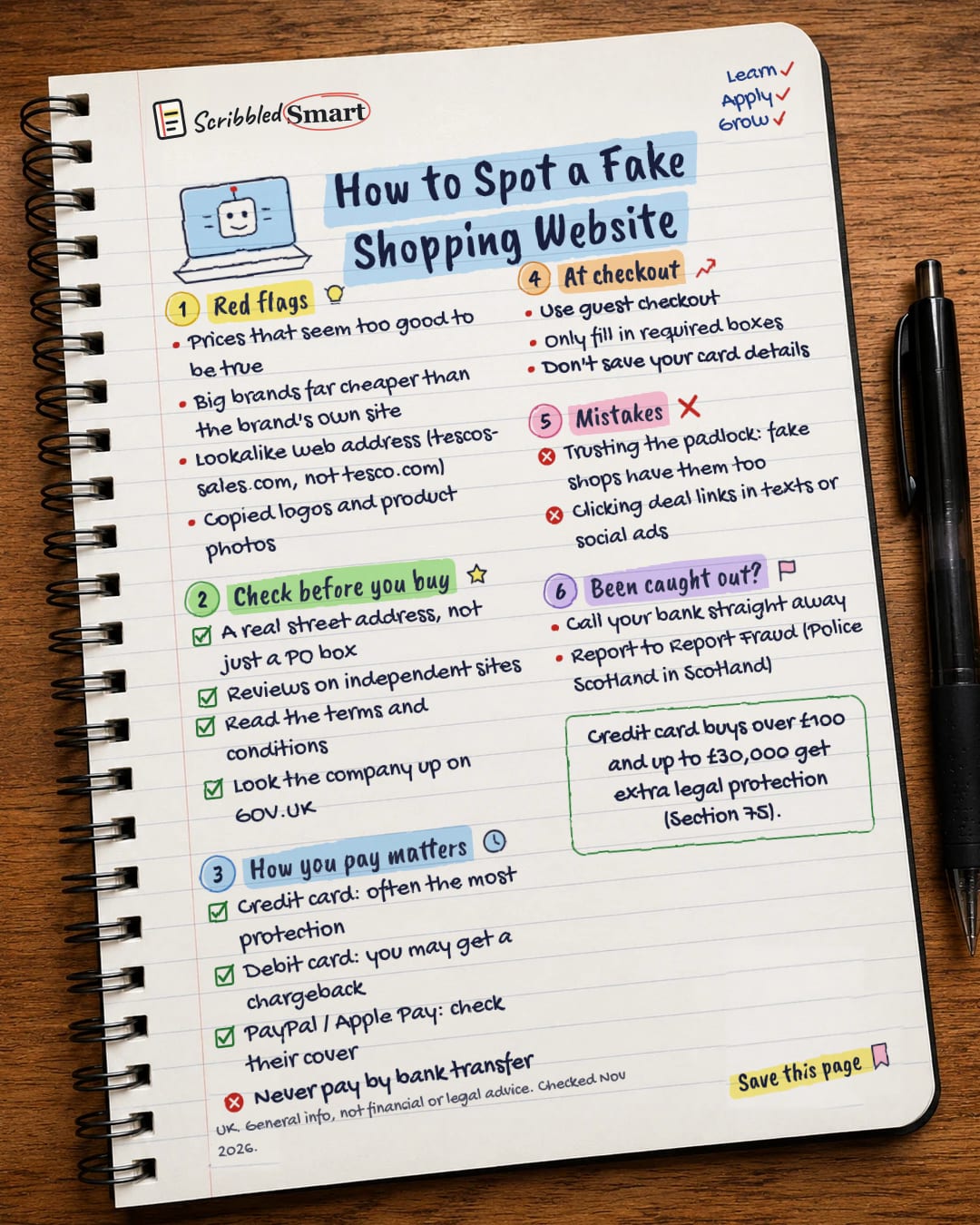
How to Spot a Fake Shopping Website
That designer bargain might be a fake shop. Check these red flags before you pay. Save this page.
Good to know
UK. General info, not financial or legal advice. Checked Nov 2026.
What's on the page
The note as text, so you can read it, copy it or use a screen reader.
Red flags
- Prices that seem too good to be true
- Big brands far cheaper than the brand's own site
- Lookalike web address (tescos-sales.com, not tesco.com)
- Copied logos and product photos
Check before you buy
- A real street address, not just a PO box
- Reviews on independent sites
- Read the terms and conditions
- Look the company up on GOV.UK
How you pay matters
- Credit card: often the most protection
- Debit card: you may get a chargeback
- PayPal / Apple Pay: check their cover
- Never pay by bank transfer
At checkout
- Use guest checkout
- Only fill in required boxes
- Don't save your card details
Mistakes
- Trusting the padlock: fake shops have them too
- Clicking deal links in texts or social ads
Been caught out?
- Call your bank straight away
- Report to Report Fraud (Police Scotland in Scotland)
Sources
How we checked this
Every fact on this note comes from the 3 sources listed here, checked against official or peer-reviewed sources where possible. AI tools help with drafting; a person checks every fact against the sources. How we research
Spotted a mistake? Tell us and we'll fix it and log it on the corrections page.


