
AI & Tech One-page note UK only
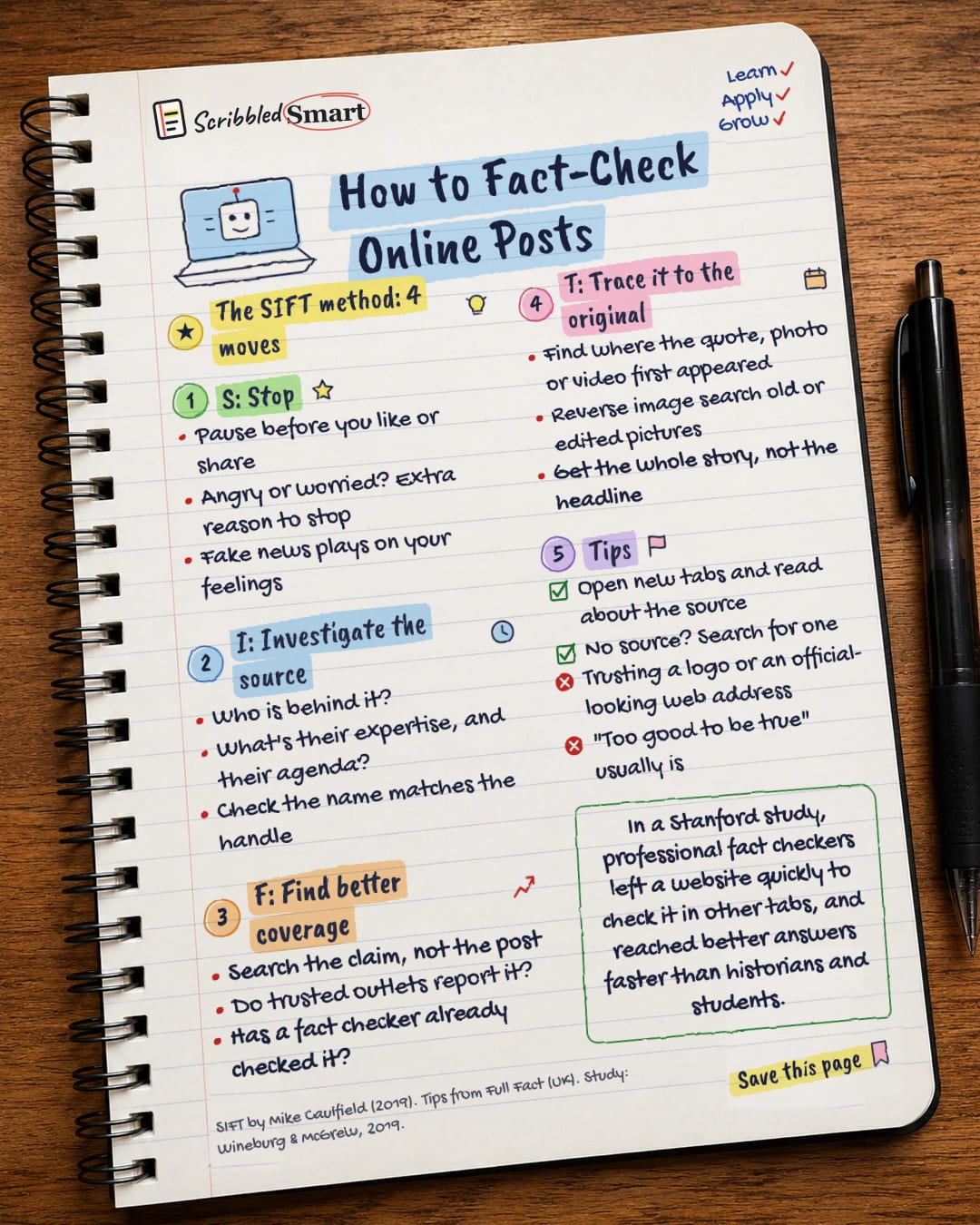
How to Fact-Check Online Posts
Before you share it, SIFT it. Four quick moves fact checkers use to spot fake posts. Save this page.
Good to know
SIFT by Mike Caulfield (2019). Tips from Full Fact (UK). Study: Wineburg & McGrew, 2019.
What's on the page
The note as text, so you can read it, copy it or use a screen reader.
The SIFT method: 4 moves
S: Stop
- Pause before you like or share
- Angry or worried? Extra reason to stop
- Fake news plays on your feelings
I: Investigate the source
- Who is behind it?
- What's their expertise, and their agenda?
- Check the name matches the handle
F: Find better coverage
- Search the claim, not the post
- Do trusted outlets report it?
- Has a fact checker already checked it?
T: Trace it to the original
- Find where the quote, photo or video first appeared
- Reverse image search old or edited pictures
- Get the whole story, not the headline
Tips
- Open new tabs and read about the source
- No source? Search for one
- Trusting a logo or an official-looking web address
- "Too good to be true" usually is
Sources
- Mike Caulfield, Hapgood: SIFT (The Four Moves), 19 June 2019
- Full Fact: Getting started with the Misinformation Toolkit
- Full Fact: Misinformation Toolkit
- Full Fact: How to fact check misleading videos
- Wineburg, S. & McGrew, S. (2019). Lateral Reading and the Nature of Expertise. Teachers College Record 121(11)
- Civic Online Reasoning: study summary
How we checked this
Every fact on this note comes from the 6 sources listed here, checked against official or peer-reviewed sources where possible. AI tools help with drafting; a person checks every fact against the sources. How we research
Spotted a mistake? Tell us and we'll fix it and log it on the corrections page.


