
AI & Tech One-page note
How Search Engines Work
What actually happens in the half-second after you press search: crawl, index, rank. Plus how to spot the ads. Save this page.
Good to know
Based on Google Search Central and Google "How Search works". Other search engines differ. Checked Nov 2026.
What's on the page
The note as text, so you can read it, copy it or use a screen reader.
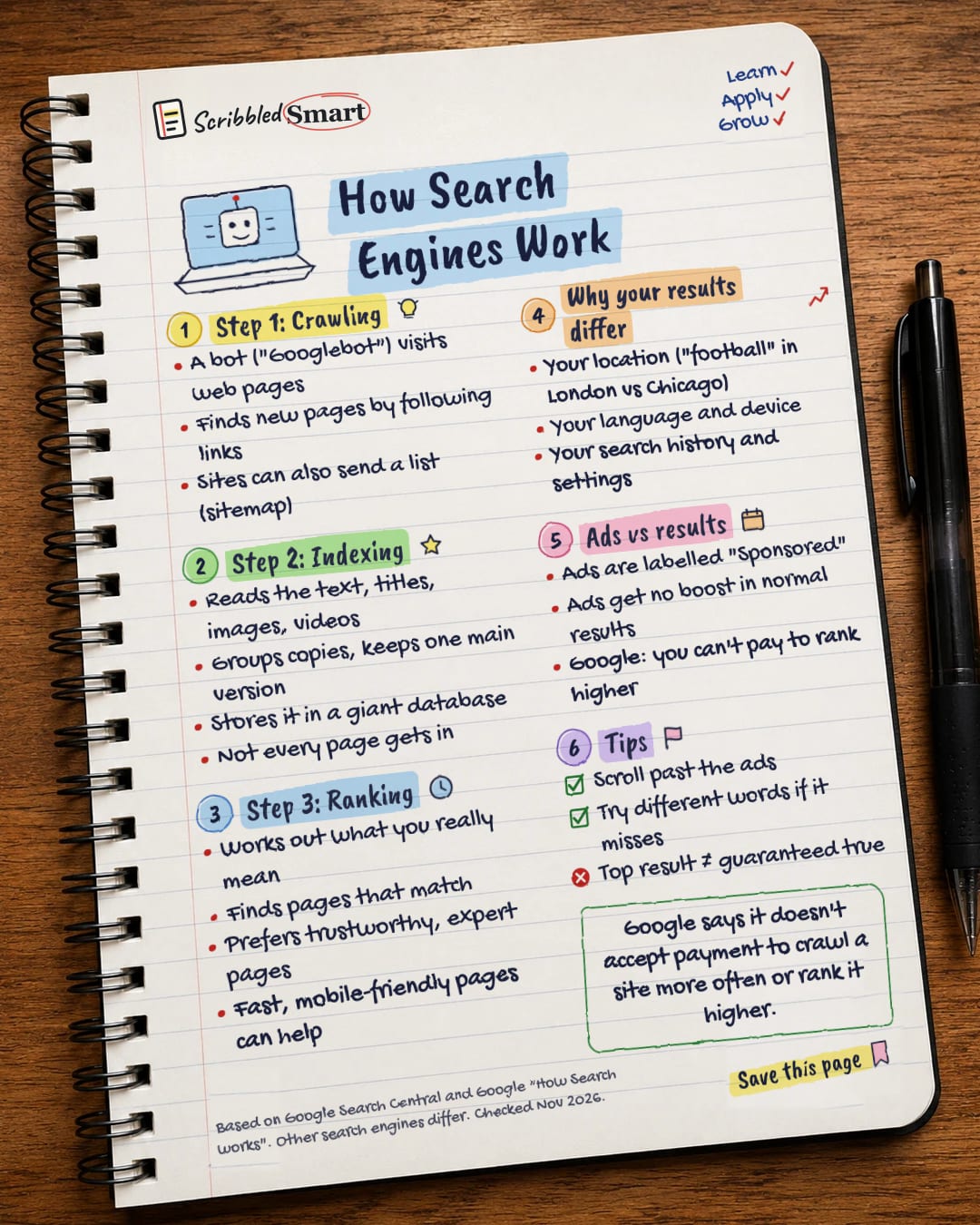
Step 1: Crawling
- A bot ("Googlebot") visits web pages
- Finds new pages by following links
- Sites can also send a list (sitemap)
Step 2: Indexing
- Reads the text, titles, images, videos
- Groups copies, keeps one main version
- Stores it in a giant database
- Not every page gets in
Step 3: Ranking
- Works out what you really mean
- Finds pages that match
- Prefers trustworthy, expert pages
- Fast, mobile-friendly pages can help
Why your results differ
- Your location ("football" in London vs Chicago)
- Your language and device
- Your search history and settings
Ads vs results
- Ads are labelled "Sponsored"
- Ads get no boost in normal results
- Google: you can't pay to rank higher
Tips
- Scroll past the ads
- Try different words if it misses
- Top result ≠ guaranteed true
Sources
How we checked this
Every fact on this note comes from the 4 sources listed here, checked against official or peer-reviewed sources where possible. AI tools help with drafting; a person checks every fact against the sources. How we research
Spotted a mistake? Tell us and we'll fix it and log it on the corrections page.


