
AI & Tech One-page note
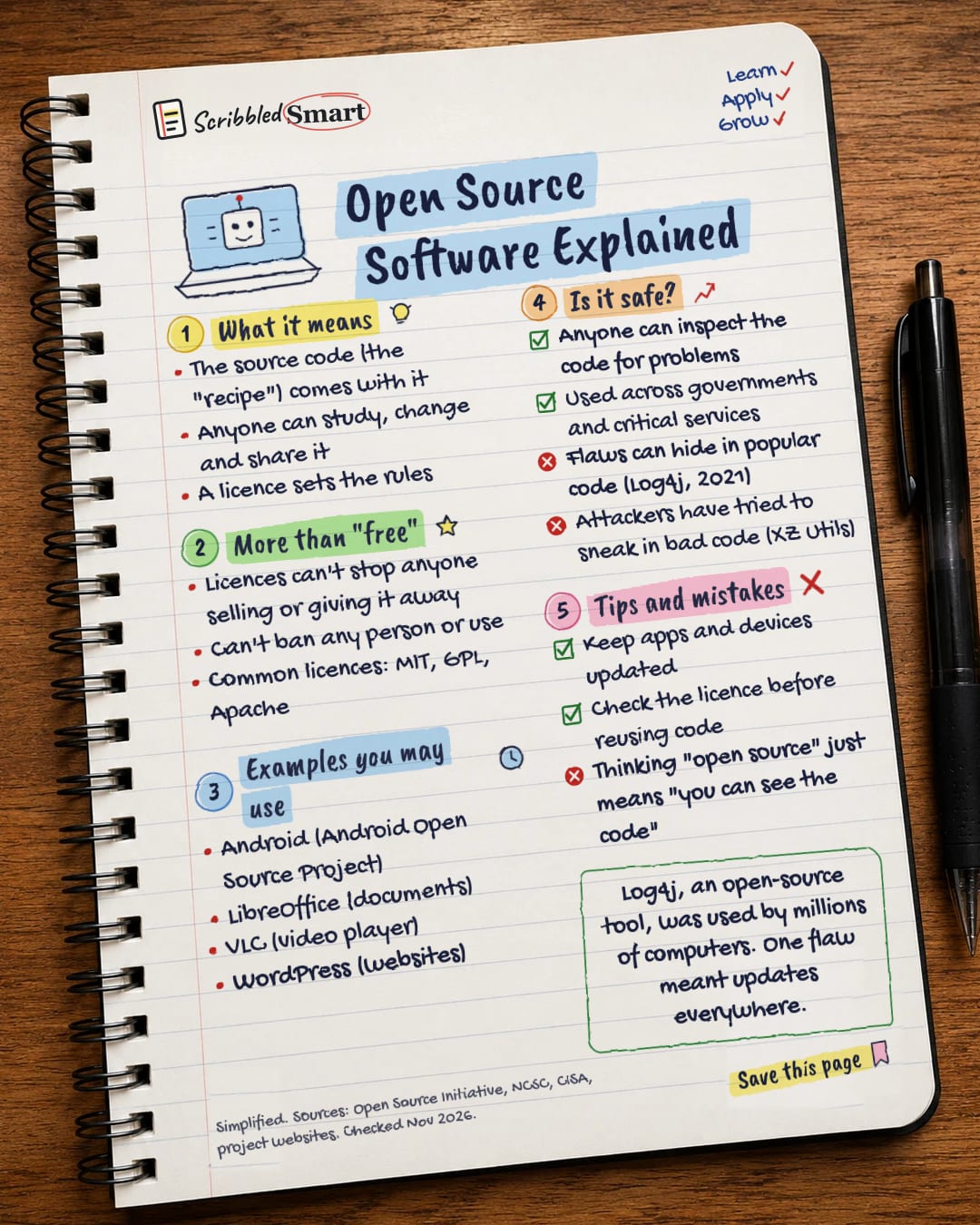
Open Source Software Explained
Some of the apps you use every day are built in the open, by anyone who wants to help. Here's what open source really means, and whether it's safe. Save this page.
Good to know
Simplified. Sources: Open Source Initiative, NCSC, CISA, project websites. Checked Nov 2026.
What's on the page
The note as text, so you can read it, copy it or use a screen reader.
What it means
- The source code (the "recipe") comes with it
- Anyone can study, change and share it
- A licence sets the rules
More than "free"
- Licences can't stop anyone selling or giving it away
- Can't ban any person or use
- Common licences: MIT, GPL, Apache
Examples you may use
- Android (Android Open Source Project)
- LibreOffice (documents)
- VLC (video player)
- WordPress (websites)
Is it safe?
- Anyone can inspect the code for problems
- Used across governments and critical services
- Flaws can hide in popular code (Log4j, 2021)
- Attackers have tried to sneak in bad code (XZ Utils)
Tips and mistakes
- Keep apps and devices updated
- Check the licence before reusing code
- Thinking "open source" just means "you can see the code"
Sources
How we checked this
Every fact on this note comes from the 8 sources listed here, checked against official or peer-reviewed sources where possible. AI tools help with drafting; a person checks every fact against the sources. How we research
Spotted a mistake? Tell us and we'll fix it and log it on the corrections page.


