
General knowledge One-page note UK only
How Antibiotic Resistance Works
Antibiotics are losing their power, and how we use them matters. Antibiotic resistance in one page. Save this page.
Good to know
General info, not medical advice. UK (NHS and UKHSA guidance). Checked November 2026.
What's on the page
The note as text, so you can read it, copy it or use a screen reader.
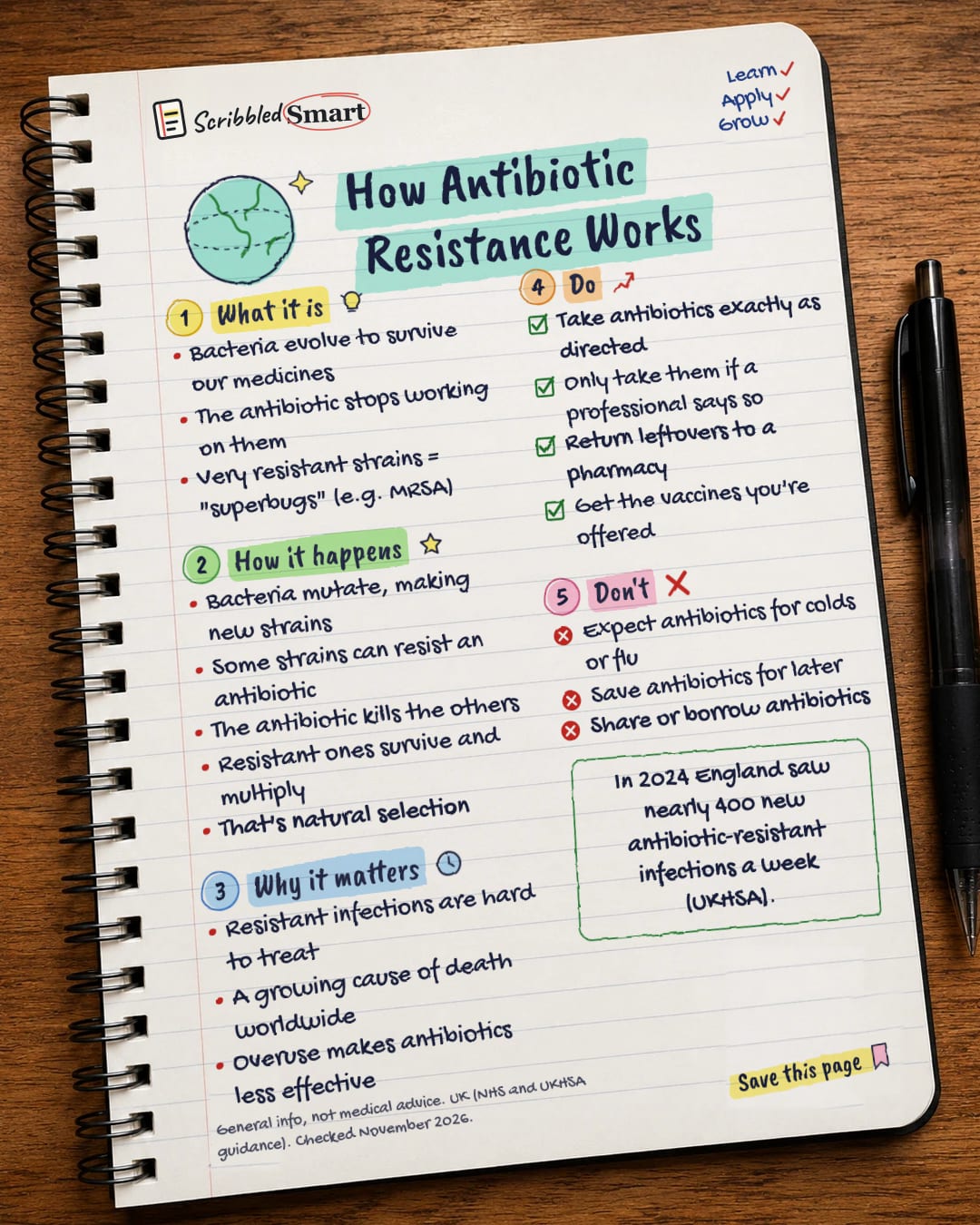
What it is
- Bacteria evolve to survive our medicines
- The antibiotic stops working on them
- Very resistant strains = "superbugs" (e.g. MRSA)
How it happens
- Bacteria mutate, making new strains
- Some strains can resist an antibiotic
- The antibiotic kills the others
- Resistant ones survive and multiply
- That's natural selection
Why it matters
- Resistant infections are hard to treat
- A growing cause of death worldwide
- Overuse makes antibiotics less effective
Do
- Take antibiotics exactly as directed
- Only take them if a professional says so
- Return leftovers to a pharmacy
- Get the vaccines you're offered
Don't
- Expect antibiotics for colds or flu
- Save antibiotics for later
- Share or borrow antibiotics
Sources
- UK Health Security Agency blog: What is antimicrobial resistance (AMR) and how can you help combat it?
- GOV.UK (UKHSA): Nearly 400 antibiotic-resistant infections each week in 2024
- NHS: Antibiotic resistance
- NHS: Antibiotics
- World Health Organization: Antimicrobial resistance fact sheet
- AQA: GCSE Biology (8461) specification, 4.6 Inheritance, variation and evolution
How we checked this
Every fact on this note comes from the 6 sources listed here, checked against official or peer-reviewed sources where possible. AI tools help with drafting; a person checks every fact against the sources. How we research
Spotted a mistake? Tell us and we'll fix it and log it on the corrections page.


