
General knowledge One-page note UK only
Blood Types Explained
A, B, AB, O, positive or negative: what your blood type actually means. Save this page.
Good to know
General info, not medical advice. UK figures (NHS and NHS Blood and Transplant). Checked November 2026.
What's on the page
The note as text, so you can read it, copy it or use a screen reader.
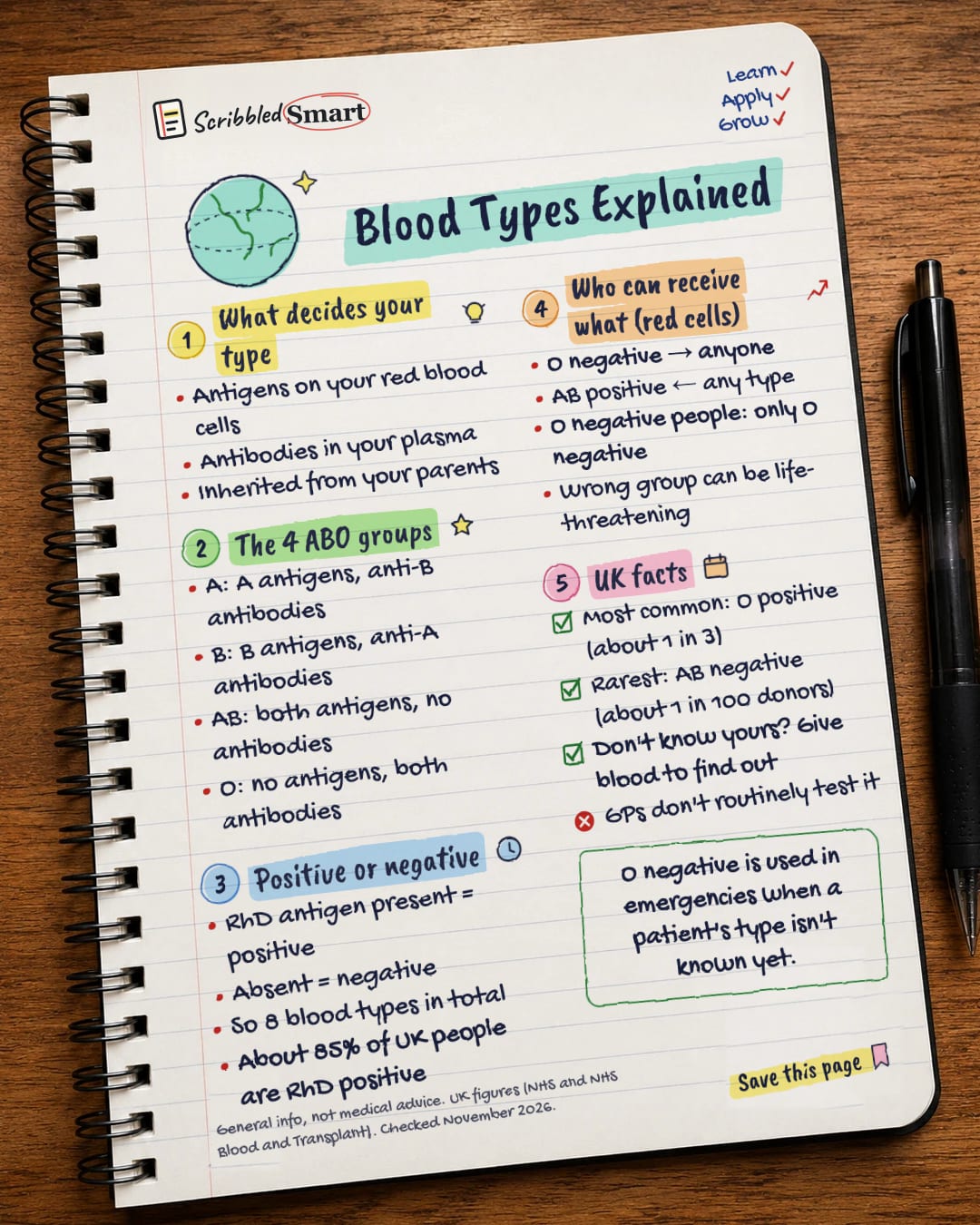
What decides your type
- Antigens on your red blood cells
- Antibodies in your plasma
- Inherited from your parents
The 4 ABO groups
- A: A antigens, anti-B antibodies
- B: B antigens, anti-A antibodies
- AB: both antigens, no antibodies
- O: no antigens, both antibodies
Positive or negative
- RhD antigen present = positive
- Absent = negative
- So 8 blood types in total
- About 85% of UK people are RhD positive
Who can receive what (red cells)
- O negative → anyone
- AB positive ← any type
- O negative people: only O negative
- Wrong group can be life-threatening
UK facts
- Most common: O positive (about 1 in 3)
- Rarest: AB negative (about 1 in 100 donors)
- Don't know yours? Give blood to find out
- GPs don't routinely test it
Sources
- NHS: Blood groups
- NHS Blood and Transplant: Blood types
- NHS Blood and Transplant: O negative blood type
- NHS Blood and Transplant: O positive blood type
- NHS Blood and Transplant: AB positive blood type
- NHS Blood and Transplant: AB negative blood type
- NHS Blood and Transplant: A positive, A negative, B positive, B negative blood type pages
How we checked this
Every fact on this note comes from the 7 sources listed here, checked against official or peer-reviewed sources where possible. AI tools help with drafting; a person checks every fact against the sources. How we research
Spotted a mistake? Tell us and we'll fix it and log it on the corrections page.


