
General knowledge One-page note
How the Immune System Works
Your body has a whole defence team working 24/7. The immune system in one page. Save this page.
Good to know
Matches GCSE Biology (Infection and response). General info, not medical advice.
What's on the page
The note as text, so you can read it, copy it or use a screen reader.
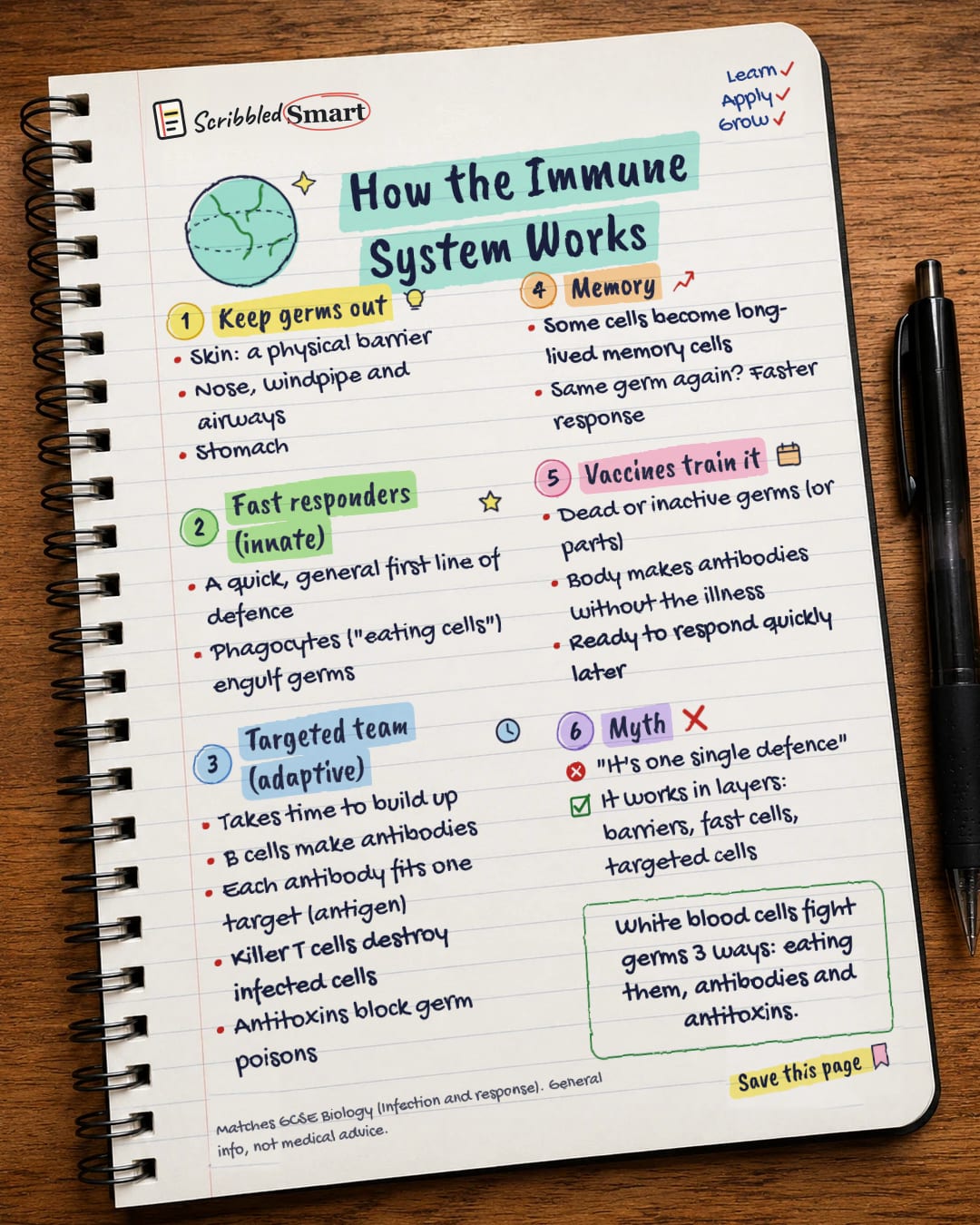
Keep germs out
- Skin: a physical barrier
- Nose, windpipe and airways
- Stomach
Fast responders (innate)
- A quick, general first line of defence
- Phagocytes ("eating cells") engulf germs
Targeted team (adaptive)
- Takes time to build up
- B cells make antibodies
- Each antibody fits one target (antigen)
- Killer T cells destroy infected cells
- Antitoxins block germ poisons
Memory
- Some cells become long-lived memory cells
- Same germ again? Faster response
Vaccines train it
- Dead or inactive germs (or parts)
- Body makes antibodies without the illness
- Ready to respond quickly later
Myth
- "It's one single defence"
- It works in layers: barriers, fast cells, targeted cells
Sources
- World Health Organization: How do vaccines work? (cited via note 06)
- British Society for Immunology, Bitesized Immunology: What is immunology?
- British Society for Immunology, Bitesized Immunology: CD8+ T cells
- InformedHealth.org (IQWiG): How does the immune system work?
- AQA: GCSE Biology (8461) specification, 4.3 Infection and response
How we checked this
Every fact on this note comes from the 5 sources listed here, checked against official or peer-reviewed sources where possible. AI tools help with drafting; a person checks every fact against the sources. How we research
Spotted a mistake? Tell us and we'll fix it and log it on the corrections page.


