
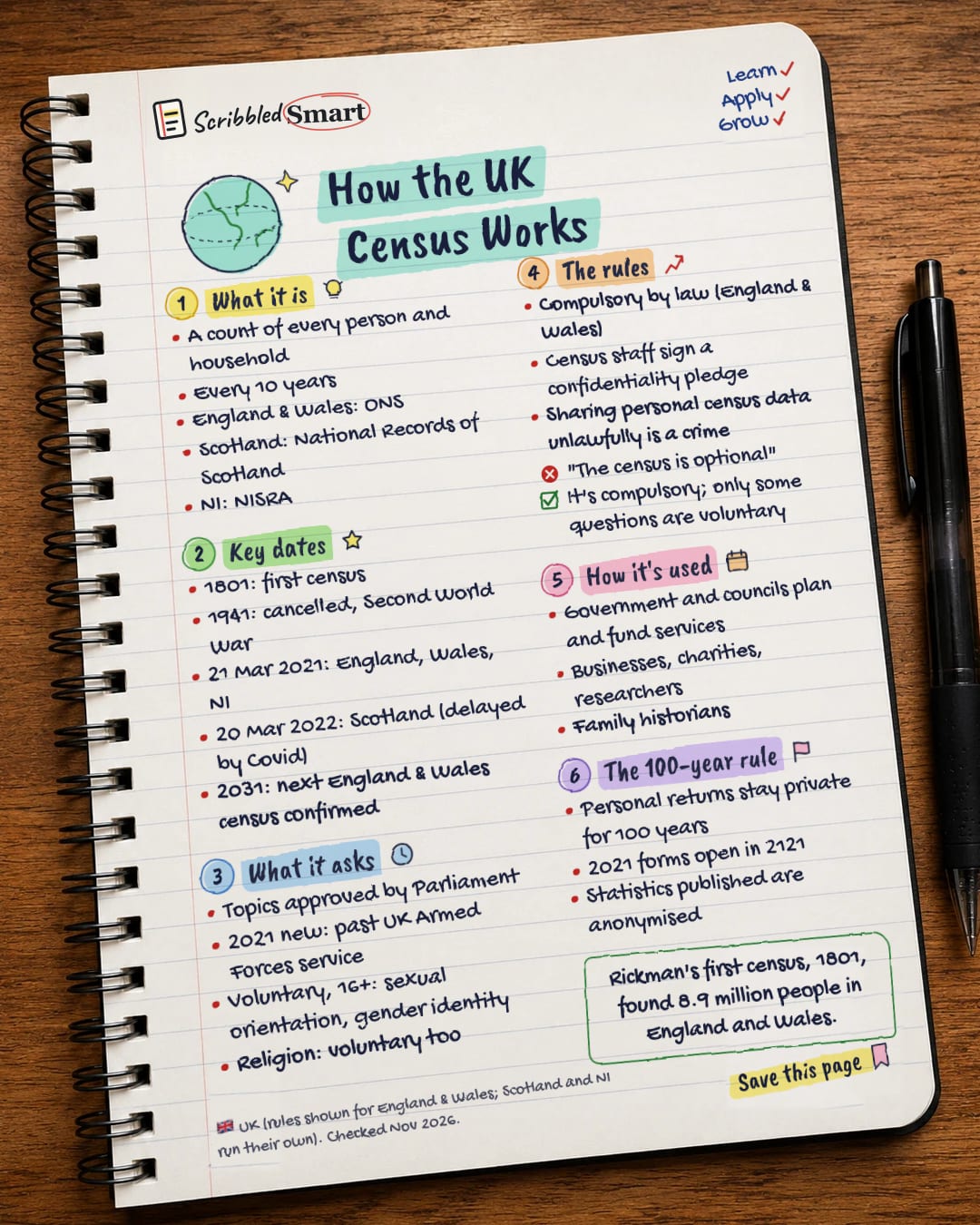
General knowledge One-page note UK only
How the UK Census Works
Every 10 years, everyone gets counted, and your form stays secret for 100 years. The census in one page. Save this page.
Good to know
🇬🇧 UK (rules shown for England & Wales; Scotland and NI run their own). Checked Nov 2026.
What's on the page
The note as text, so you can read it, copy it or use a screen reader.
What it is
- A count of every person and household
- Every 10 years
- England & Wales: ONS
- Scotland: National Records of Scotland
- NI: NISRA
Key dates
- 1801: first census
- 1941: cancelled, Second World War
- 21 Mar 2021: England, Wales, NI
- 20 Mar 2022: Scotland (delayed by Covid)
- 2031: next England & Wales census confirmed
What it asks
- Topics approved by Parliament
- 2021 new: past UK Armed Forces service
- Voluntary, 16+: sexual orientation, gender identity
- Religion: voluntary too
The rules
- Compulsory by law (England & Wales)
- Census staff sign a confidentiality pledge
- Sharing personal census data unlawfully is a crime
- "The census is optional"
- It's compulsory; only some questions are voluntary
How it's used
- Government and councils plan and fund services
- Businesses, charities, researchers
- Family historians
The 100-year rule
- Personal returns stay private for 100 years
- 2021 forms open in 2121
- Statistics published are anonymised
Sources
- ONS: About the census
- ONS: Story of the Census
- ONS: Combining and comparing census figures across the UK
- ONS: Legislation and policy
- ONS FOI: 2021 Census: costs, data sharing, fines, data security, and questions
- UK Statistics Authority: HM Government commissions the ONS to deliver a whole population census of England and Wales in 2031
How we checked this
Every fact on this note comes from the 6 sources listed here, checked against official or peer-reviewed sources where possible. AI tools help with drafting; a person checks every fact against the sources. How we research
Spotted a mistake? Tell us and we'll fix it and log it on the corrections page.


