
General knowledge One-page note
Why the Sky Is Blue
Why is the sky blue and not violet? The answer, explained in one page. Save this page.
What's on the page
The note as text, so you can read it, copy it or use a screen reader.
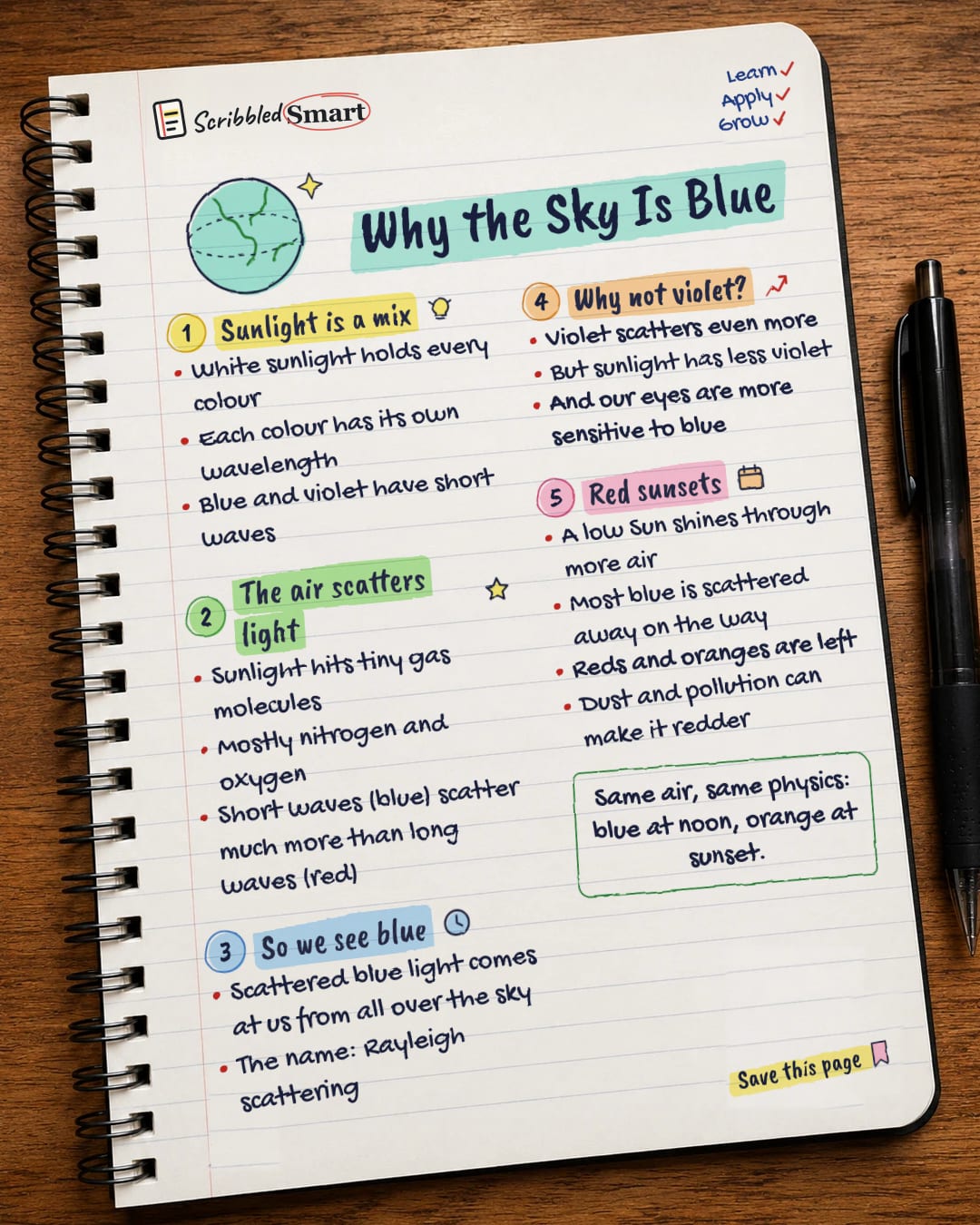
Sunlight is a mix
- White sunlight holds every colour
- Each colour has its own wavelength
- Blue and violet have short waves
The air scatters light
- Sunlight hits tiny gas molecules
- Mostly nitrogen and oxygen
- Short waves (blue) scatter much more than long waves (red)
So we see blue
- Scattered blue light comes at us from all over the sky
- The name: Rayleigh scattering
Why not violet?
- Violet scatters even more
- But sunlight has less violet
- And our eyes are more sensitive to blue
Red sunsets
- A low Sun shines through more air
- Most blue is scattered away on the way
- Reds and oranges are left
- Dust and pollution can make it redder
Sources
How we checked this
Every fact on this note comes from the 2 sources listed here, checked against official or peer-reviewed sources where possible. AI tools help with drafting; a person checks every fact against the sources. How we research
Spotted a mistake? Tell us and we'll fix it and log it on the corrections page.


