
Money One-page note
Zero-Based Budgeting
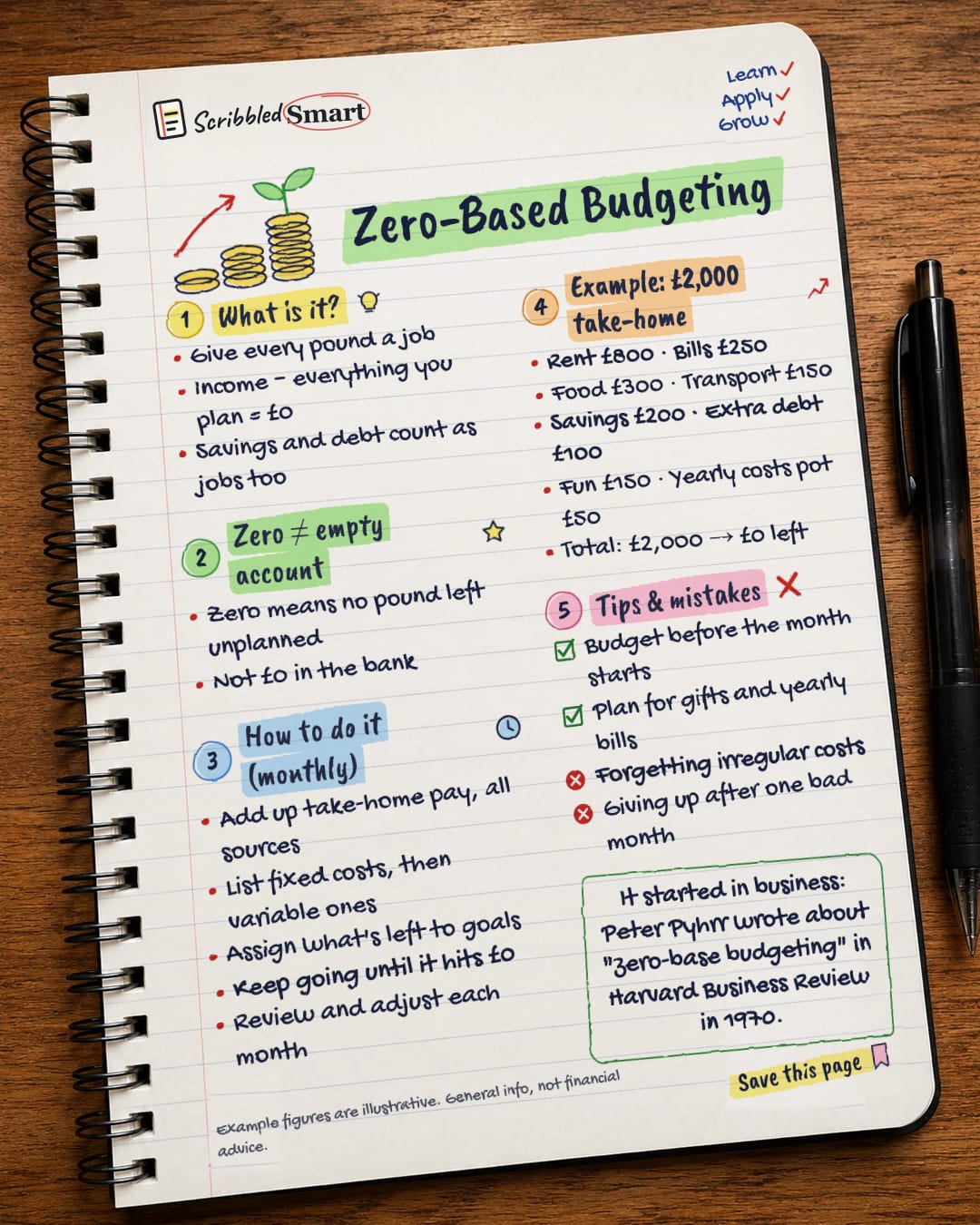
Zero-based budgeting doesn't mean spending everything. It means every pound gets a job before the month starts. Save this page.
Good to know
Example figures are illustrative. General info, not financial advice.
What's on the page
The note as text, so you can read it, copy it or use a screen reader.
What is it?
- Give every pound a job
- Income − everything you plan = £0
- Savings and debt count as jobs too
Zero ≠ empty account
- Zero means no pound left unplanned
- Not £0 in the bank
How to do it (monthly)
- Add up take-home pay, all sources
- List fixed costs, then variable ones
- Assign what's left to goals
- Keep going until it hits £0
- Review and adjust each month
Example: £2,000 take-home
- Rent £800 · Bills £250
- Food £300 · Transport £150
- Savings £200 · Extra debt £100
- Fun £150 · Yearly costs pot £50
- Total: £2,000 → £0 left
Tips & mistakes
- Budget before the month starts
- Plan for gifts and yearly bills
- Forgetting irregular costs
- Giving up after one bad month
Sources
How we checked this
Every fact on this note comes from the 5 sources listed here, checked against official or peer-reviewed sources where possible. AI tools help with drafting; a person checks every fact against the sources. How we research
Spotted a mistake? Tell us and we'll fix it and log it on the corrections page.


