
Money One-page note UK only
Avoid Card Fees Abroad
"Pay in pounds or local currency?" The wrong answer can quietly cost you on holiday purchases. Save this page.
Good to know
UK cards; fees vary. General info, not financial advice.
What's on the page
The note as text, so you can read it, copy it or use a screen reader.
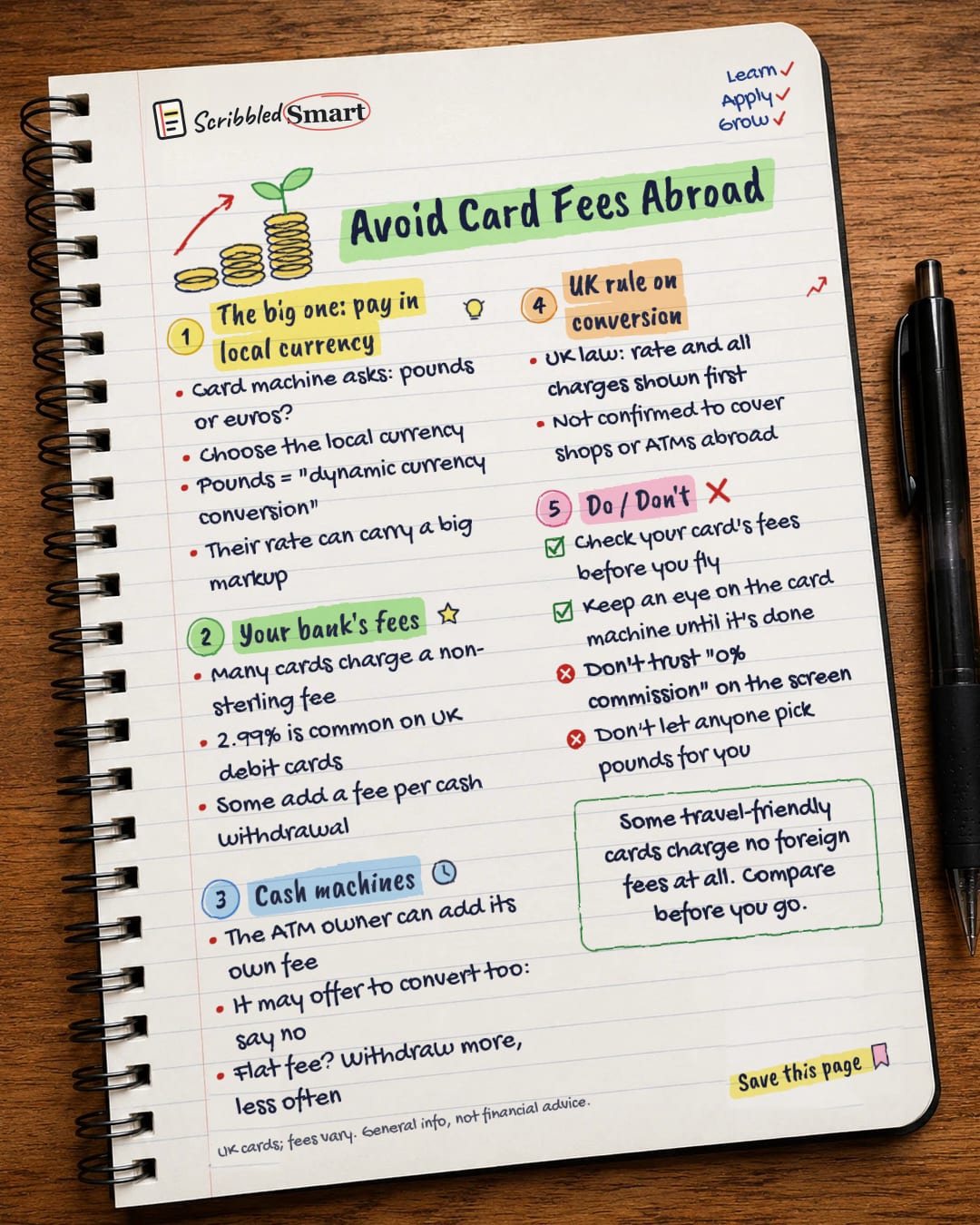
The big one: pay in local currency
- Card machine asks: pounds or euros?
- Choose the local currency
- Pounds = "dynamic currency conversion"
- Their rate can carry a big markup
Your bank's fees
- Many cards charge a non-sterling fee
- 2.99% is common on UK debit cards
- Some add a fee per cash withdrawal
Cash machines
- The ATM owner can add its own fee
- It may offer to convert too: say no
- Flat fee? Withdraw more, less often
UK rule on conversion
- UK law: rate and all charges shown first
- Not confirmed to cover shops or ATMs abroad
Do / Don't
- Check your card's fees before you fly
- Keep an eye on the card machine until it's done
- Don't trust "0% commission" on the screen
- Don't let anyone pick pounds for you
Sources
- legislation.gov.uk: Payment Services Regulations 2017, regulation 57 (Currency and currency conversion)
- Barclays: Using your debit card abroad
- Which?: Best debit cards to use abroad 2026
- MoneySavingExpert: Best travel credit & debit cards 2026
- MoneySavingExpert: Avoid holiday rip-offs by always keeping hold of the card machine (2017)
- MoneySavingExpert: Always pay in euros, even if it says 0% commission (2013)
- Lloyds Bank: Using debit and credit cards abroad (unopened, not used)
- HSBC: What is a non-sterling transaction fee? (unopened, not used)
How we checked this
Every fact on this note comes from the 8 sources listed here, checked against official or peer-reviewed sources where possible. AI tools help with drafting; a person checks every fact against the sources. How we research
Spotted a mistake? Tell us and we'll fix it and log it on the corrections page.


