
Money One-page note UK only
How Much Can I Borrow for a Mortgage?
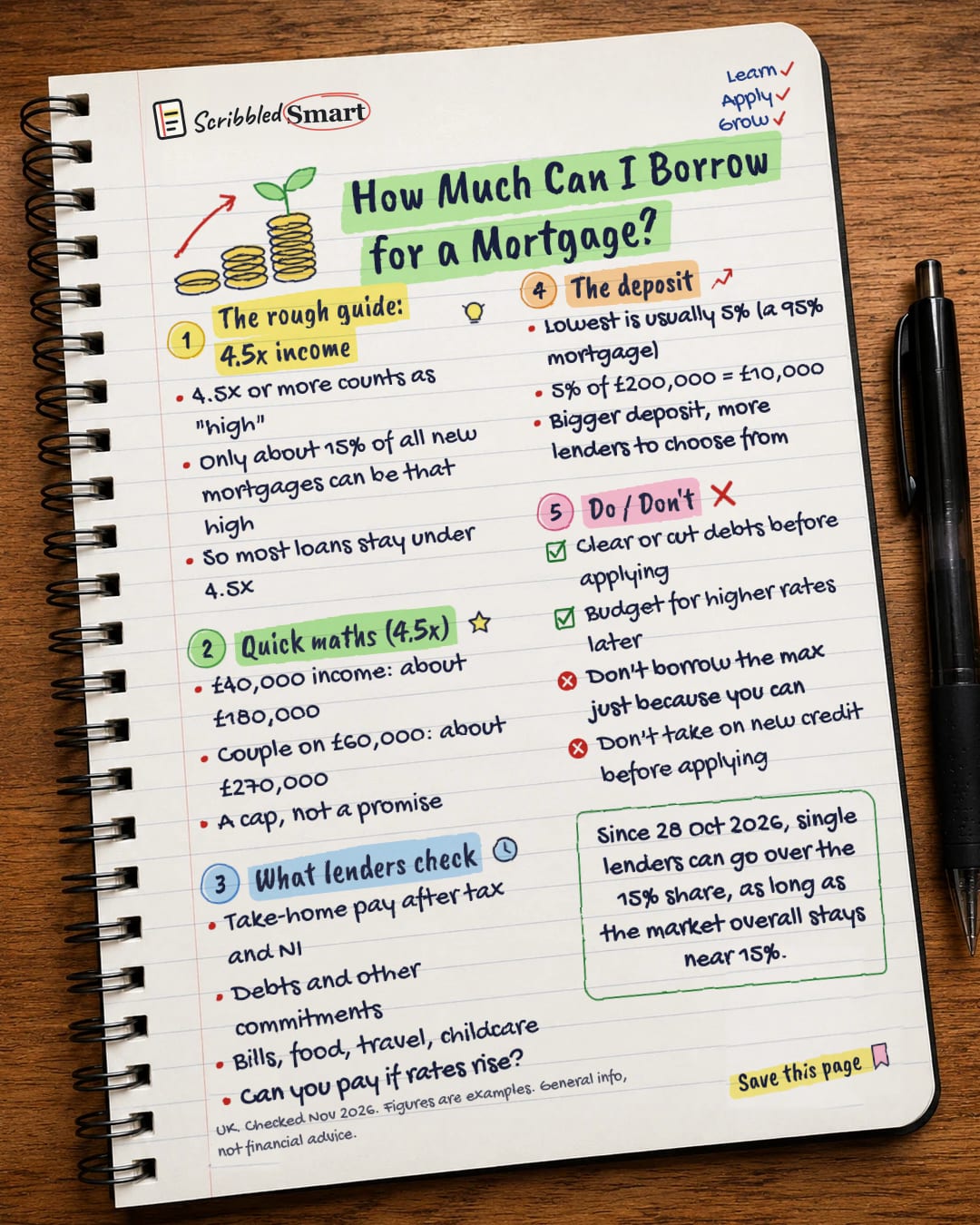
"How much can I borrow?" Lenders start with your income, then check everything else. Here's the maths. Save this page.
Good to know
UK. Checked Nov 2026. Figures are examples. General info, not financial advice.
What's on the page
The note as text, so you can read it, copy it or use a screen reader.
The rough guide: 4.5x income
- 4.5x or more counts as "high"
- Only about 15% of all new mortgages can be that high
- So most loans stay under 4.5x
Quick maths (4.5x)
- £40,000 income: about £180,000
- Couple on £60,000: about £270,000
- A cap, not a promise
What lenders check
- Take-home pay after tax and NI
- Debts and other commitments
- Bills, food, travel, childcare
- Can you pay if rates rise?
The deposit
- Lowest is usually 5% (a 95% mortgage)
- 5% of £200,000 = £10,000
- Bigger deposit, more lenders to choose from
Do / Don't
- Clear or cut debts before applying
- Budget for higher rates later
- Don't borrow the max just because you can
- Don't take on new credit before applying
Sources
- Bank of England PRA: PS19/26 High loan-to-income lending (14 Oct 2026)
- FCA: FG26/11 The FPC's recommendation on loan to income ratios in mortgage lending (14 Oct 2026)
- FCA: The FPC's mortgage market recommendations
- FCA: Interest rate 'stress test' rule
- FCA Handbook: MCOB 11 Responsible lending
- GOV.UK: 2025 Mortgage Guarantee Scheme
How we checked this
Every fact on this note comes from the 6 sources listed here, checked against official or peer-reviewed sources where possible. AI tools help with drafting; a person checks every fact against the sources. How we research
Spotted a mistake? Tell us and we'll fix it and log it on the corrections page.


