
Money One-page note
Stamp Duty Explained (England)
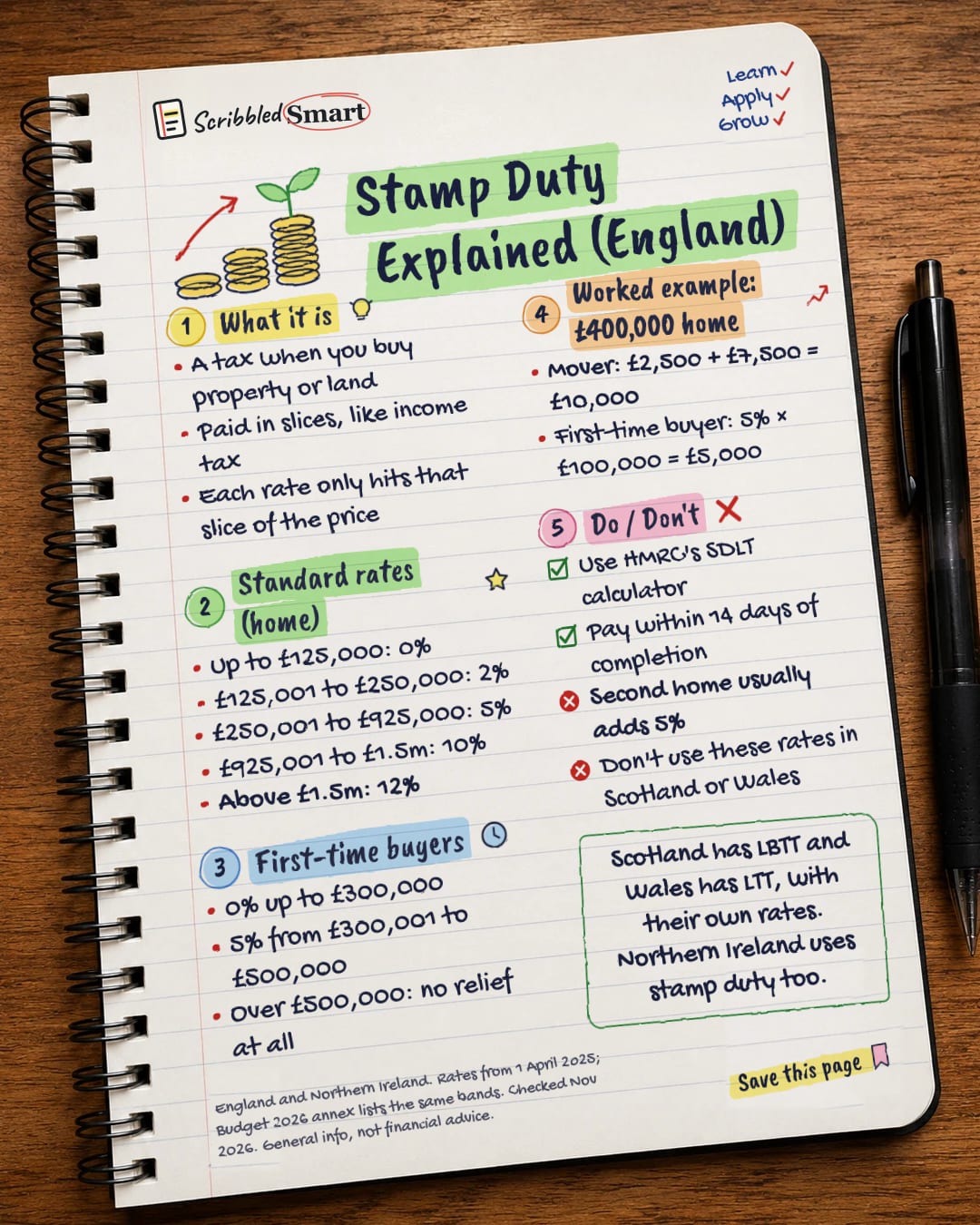
Stamp duty is charged in slices, not on the whole price. Here's how much you'd really pay, with a first-time buyer example. Save this page.
Good to know
England and Northern Ireland. Rates from 1 April 2025; Budget 2026 annex lists the same bands. Checked Nov 2026. General info, not financial advice.
What's on the page
The note as text, so you can read it, copy it or use a screen reader.
What it is
- A tax when you buy property or land
- Paid in slices, like income tax
- Each rate only hits that slice of the price
Standard rates (home)
- Up to £125,000: 0%
- £125,001 to £250,000: 2%
- £250,001 to £925,000: 5%
- £925,001 to £1.5m: 10%
- Above £1.5m: 12%
First-time buyers
- 0% up to £300,000
- 5% from £300,001 to £500,000
- Over £500,000: no relief at all
Worked example: £400,000 home
- Mover: £2,500 + £7,500 = £10,000
- First-time buyer: 5% × £100,000 = £5,000
Do / Don't
- Use HMRC's SDLT calculator
- Pay within 14 days of completion
- Second home usually adds 5%
- Don't use these rates in Scotland or Wales
Sources
How we checked this
Every fact on this note comes from the 4 sources listed here, checked against official or peer-reviewed sources where possible. AI tools help with drafting; a person checks every fact against the sources. How we research
Spotted a mistake? Tell us and we'll fix it and log it on the corrections page.


