
Psychology One-page note
Perfectionism: Why It's Rising
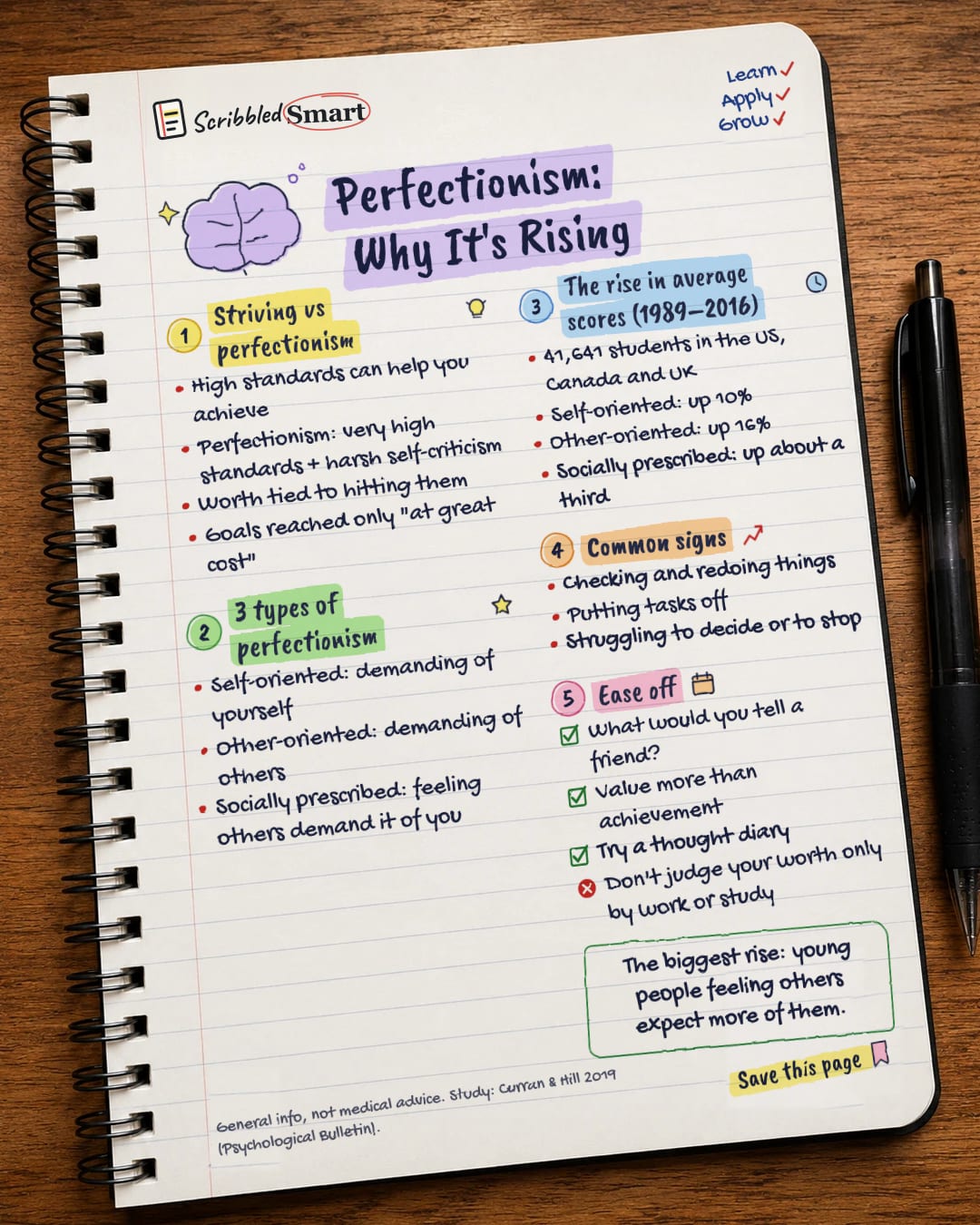
Perfectionism has risen in young people for decades, and the biggest jump is pressure we feel from others. Save this page.
Good to know
General info, not medical advice. Study: Curran & Hill 2019 (Psychological Bulletin).
What's on the page
The note as text, so you can read it, copy it or use a screen reader.
Striving vs perfectionism
- High standards can help you achieve
- Perfectionism: very high standards + harsh self-criticism
- Worth tied to hitting them
- Goals reached only "at great cost"
3 types of perfectionism
- Self-oriented: demanding of yourself
- Other-oriented: demanding of others
- Socially prescribed: feeling others demand it of you
The rise in average scores (1989–2016)
- 41,641 students in the US, Canada and UK
- Self-oriented: up 10%
- Other-oriented: up 16%
- Socially prescribed: up about a third
Common signs
- Checking and redoing things
- Putting tasks off
- Struggling to decide or to stop
Ease off
- What would you tell a friend?
- Value more than achievement
- Try a thought diary
- Don't judge your worth only by work or study
Sources
- Curran, T. & Hill, A. P. (2019): Perfectionism is increasing over time: A meta-analysis of birth cohort differences from 1989 to 2016. Psychological Bulletin
- Abstract read on the University of Bath research portal (2026-11-17)
- York St John University (2018): Rise in perfectionism among young people
- University of Warwick, Wellbeing Support Services: Perfectionism
- Medical News Today (2018): coverage of Curran & Hill
- Charlie Waller Trust: Understanding perfectionism
How we checked this
Every fact on this note comes from the 6 sources listed here, checked against official or peer-reviewed sources where possible. AI tools help with drafting; a person checks every fact against the sources. How we research
Spotted a mistake? Tell us and we'll fix it and log it on the corrections page.


