
Psychology One-page note
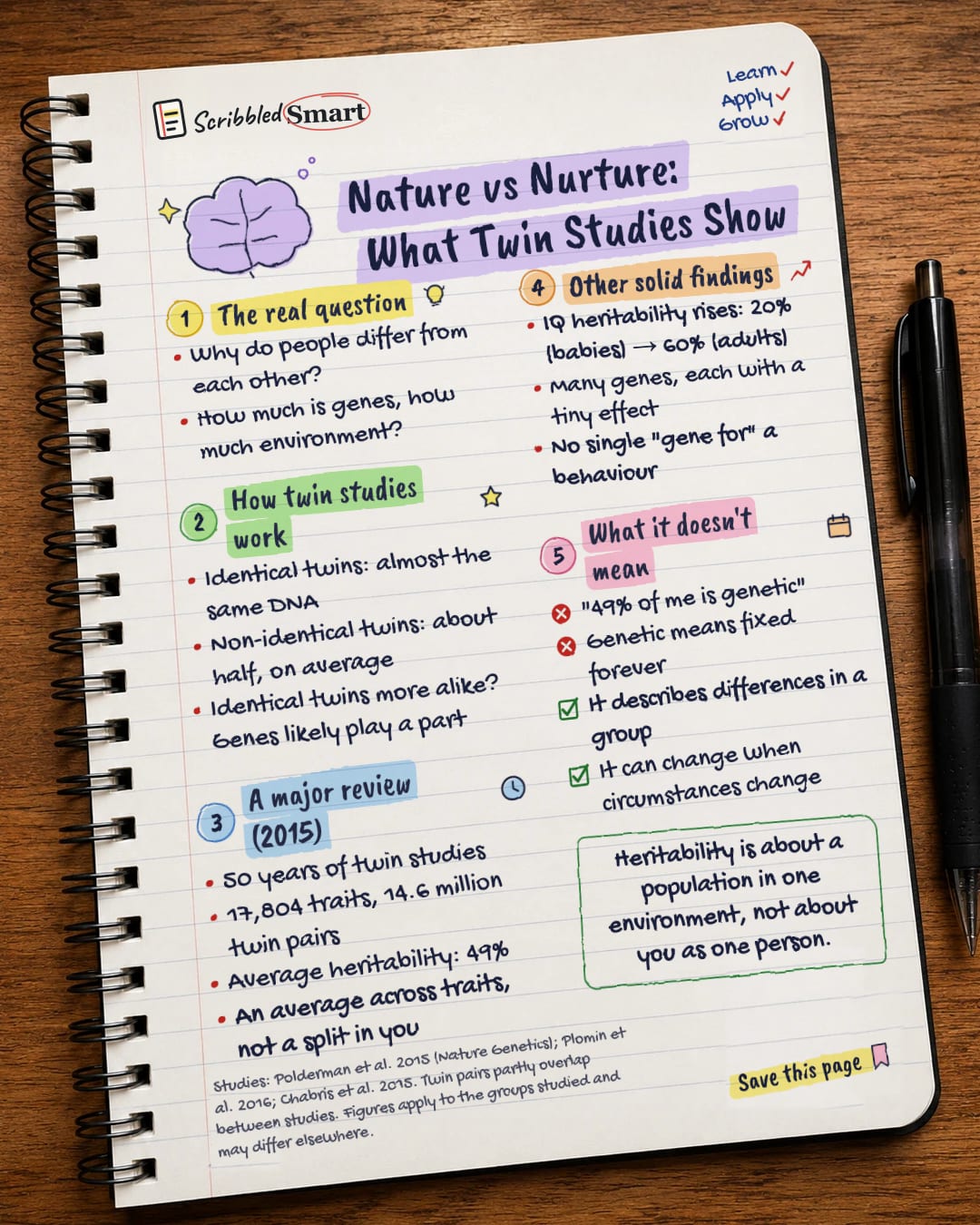
Nature vs Nurture: What Twin Studies Show
Is it nature or nurture? Fifty years of twin studies say: roughly both, and here's what that really means. Save this page.
Good to know
Studies: Polderman et al. 2015 (Nature Genetics); Plomin et al. 2016; Chabris et al. 2015. Twin pairs partly overlap between studies. Figures apply to the groups studied and may differ elsewhere.
What's on the page
The note as text, so you can read it, copy it or use a screen reader.
The real question
- Why do people differ from each other?
- How much is genes, how much environment?
How twin studies work
- Identical twins: almost the same DNA
- Non-identical twins: about half, on average
- Identical twins more alike? Genes likely play a part
A major review (2015)
- 50 years of twin studies
- 17,804 traits, 14.6 million twin pairs
- Average heritability: 49%
- An average across traits, not a split in you
Other solid findings
- IQ heritability rises: 20% (babies) → 60% (adults)
- Many genes, each with a tiny effect
- No single "gene for" a behaviour
What it doesn't mean
- "49% of me is genetic"
- Genetic means fixed forever
- It describes differences in a group
- It can change when circumstances change
Sources
- Polderman, T. J. C. et al. (2015): Meta-analysis of the heritability of human traits based on fifty years of twin studies. Nature Genetics
- Plomin, R. et al. (2016): Top 10 replicated findings from behavioral genetics
- Chabris, C. F. et al. (2015): The Fourth Law of Behavior Genetics
- MedlinePlus Genetics (US National Library of Medicine): What is heritability?
How we checked this
Every fact on this note comes from the 4 sources listed here, checked against official or peer-reviewed sources where possible. AI tools help with drafting; a person checks every fact against the sources. How we research
Spotted a mistake? Tell us and we'll fix it and log it on the corrections page.


