
Psychology One-page note
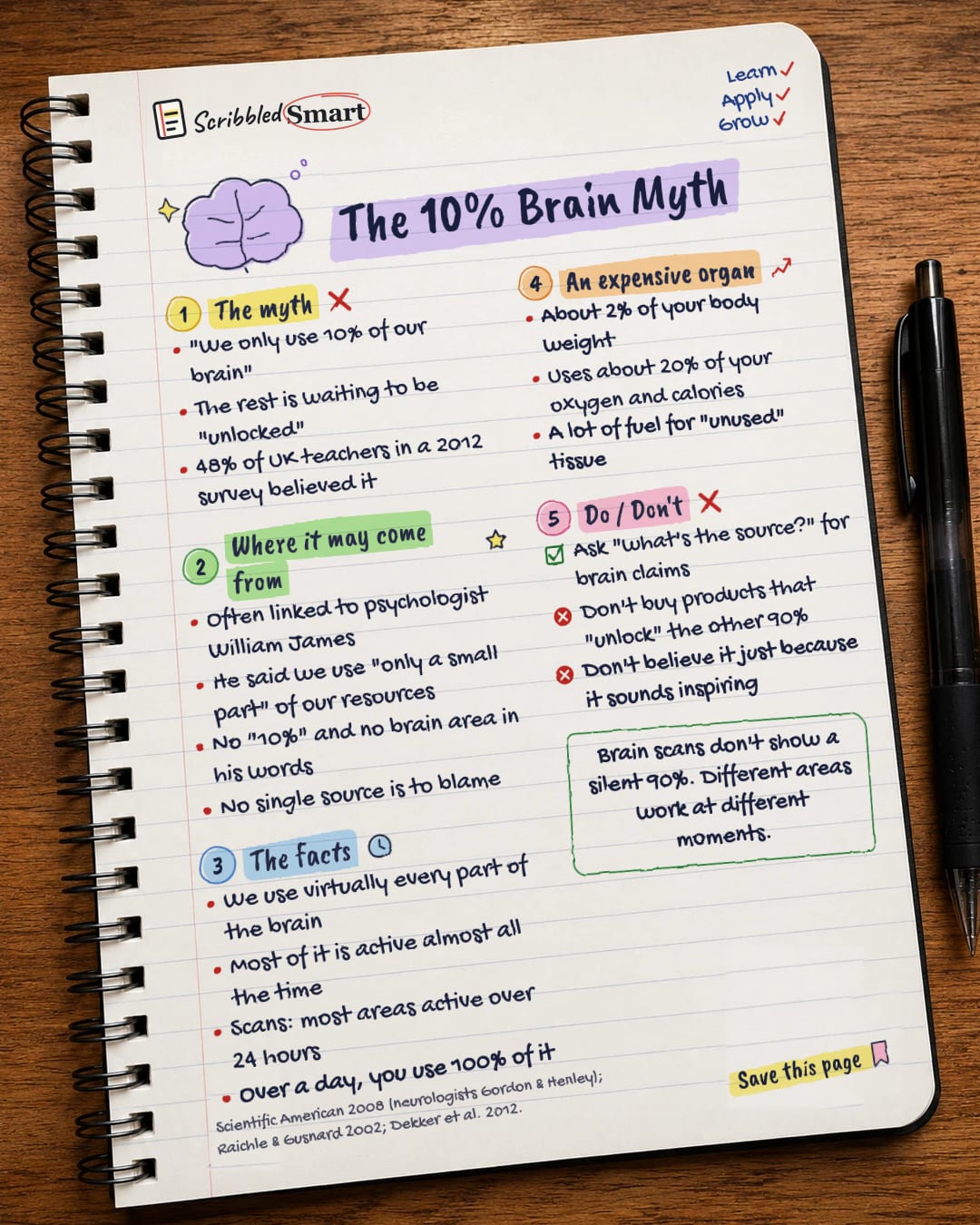
The 10% Brain Myth
You don't use just 10% of your brain. Here's where the myth came from and what the science says. Save this page.
Good to know
Scientific American 2008 (neurologists Gordon & Henley); Raichle & Gusnard 2002; Dekker et al. 2012.
What's on the page
The note as text, so you can read it, copy it or use a screen reader.
The myth
- "We only use 10% of our brain"
- The rest is waiting to be "unlocked"
- 48% of UK teachers in a 2012 survey believed it
Where it may come from
- Often linked to psychologist William James
- He said we use "only a small part" of our resources
- No "10%" and no brain area in his words
- No single source is to blame
The facts
- We use virtually every part of the brain
- Most of it is active almost all the time
- Scans: most areas active over 24 hours
- Over a day, you use 100% of it
An expensive organ
- About 2% of your body weight
- Uses about 20% of your oxygen and calories
- A lot of fuel for "unused" tissue
Do / Don't
- Ask "what's the source?" for brain claims
- Don't buy products that "unlock" the other 90%
- Don't believe it just because it sounds inspiring
Sources
How we checked this
Every fact on this note comes from the 3 sources listed here, checked against official or peer-reviewed sources where possible. AI tools help with drafting; a person checks every fact against the sources. How we research
Spotted a mistake? Tell us and we'll fix it and log it on the corrections page.


