
Study One-page note
Active Recall: Test Yourself to Remember
Re-reading your notes feels productive. Testing yourself actually works. Save this page.
What's on the page
The note as text, so you can read it, copy it or use a screen reader.
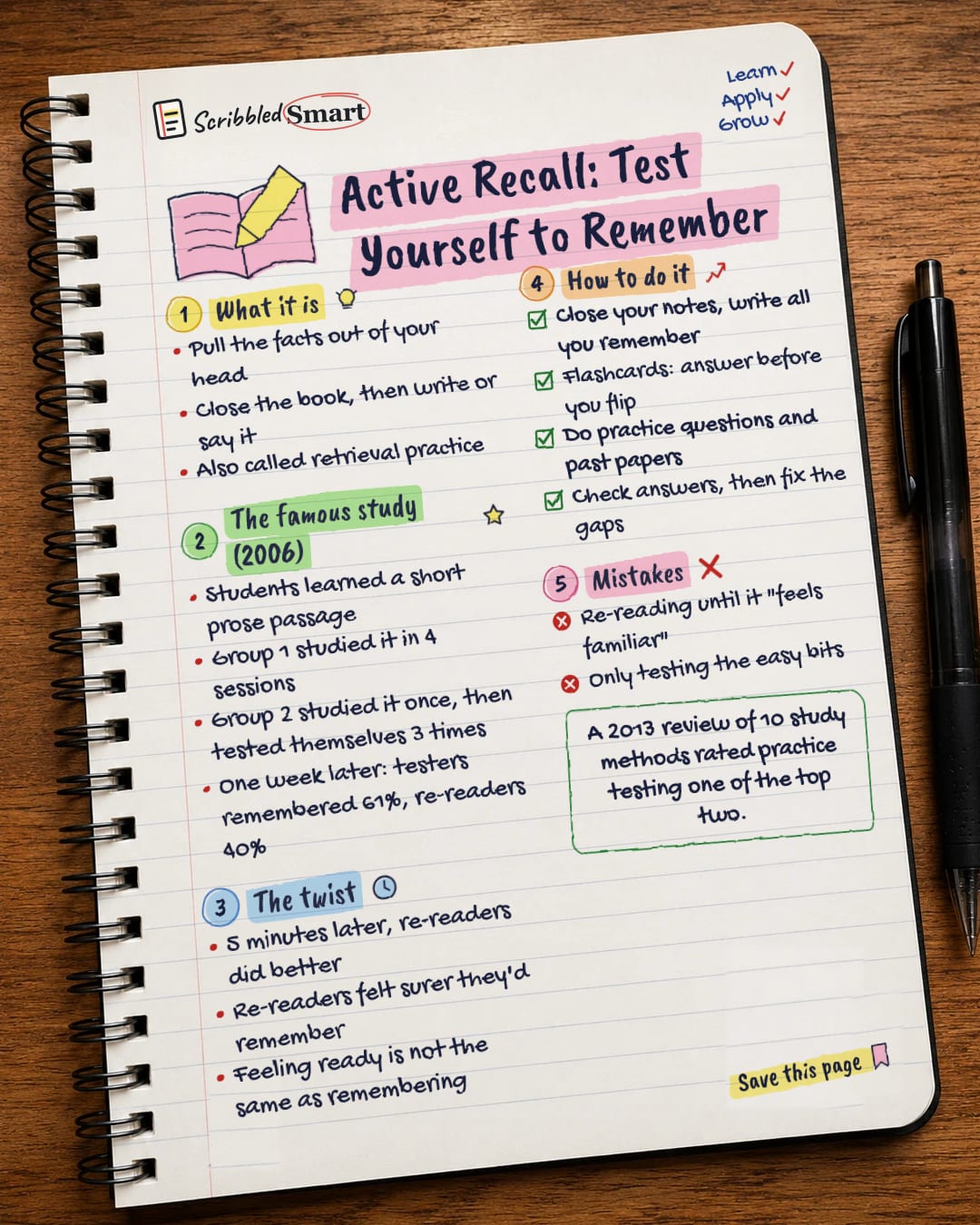
What it is
- Pull the facts out of your head
- Close the book, then write or say it
- Also called retrieval practice
The famous study (2006)
- Students learned a short prose passage
- Group 1 studied it in 4 sessions
- Group 2 studied it once, then tested themselves 3 times
- One week later: testers remembered 61%, re-readers 40%
The twist
- 5 minutes later, re-readers did better
- Re-readers felt surer they'd remember
- Feeling ready is not the same as remembering
How to do it
- Close your notes, write all you remember
- Flashcards: answer before you flip
- Do practice questions and past papers
- Check answers, then fix the gaps
Mistakes
- Re-reading until it "feels familiar"
- Only testing the easy bits
Sources
How we checked this
Every fact on this note comes from the 4 sources listed here, checked against official or peer-reviewed sources where possible. AI tools help with drafting; a person checks every fact against the sources. How we research
Spotted a mistake? Tell us and we'll fix it and log it on the corrections page.


