
Study One-page note
Spaced Repetition: Study Less, Remember More
Cramming feels efficient. Your memory disagrees. Here's how to space it out. Save this page.
What's on the page
The note as text, so you can read it, copy it or use a screen reader.
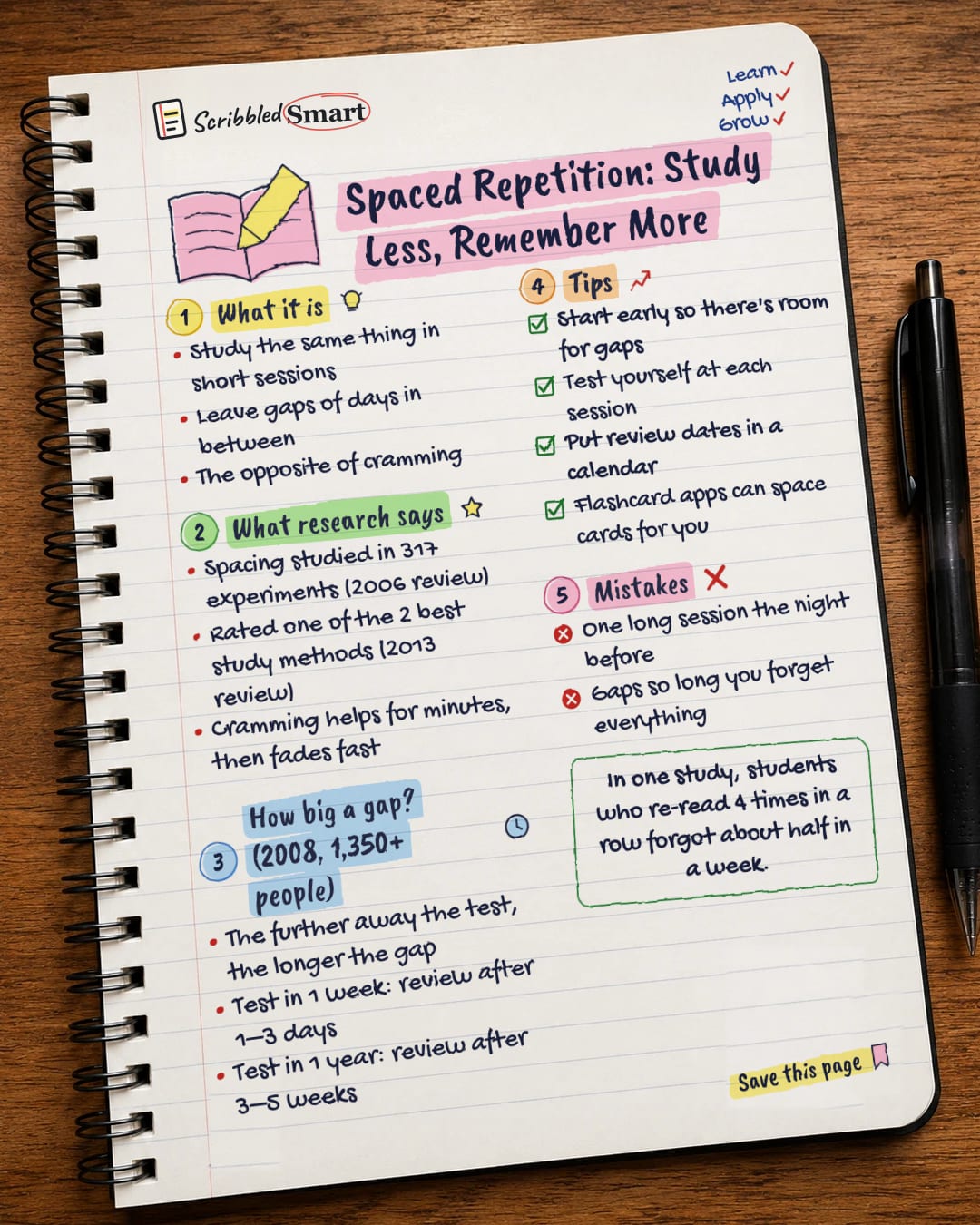
What it is
- Study the same thing in short sessions
- Leave gaps of days in between
- The opposite of cramming
What research says
- Spacing studied in 317 experiments (2006 review)
- Rated one of the 2 best study methods (2013 review)
- Cramming helps for minutes, then fades fast
How big a gap? (2008, 1,350+ people)
- The further away the test, the longer the gap
- Test in 1 week: review after 1–3 days
- Test in 1 year: review after 3–5 weeks
Tips
- Start early so there's room for gaps
- Test yourself at each session
- Put review dates in a calendar
- Flashcard apps can space cards for you
Mistakes
- One long session the night before
- Gaps so long you forget everything
Sources
How we checked this
Every fact on this note comes from the 4 sources listed here, checked against official or peer-reviewed sources where possible. AI tools help with drafting; a person checks every fact against the sources. How we research
Spotted a mistake? Tell us and we'll fix it and log it on the corrections page.


