
Study One-page note
The Feynman Technique: What Science Says
The Feynman technique is everywhere online. Here's what the research actually backs up. Save this page.
What's on the page
The note as text, so you can read it, copy it or use a screen reader.
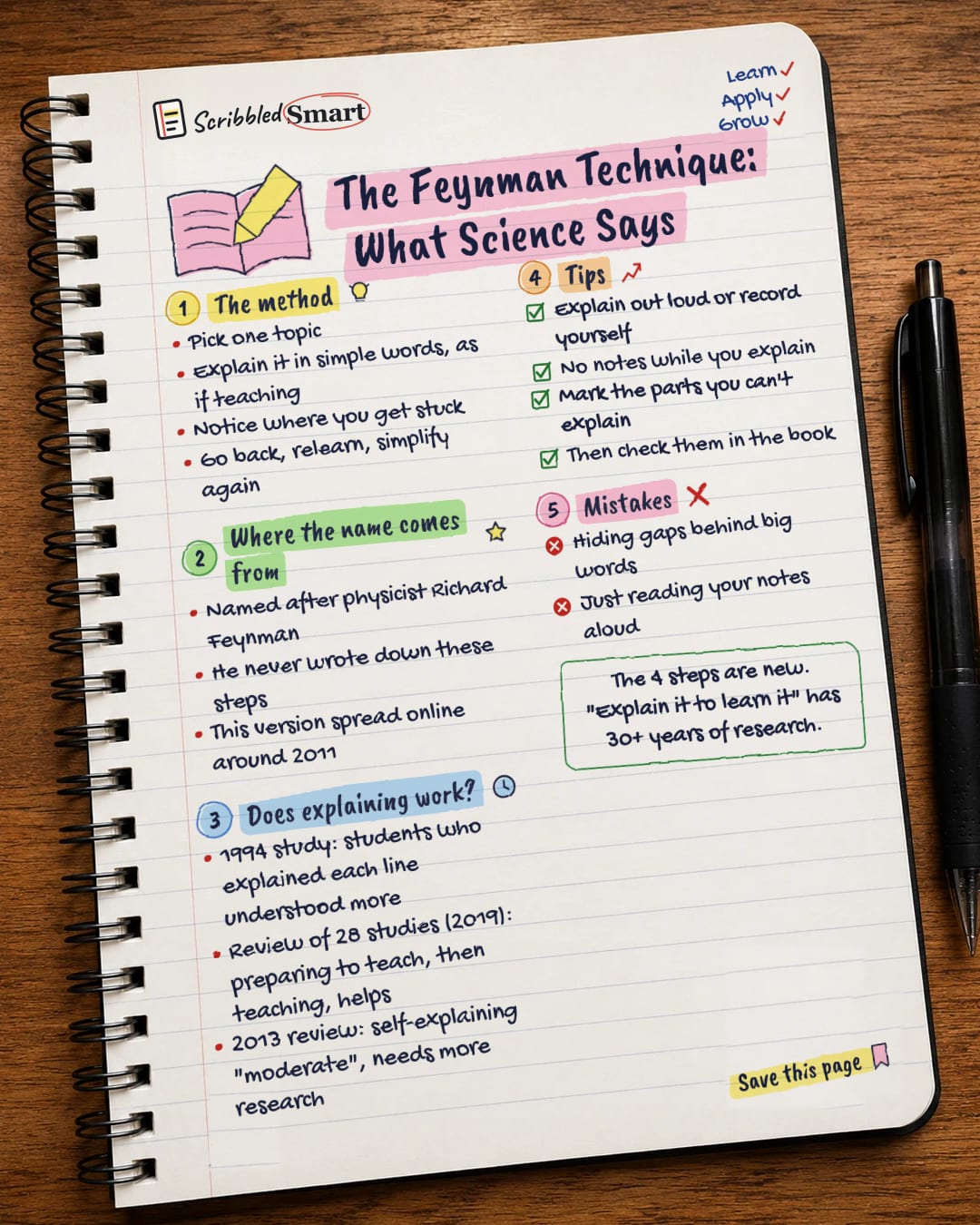
The method
- Pick one topic
- Explain it in simple words, as if teaching
- Notice where you get stuck
- Go back, relearn, simplify again
Where the name comes from
- Named after physicist Richard Feynman
- He never wrote down these steps
- This version spread online around 2011
Does explaining work?
- 1994 study: students who explained each line understood more
- Review of 28 studies (2019): preparing to teach, then teaching, helps
- 2013 review: self-explaining "moderate", needs more research
Tips
- Explain out loud or record yourself
- No notes while you explain
- Mark the parts you can't explain
- Then check them in the book
Mistakes
- Hiding gaps behind big words
- Just reading your notes aloud
Sources
How we checked this
Every fact on this note comes from the 4 sources listed here, checked against official or peer-reviewed sources where possible. AI tools help with drafting; a person checks every fact against the sources. How we research
Spotted a mistake? Tell us and we'll fix it and log it on the corrections page.


