
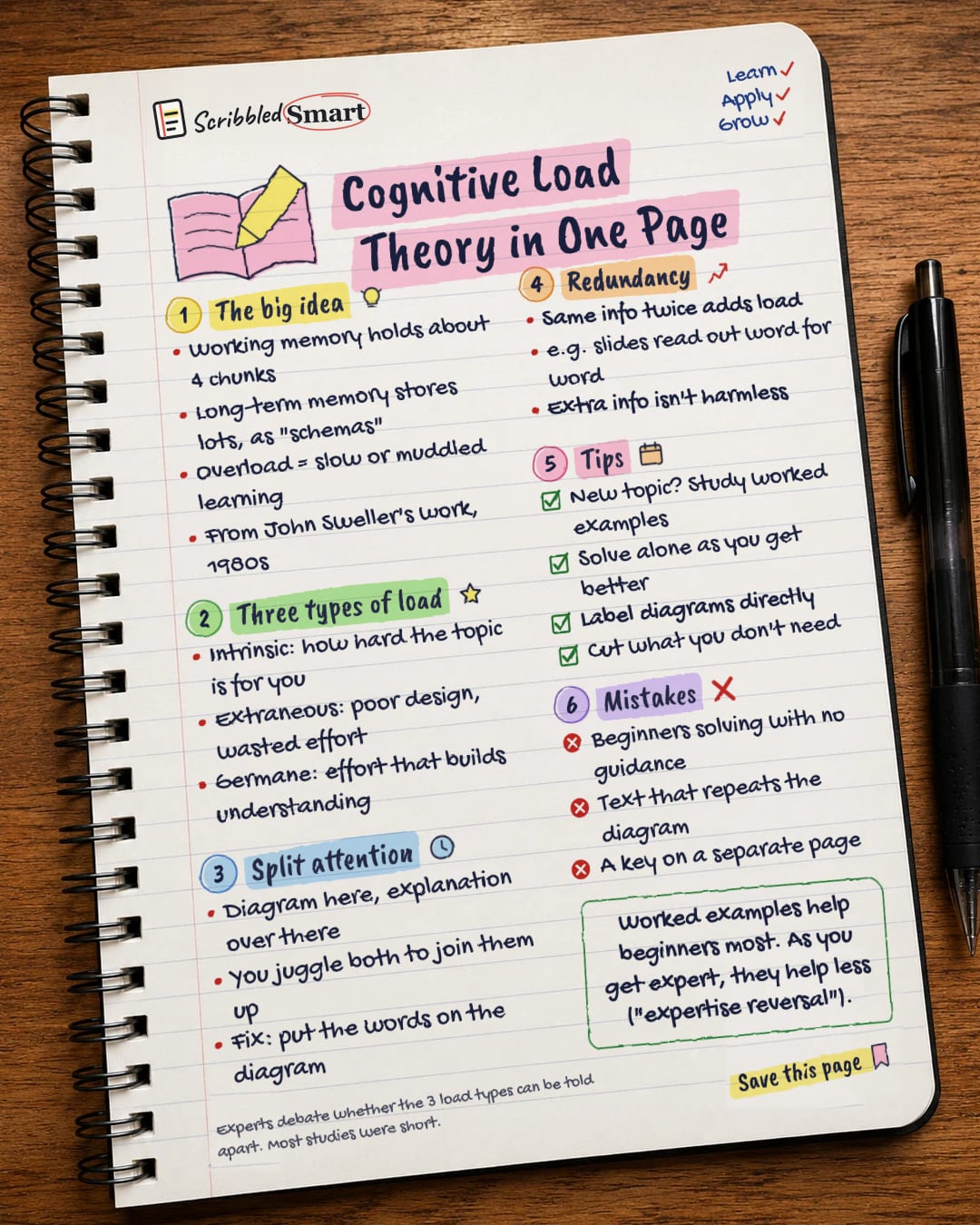
Study One-page note
Cognitive Load Theory in One Page
Your brain can only juggle about 4 things at once. Here's how to stop overloading it when you study. Save this page.
Good to know
Experts debate whether the 3 load types can be told apart. Most studies were short.
What's on the page
The note as text, so you can read it, copy it or use a screen reader.
The big idea
- Working memory holds about 4 chunks
- Long-term memory stores lots, as "schemas"
- Overload = slow or muddled learning
- From John Sweller's work, 1980s
Three types of load
- Intrinsic: how hard the topic is for you
- Extraneous: poor design, wasted effort
- Germane: effort that builds understanding
Split attention
- Diagram here, explanation over there
- You juggle both to join them up
- Fix: put the words on the diagram
Redundancy
- Same info twice adds load
- e.g. slides read out word for word
- Extra info isn't harmless
Tips
- New topic? Study worked examples
- Solve alone as you get better
- Label diagrams directly
- Cut what you don't need
Mistakes
- Beginners solving with no guidance
- Text that repeats the diagram
- A key on a separate page
Sources
How we checked this
Every fact on this note comes from the 3 sources listed here, checked against official or peer-reviewed sources where possible. AI tools help with drafting; a person checks every fact against the sources. How we research
Spotted a mistake? Tell us and we'll fix it and log it on the corrections page.


