
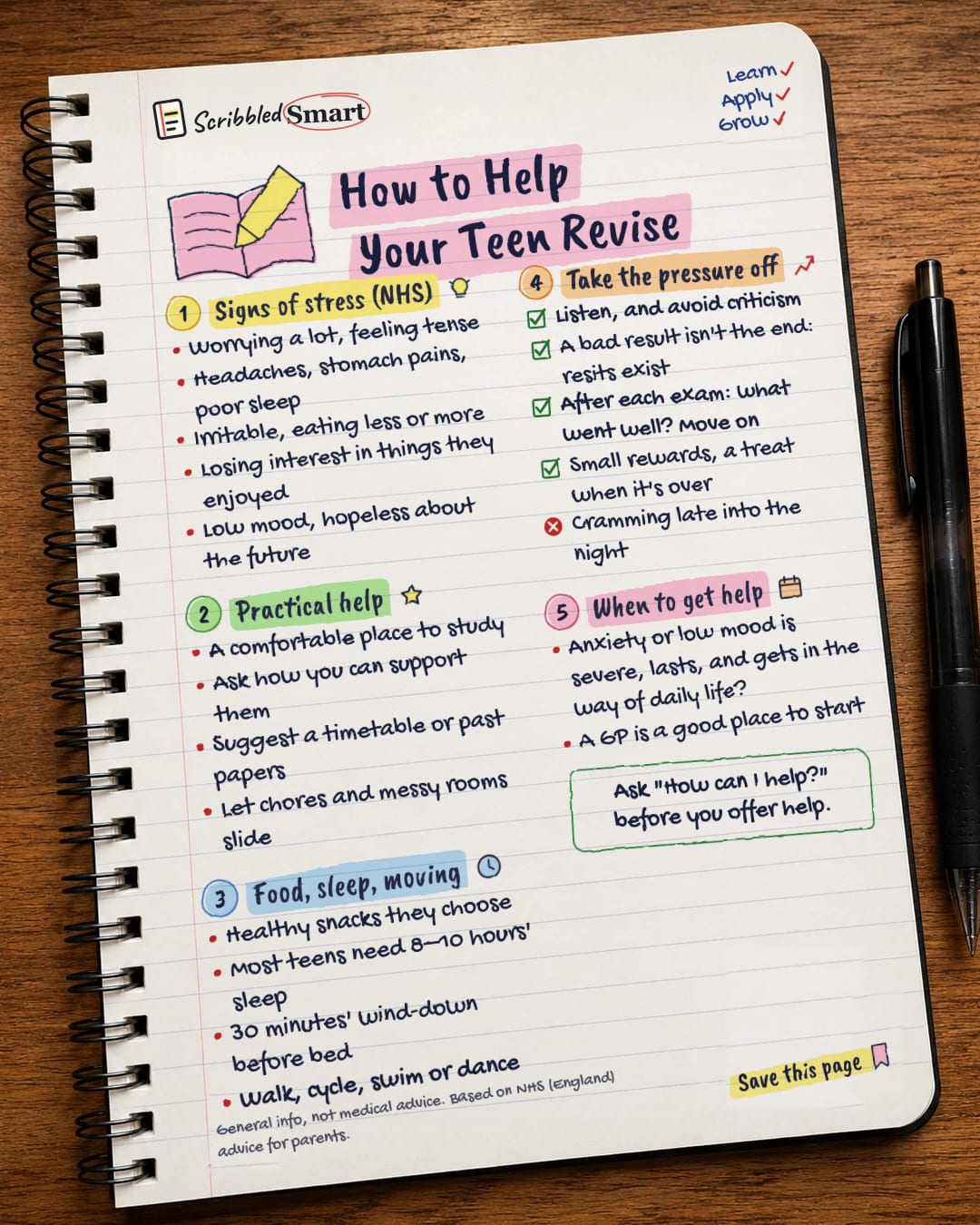
Study One-page note
How to Help Your Teen Revise
Your teen has exams. Here's how to help without adding pressure, from NHS advice for parents. Save this page.
Good to know
General info, not medical advice. Based on NHS (England) advice for parents.
What's on the page
The note as text, so you can read it, copy it or use a screen reader.
Signs of stress (NHS)
- Worrying a lot, feeling tense
- Headaches, stomach pains, poor sleep
- Irritable, eating less or more
- Losing interest in things they enjoyed
- Low mood, hopeless about the future
Practical help
- A comfortable place to study
- Ask how you can support them
- Suggest a timetable or past papers
- Let chores and messy rooms slide
Food, sleep, moving
- Healthy snacks they choose
- Most teens need 8–10 hours' sleep
- 30 minutes' wind-down before bed
- Walk, cycle, swim or dance
Take the pressure off
- Listen, and avoid criticism
- A bad result isn't the end: resits exist
- After each exam: what went well? Move on
- Small rewards, a treat when it's over
- Cramming late into the night
When to get help
- Anxiety or low mood is severe, lasts, and gets in the way of daily life?
- A GP is a good place to start
Sources
How we checked this
Every fact on this note comes from the 1 sources listed here, checked against official or peer-reviewed sources where possible. AI tools help with drafting; a person checks every fact against the sources. How we research
Spotted a mistake? Tell us and we'll fix it and log it on the corrections page.


