
AI & Tech One-page note UK only
How Contactless Payments Work
Tap, beep, done. But what actually happens, and is paying by phone safer than by card? Contactless explained, including the UK limit change. Save this page.
Good to know
UK. Limits vary by bank: check yours. Fraud you didn't authorise must be refunded. General info, not financial advice. Checked Nov 2026.
What's on the page
The note as text, so you can read it, copy it or use a screen reader.
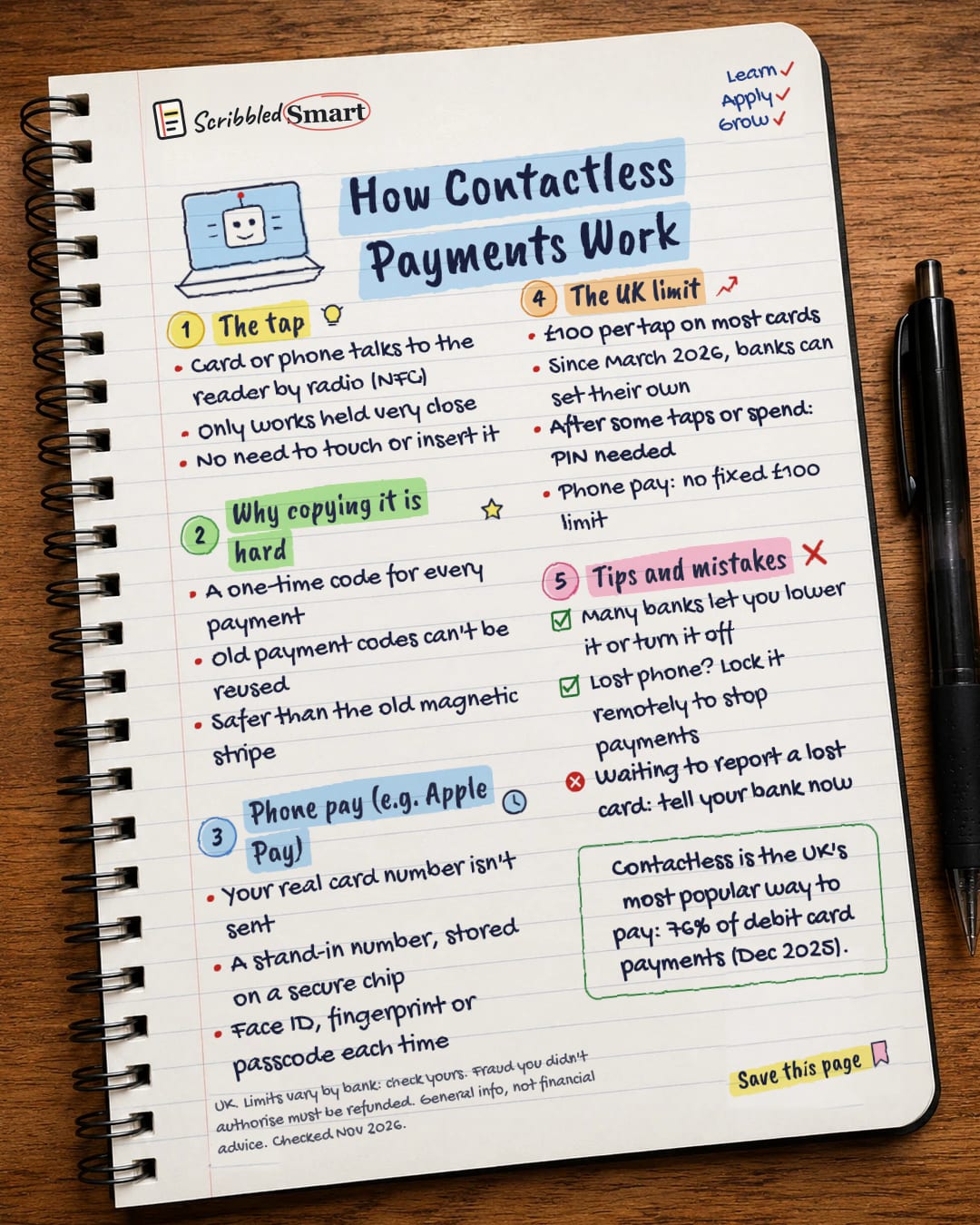
The tap
- Card or phone talks to the reader by radio (NFC)
- Only works held very close
- No need to touch or insert it
Why copying it is hard
- A one-time code for every payment
- Old payment codes can't be reused
- Safer than the old magnetic stripe
Phone pay (e.g. Apple Pay)
- Your real card number isn't sent
- A stand-in number, stored on a secure chip
- Face ID, fingerprint or passcode each time
The UK limit
- £100 per tap on most cards
- Since March 2026, banks can set their own
- After some taps or spend: PIN needed
- Phone pay: no fixed £100 limit
Tips and mistakes
- Many banks let you lower it or turn it off
- Lost phone? Lock it remotely to stop payments
- Waiting to report a lost card: tell your bank now
Sources
- FCA: Greater flexibility to be given in setting future contactless limits (19 Dec 2025)
- UK Finance: Contactless cards information
- EMVCo: Contactless
- Apple Support: Apple Pay security and privacy overview
- Apple Platform Security: Apple Pay component security
- MacRumors: Next NFC release will quadruple range (17 Jun 2025)
How we checked this
Every fact on this note comes from the 6 sources listed here, checked against official or peer-reviewed sources where possible. AI tools help with drafting; a person checks every fact against the sources. How we research
Spotted a mistake? Tell us and we'll fix it and log it on the corrections page.


