
General knowledge One-page note
The Human Skeleton: 206 Bones
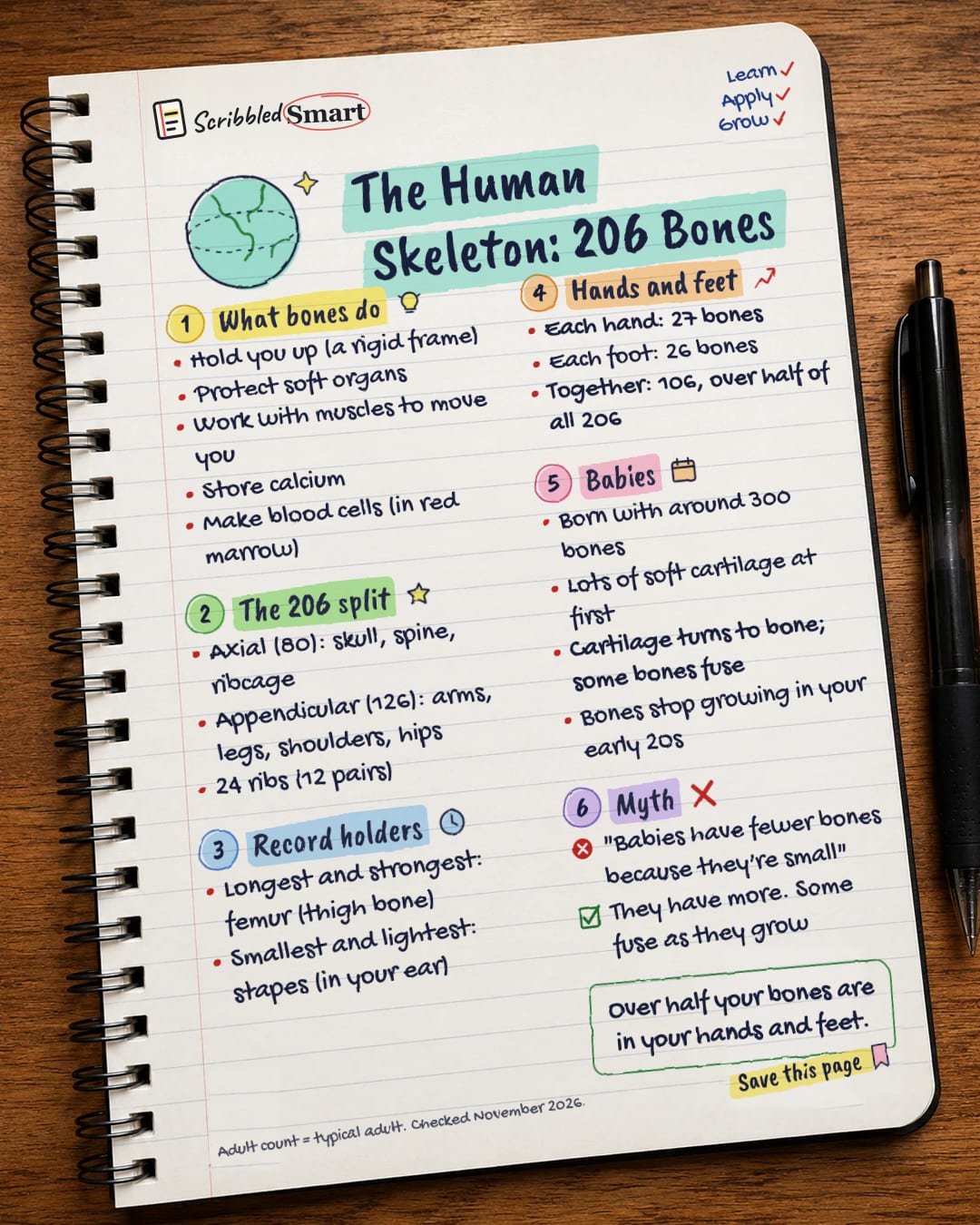
You have 206 bones, but you were born with around 300. The skeleton in one page. Save this page.
Good to know
Adult count = typical adult. Checked November 2026.
What's on the page
The note as text, so you can read it, copy it or use a screen reader.
What bones do
- Hold you up (a rigid frame)
- Protect soft organs
- Work with muscles to move you
- Store calcium
- Make blood cells (in red marrow)
The 206 split
- Axial (80): skull, spine, ribcage
- Appendicular (126): arms, legs, shoulders, hips
- 24 ribs (12 pairs)
Record holders
- Longest and strongest: femur (thigh bone)
- Smallest and lightest: stapes (in your ear)
Hands and feet
- Each hand: 27 bones
- Each foot: 26 bones
- Together: 106, over half of all 206
Babies
- Born with around 300 bones
- Lots of soft cartilage at first
- Cartilage turns to bone; some bones fuse
- Bones stop growing in your early 20s
Myth
- "Babies have fewer bones because they're small"
- They have more. Some fuse as they grow
Sources
- National Cancer Institute SEER Training Modules: Introduction to the skeletal system
- NCI SEER Training: Axial skeleton (80 bones)
- NCI SEER Training: Bone development & growth
- StatPearls (NCBI Bookshelf): Anatomy, Appendicular skeleton
- Kenhub: Bones of the human body: overview and anatomy
- Kenhub: Stapes
- Healthline: How many bones does a baby have?
- Britannica: Human skeleton facts (search summary only)
How we checked this
Every fact on this note comes from the 8 sources listed here, checked against official or peer-reviewed sources where possible. AI tools help with drafting; a person checks every fact against the sources. How we research
Spotted a mistake? Tell us and we'll fix it and log it on the corrections page.


