
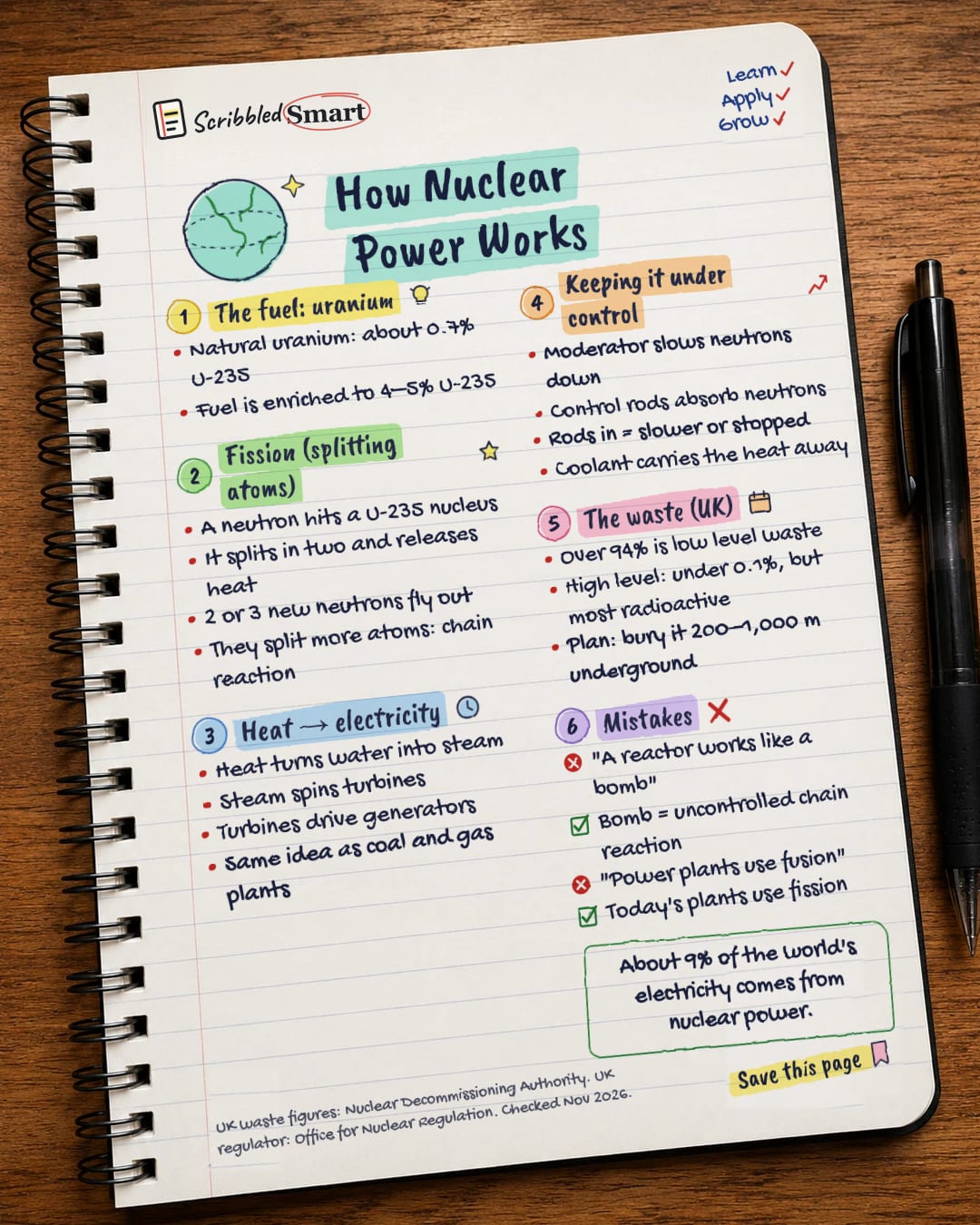
General knowledge One-page note UK only
How Nuclear Power Works
Splitting one atom sets off millions more. Here's how that boils water and lights your home. Save this page.
Good to know
UK waste figures: Nuclear Decommissioning Authority. UK regulator: Office for Nuclear Regulation. Checked Nov 2026.
What's on the page
The note as text, so you can read it, copy it or use a screen reader.
The fuel: uranium
- Natural uranium: about 0.7% U-235
- Fuel is enriched to 4–5% U-235
Fission (splitting atoms)
- A neutron hits a U-235 nucleus
- It splits in two and releases heat
- 2 or 3 new neutrons fly out
- They split more atoms: chain reaction
Heat → electricity
- Heat turns water into steam
- Steam spins turbines
- Turbines drive generators
- Same idea as coal and gas plants
Keeping it under control
- Moderator slows neutrons down
- Control rods absorb neutrons
- Rods in = slower or stopped
- Coolant carries the heat away
The waste (UK)
- Over 94% is low level waste
- High level: under 0.1%, but most radioactive
- Plan: bury it 200–1,000 m underground
Mistakes
- "A reactor works like a bomb"
- Bomb = uncontrolled chain reaction
- "Power plants use fusion"
- Today's plants use fission
Sources
- World Nuclear Association: What is Uranium? How Does it Work?
- World Nuclear Association: Nuclear Power Reactors (updated 5 Aug 2026)
- AQA: GCSE Physics (8463) specification, 4.4 Atomic structure
- Nuclear Decommissioning Authority blog: How much radioactive waste is there in the UK? (8 Jan 2023)
- GOV.UK (Nuclear Waste Services): GDF (Geological Disposal Facility)
- Office for Nuclear Regulation: About us
- World Nuclear Association: Nuclear Power in the United Kingdom
- IAEA: Climate Change and Nuclear Power reports
How we checked this
Every fact on this note comes from the 8 sources listed here, checked against official or peer-reviewed sources where possible. AI tools help with drafting; a person checks every fact against the sources. How we research
Spotted a mistake? Tell us and we'll fix it and log it on the corrections page.


