
Money One-page note
The 50/30/20 Budget Rule
A popular budget rule: 3 pots, 3 numbers. Which pot is hardest for you? Save this page.
Good to know
General info, not financial advice.
What's on the page
The note as text, so you can read it, copy it or use a screen reader.
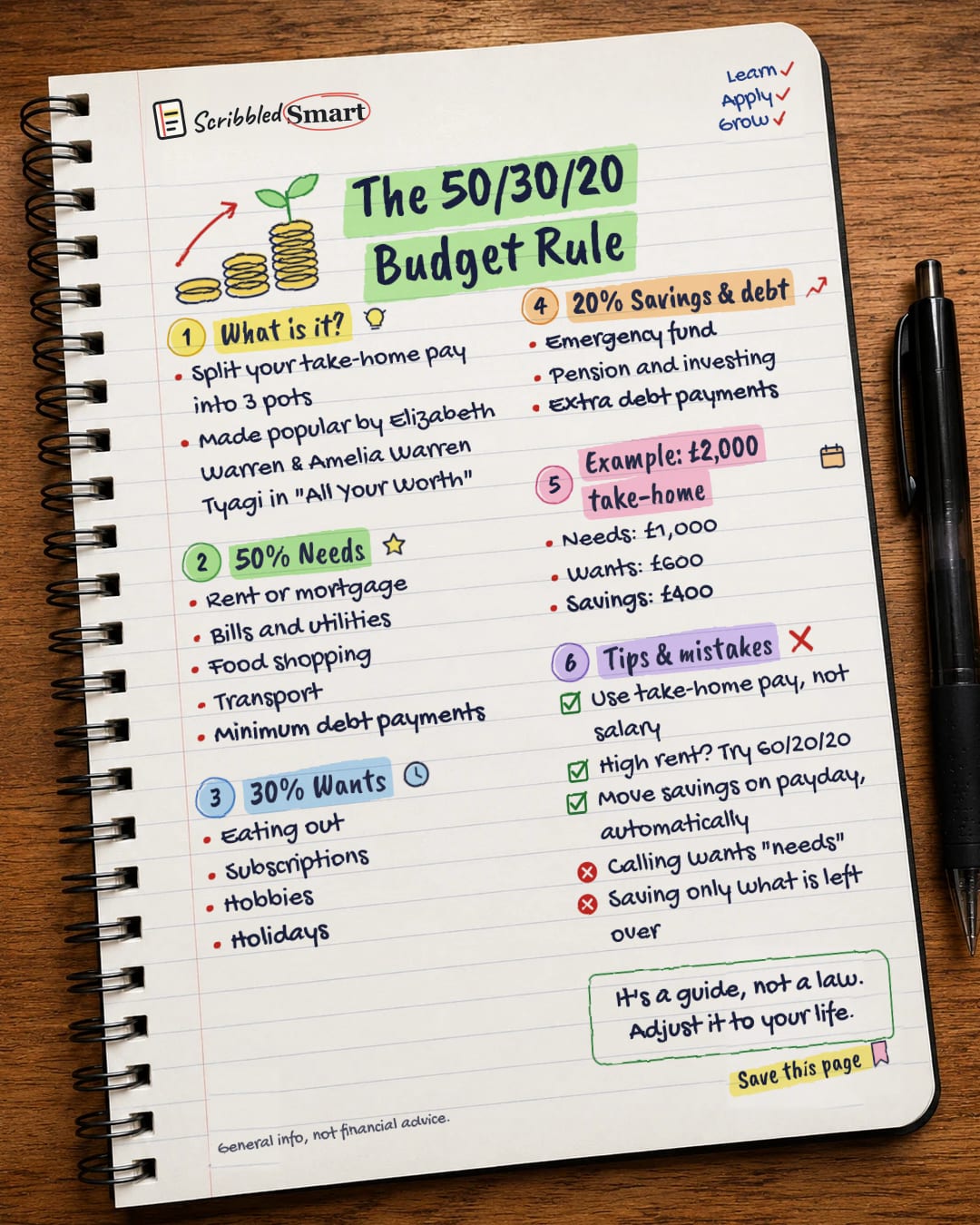
What is it?
- Split your take-home pay into 3 pots
- Made popular by Elizabeth Warren & Amelia Warren Tyagi in "All Your Worth"
50% Needs
- Rent or mortgage
- Bills and utilities
- Food shopping
- Transport
- Minimum debt payments
30% Wants
- Eating out
- Subscriptions
- Hobbies
- Holidays
20% Savings & debt
- Emergency fund
- Pension and investing
- Extra debt payments
Example: £2,000 take-home
- Needs: £1,000
- Wants: £600
- Savings: £400
Tips & mistakes
- Use take-home pay, not salary
- High rent? Try 60/20/20
- Move savings on payday, automatically
- Calling wants "needs"
- Saving only what is left over
Sources
- Financial Advice Working Group for HM Treasury and the FCA: Rules of Thumb and Nudges (2017)
- Fox Business: What is the 50/30/20 budget rule?
- InCharge: The 50/30/20 Rule for Budgeting
- Bankrate: What is the 50/30/20 rule?
- SoFi: 50/30/20 Budget Rule
- Acorns: 50/30/20 budget rule
- SuperMoney: 50/30/20 Rule
- Money.ca: 50-30-20 Budgeting Rule
How we checked this
Every fact on this note comes from the 8 sources listed here, checked against official or peer-reviewed sources where possible. AI tools help with drafting; a person checks every fact against the sources. How we research
Spotted a mistake? Tell us and we'll fix it and log it on the corrections page.


