
On this page
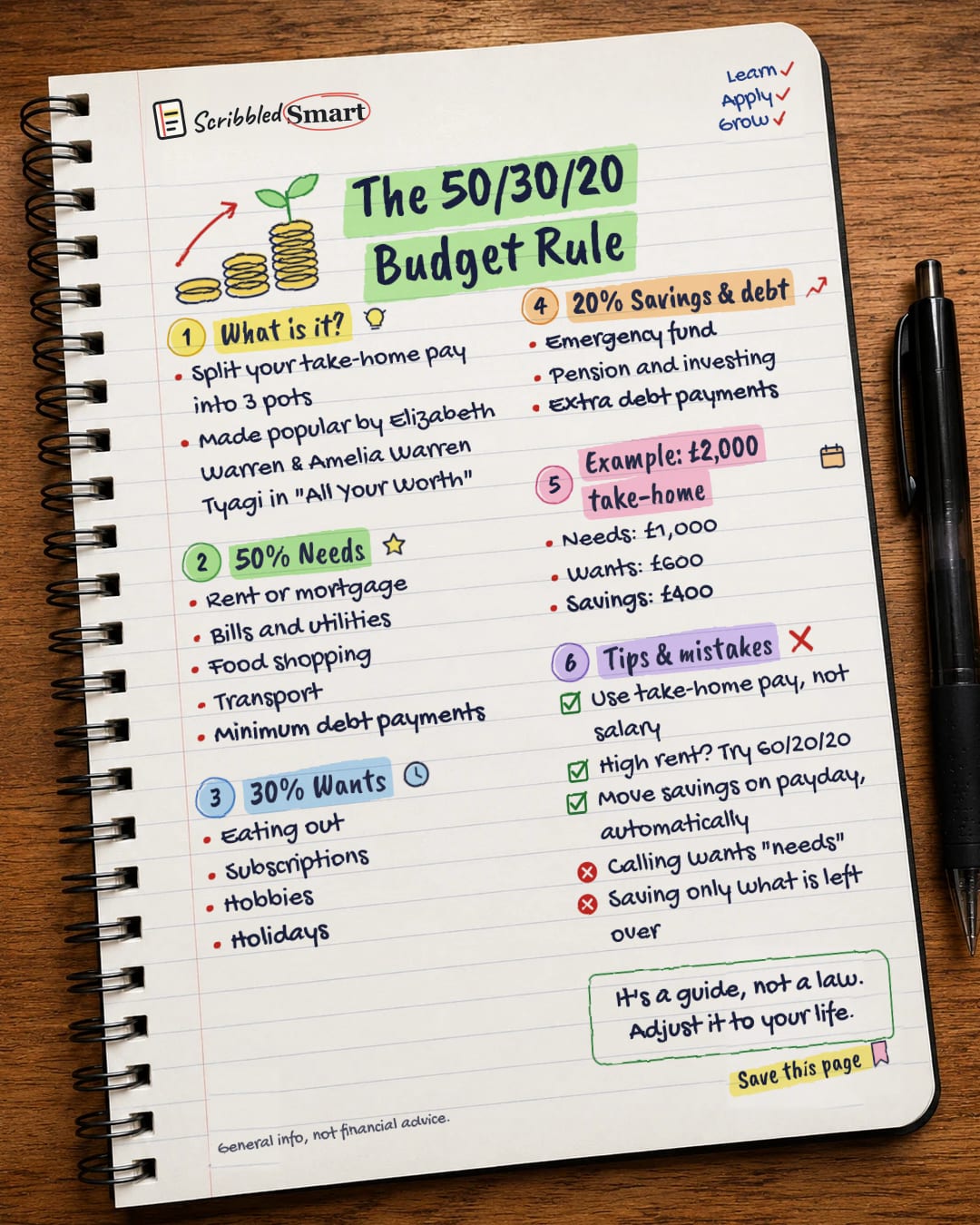
The 50/30/20 budget rule splits your take-home pay into three pots: 50% for needs, 30% for wants and 20% for savings and paying off debt. You only track three categories instead of dozens, which makes it a popular starting point. Here's what goes in each pot, a worked example, and how to adjust it when your life doesn't fit the numbers.
Where does the 50/30/20 rule come from?
The rule was made popular by Elizabeth Warren and Amelia Warren Tyagi in their book All Your Worth: The Ultimate Lifetime Money Plan. Sources give the publication year as either 2005 or 2006, so we leave the exact year out.
The idea is not to track every coffee. You decide how big each of the three pots should be, then keep each pot within its limit.
How does the 50/30/20 budget rule work?
Start with the money that actually reaches your bank account each month. That's your take-home pay: what's left after tax and other deductions. Budgeting guides like InCharge, SoFi, Bankrate and Acorns all agree the percentages apply to after-tax income. Not sure what yours is? Our guide to reading your UK payslip explains gross and net pay.
50% for needs
Needs are the things you must pay to live and work:
- Rent or mortgage
- Bills and utilities
- Food shopping
- Transport
Guides such as Fox Business and InCharge also put essential healthcare costs here.
30% for wants
Wants make life enjoyable, but you could cut them if you had to:
- Eating out
- Subscriptions
- Hobbies
- Holidays and travel
20% for savings and debt
This pot builds your future:
- An emergency fund for surprises
- Pension and investing
- Extra debt payments, above the minimum
If you're paying off debts, this 20% is where faster repayment comes from. Our guide to the avalanche and snowball methods shows two ways to aim it.
A worked example: £2,000 take-home pay
| Pot | Share | Amount |
|---|---|---|
| Needs | 50% | £1,000 |
| Wants | 30% | £600 |
| Savings & debt | 20% | £400 |
That's it. If your needs come to £1,150, you're over by £150. You can trim wants or look for ways to bring a bill down.
Does the 50/30/20 rule actually work?
Its appeal is that you track 3 categories instead of dozens, and saving is built into the plan from day one instead of being whatever is left at the end of the month.
It has critics too. In 2017 a working group for HM Treasury and the FCA listed 50/30/20 as one of the UK's existing money rules of thumb, then judged it "difficult to remember and hard to put in practice", adding that it "ignores high availability of credit". It also said rules like this "are only relevant to specific life stages or circumstances". So treat the split as a starting point to adjust, not a test you pass or fail.
When should you change the split?
The 50/30/20 rule is a benchmark, not a strict rule. SoFi and Money.ca both describe it that way. Some common reasons to change it:
High rent or living costs
If you live somewhere with a high cost of living, 50% may not cover your needs. Variations exist, such as 60/20/20: 60% needs, 20% wants, 20% savings (SuperMoney, SoFi). The savings share stays the same. Only the wants pot shrinks.
Irregular income
Freelancers and people on variable hours find fixed percentages harder (SoFi). Two ways to cope:
- Budget from an average month.
- Or budget from your lowest expected income, and save anything extra.
Big student loans or other debts
Big student loans can also mean the classic split doesn't fit. A different split may suit you better for a while.
Tips and common mistakes
Do:
- ✅ Use take-home pay, not salary.
- ✅ High rent? Try 60/20/20.
- ✅ Move your savings on payday, automatically, before you can spend them. The same HM Treasury/FCA working group advises saving "on your pay day rather than at the end of the month", and says people are less likely to opt out of saving when the transfer is automatic.
Avoid:
- ❌ Calling wants "needs". A streaming service is a want, even if it doesn't feel like one.
- ❌ Saving only what's left over. Pay your savings pot first instead.
Small automatic steps are easier to stick to than willpower. Our guide to how habits really form explains why.
FAQ
What is the 50/30/20 rule in simple terms?
The 50/30/20 rule is a budgeting rule of thumb that splits your take-home pay into three parts: 50% for needs like rent, bills, food and transport; 30% for wants like eating out and hobbies; and 20% for savings, investing and extra debt payments. It was made popular by Elizabeth Warren and Amelia Warren Tyagi.
Is the 50/30/20 rule based on gross or net income?
Net income, meaning your take-home pay after tax. Budgeting guides including InCharge, SoFi and Bankrate all apply the percentages to after-tax income. Using your gross salary would make every pot look bigger than the money you actually have.
How do I use the 50/30/20 rule on £2,000 a month?
On £2,000 take-home pay, put £1,000 towards needs, £600 towards wants and £400 into savings or extra debt payments. If your needs cost more than £1,000, cut back on wants first and keep the savings pot as close to 20% as you can.
What if my rent is more than 50% of my income?
Then the classic split won't fit, and that's normal in high-cost areas. A common variation is 60/20/20: 60% needs, 20% wants and 20% savings. The rule is a guide, not a law, so adjust it to your life.
Does the 50/30/20 rule work with irregular income?
It's harder, because fixed percentages need a steady amount. SoFi points out this problem for freelancers. You can work from an average month, or from your lowest expected income and save anything above it.
Related reading
- Emergency fund: your money safety net: where the first savings should go.
- Paying off debt: avalanche vs snowball: how to use the 20% on debt.
- How to read your payslip (UK): find your real take-home pay.
- How habits really form: make saving automatic.
Sources
- Financial Advice Working Group for HM Treasury and the FCA: Rules of Thumb and Nudges (2017)
- Fox Business: What is the 50/30/20 budget rule?
- InCharge: The 50/30/20 Rule for Budgeting
- Bankrate: What is the 50/30/20 rule?
- SoFi: 50/30/20 Budget Rule
- Acorns: 50/30/20 budget rule
- SuperMoney: 50/30/20 Rule
- Money.ca: 50-30-20 Budgeting Rule
Further reading, free UK budgeting help (these pages don't cover the 50/30/20 rule): Citizens Advice: Work out your budget · StepChange: Making a budget plan
How we checked this
Every fact in this article comes from the 8 sources listed above, checked against official or peer-reviewed sources where possible. AI tools help with drafting; a person checks every fact against the sources. How we research
- Published and checked
General info, not financial advice.
Spotted a mistake? Tell us and we'll fix it and log it on the corrections page.


