
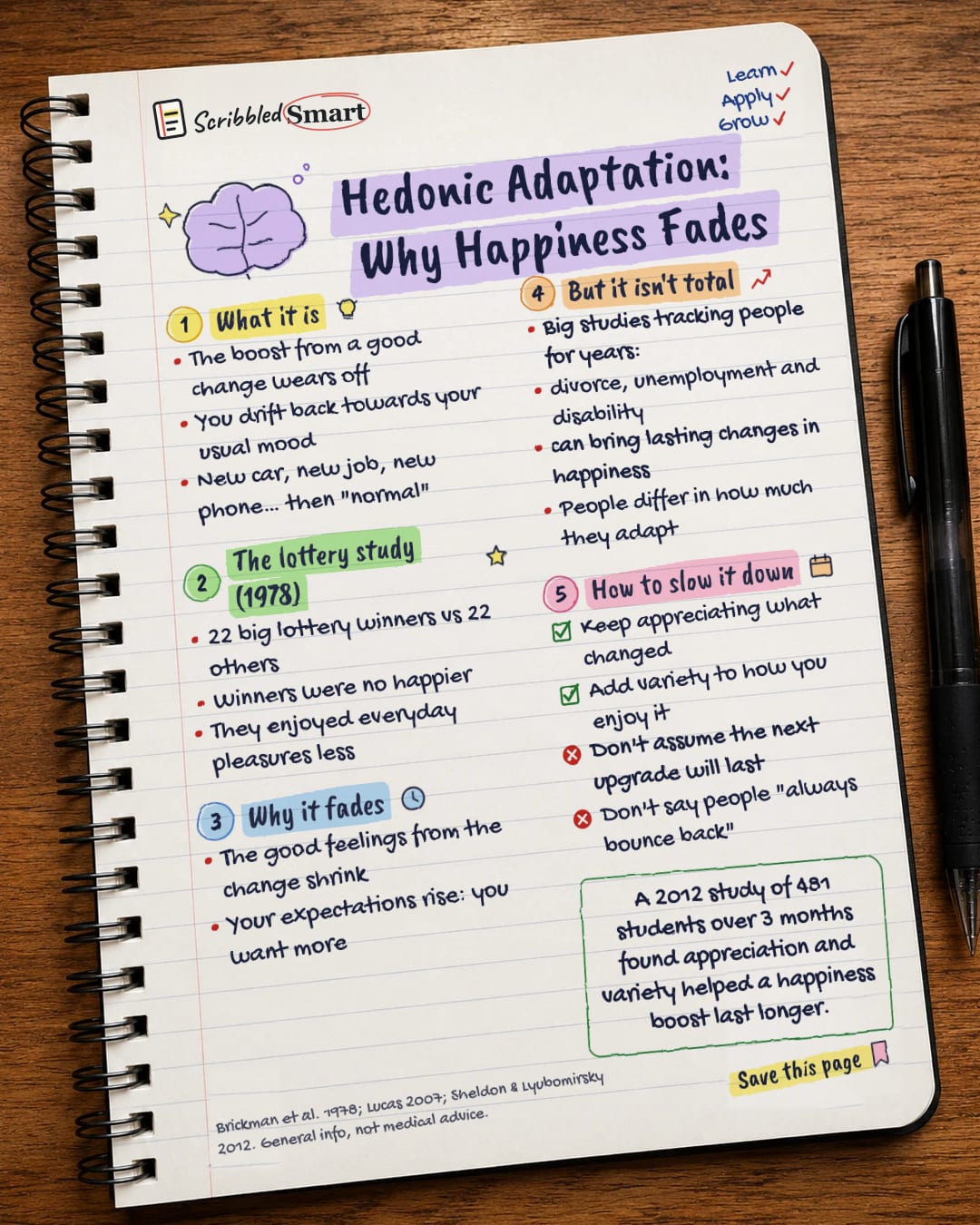
Psychology One-page note
Hedonic Adaptation: Why Happiness Fades
Why does the thrill of something new always wear off? It has a name, and a couple of ways to slow it. Save this page.
Good to know
Brickman et al. 1978; Lucas 2007; Sheldon & Lyubomirsky 2012. General info, not medical advice.
What's on the page
The note as text, so you can read it, copy it or use a screen reader.
What it is
- The boost from a good change wears off
- You drift back towards your usual mood
- New car, new job, new phone… then "normal"
The lottery study (1978)
- 22 big lottery winners vs 22 others
- Winners were no happier
- They enjoyed everyday pleasures less
Why it fades
- The good feelings from the change shrink
- Your expectations rise: you want more
But it isn't total
- Big studies tracking people for years:
- divorce, unemployment and disability
- can bring lasting changes in happiness
- People differ in how much they adapt
How to slow it down
- Keep appreciating what changed
- Add variety to how you enjoy it
- Don't assume the next upgrade will last
- Don't say people "always bounce back"
Sources
- Brickman, P., Coates, D. & Janoff-Bulman, R. (1978): Lottery winners and accident victims: Is happiness relative? JPSP
- Lucas, R. E. (2007): Adaptation and the set-point model of subjective well-being. Current Directions in Psychological Science
- Sheldon, K. M. & Lyubomirsky, S. (2012): The challenge of staying happier. PSPB
How we checked this
Every fact on this note comes from the 3 sources listed here, checked against official or peer-reviewed sources where possible. AI tools help with drafting; a person checks every fact against the sources. How we research
Spotted a mistake? Tell us and we'll fix it and log it on the corrections page.


