
Psychology One-page note
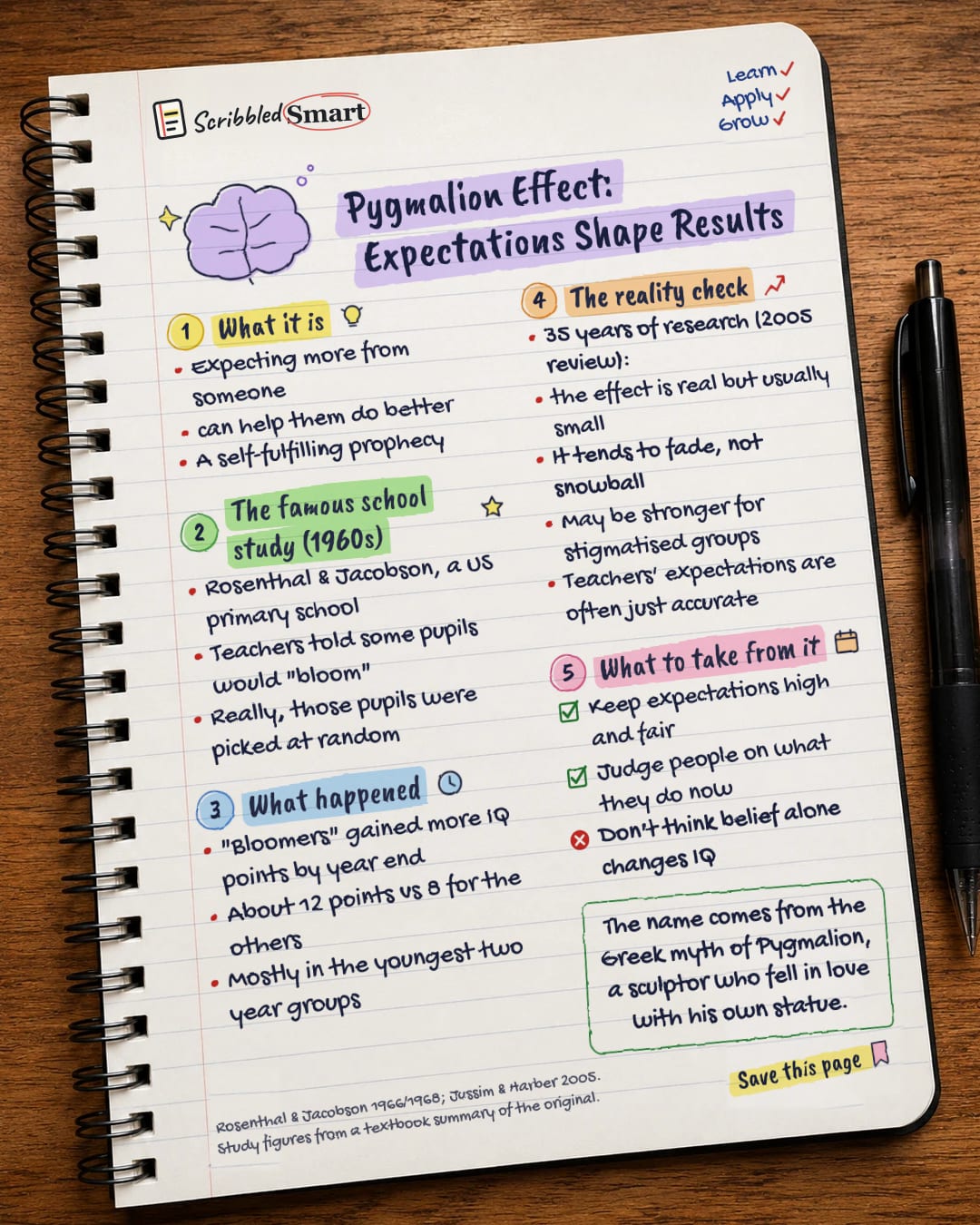
Pygmalion Effect: Expectations Shape Results
Teachers were told some pupils were about to "bloom". They were picked at random. Here's what happened, and why the real effect is smaller than you've heard. Save this page.
Good to know
Rosenthal & Jacobson 1966/1968; Jussim & Harber 2005. Study figures from a textbook summary of the original.
What's on the page
The note as text, so you can read it, copy it or use a screen reader.
What it is
- Expecting more from someone
- can help them do better
- A self-fulfilling prophecy
The famous school study (1960s)
- Rosenthal & Jacobson, a US primary school
- Teachers told some pupils would "bloom"
- Really, those pupils were picked at random
What happened
- "Bloomers" gained more IQ points by year end
- About 12 points vs 8 for the others
- Mostly in the youngest two year groups
The reality check
- 35 years of research (2005 review):
- the effect is real but usually small
- It tends to fade, not snowball
- May be stronger for stigmatised groups
- Teachers' expectations are often just accurate
What to take from it
- Keep expectations high and fair
- Judge people on what they do now
- Don't think belief alone changes IQ
Sources
How we checked this
Every fact on this note comes from the 2 sources listed here, checked against official or peer-reviewed sources where possible. AI tools help with drafting; a person checks every fact against the sources. How we research
Spotted a mistake? Tell us and we'll fix it and log it on the corrections page.


