
Psychology One-page note
How to Apologise Properly
Not all apologies work. Research found the part that matters most, and the one you can skip. Save this page.
Good to know
Lewicki, Polin & Lount 2016. Participants read a work scenario; spoken apologies weren't tested.
What's on the page
The note as text, so you can read it, copy it or use a screen reader.
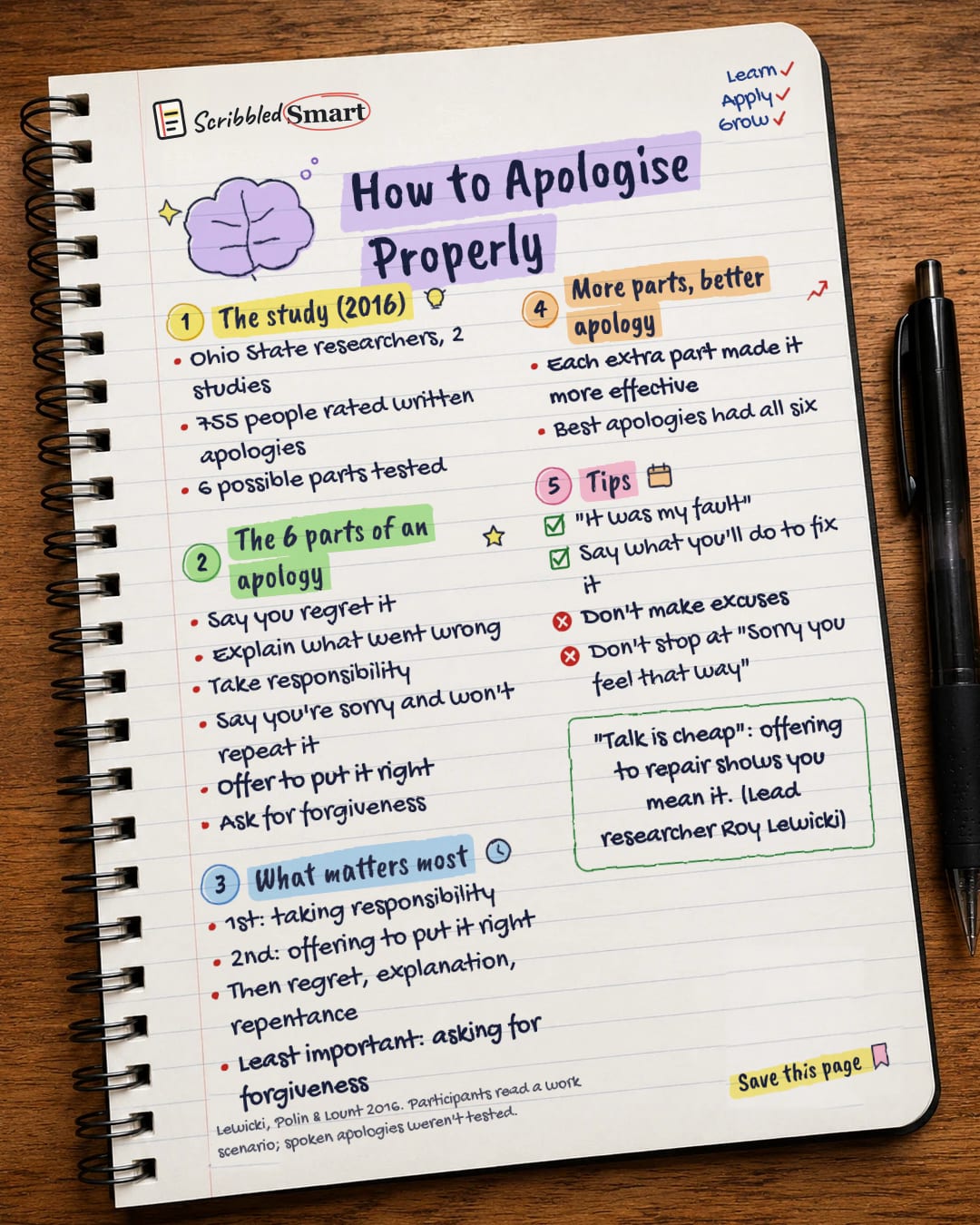
The study (2016)
- Ohio State researchers, 2 studies
- 755 people rated written apologies
- 6 possible parts tested
The 6 parts of an apology
- Say you regret it
- Explain what went wrong
- Take responsibility
- Say you're sorry and won't repeat it
- Offer to put it right
- Ask for forgiveness
What matters most
- 1st: taking responsibility
- 2nd: offering to put it right
- Then regret, explanation, repentance
- Least important: asking for forgiveness
More parts, better apology
- Each extra part made it more effective
- Best apologies had all six
Tips
- "It was my fault"
- Say what you'll do to fix it
- Don't make excuses
- Don't stop at "Sorry you feel that way"
Sources
How we checked this
Every fact on this note comes from the 2 sources listed here, checked against official or peer-reviewed sources where possible. AI tools help with drafting; a person checks every fact against the sources. How we research
Spotted a mistake? Tell us and we'll fix it and log it on the corrections page.


