
Psychology One-page note
Gratitude – What the Research Shows
Gratitude journals are everywhere. Here's what the studies actually found, and how big the effect really is. Save this page.
Good to know
Emmons & McCullough 2003; Davis et al. 2016. General info, not medical advice.
What's on the page
The note as text, so you can read it, copy it or use a screen reader.
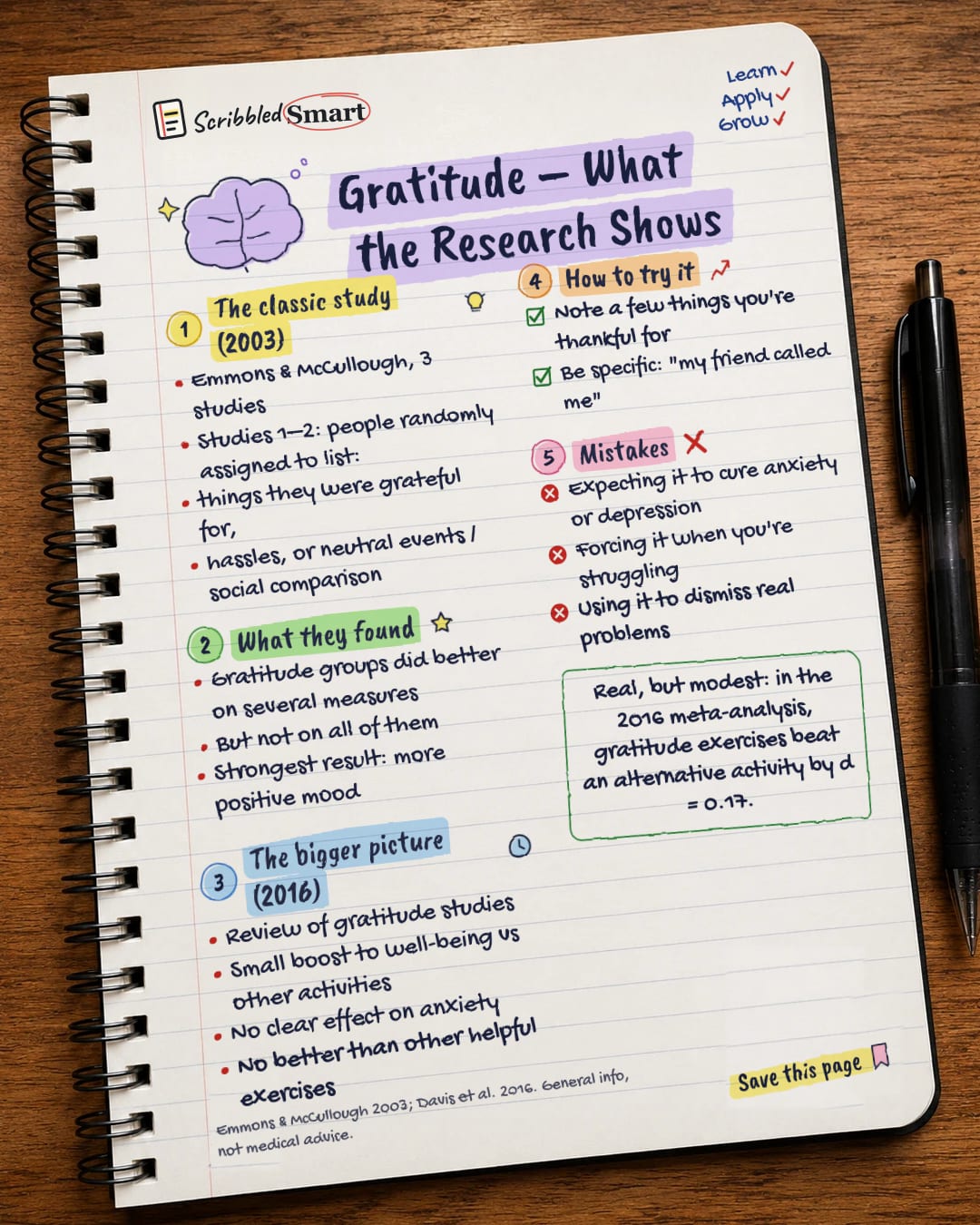
The classic study (2003)
- Emmons & McCullough, 3 studies
- Studies 1–2: people randomly assigned to list:
- things they were grateful for,
- hassles, or neutral events / social comparison
What they found
- Gratitude groups did better on several measures
- But not on all of them
- Strongest result: more positive mood
The bigger picture (2016)
- Review of gratitude studies
- Small boost to well-being vs other activities
- No clear effect on anxiety
- No better than other helpful exercises
How to try it
- Note a few things you're thankful for
- Be specific: "my friend called me"
Mistakes
- Expecting it to cure anxiety or depression
- Forcing it when you're struggling
- Using it to dismiss real problems
Sources
How we checked this
Every fact on this note comes from the 2 sources listed here, checked against official or peer-reviewed sources where possible. AI tools help with drafting; a person checks every fact against the sources. How we research
Spotted a mistake? Tell us and we'll fix it and log it on the corrections page.


