
Psychology One-page note
Shame vs Guilt
"I did a bad thing" and "I am bad" sound similar, but research says they lead to very different places. Save this page.
Good to know
Tangney, Stuewig & Mashek 2007 (Annual Review of Psychology); Lewis 1971. Links, not proof of cause. General info, not medical advice.
What's on the page
The note as text, so you can read it, copy it or use a screen reader.
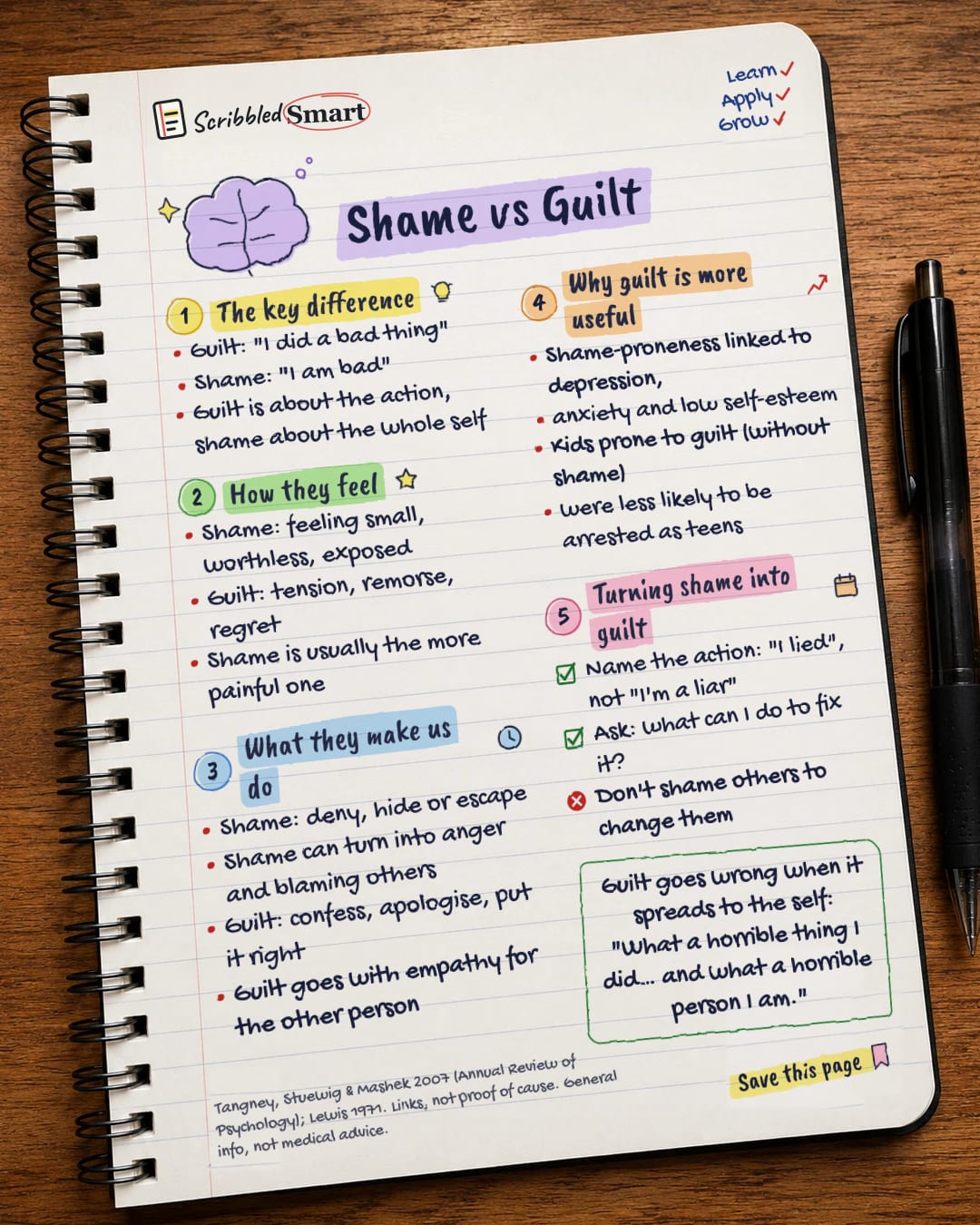
The key difference
- Guilt: "I did a bad thing"
- Shame: "I am bad"
- Guilt is about the action, shame about the whole self
How they feel
- Shame: feeling small, worthless, exposed
- Guilt: tension, remorse, regret
- Shame is usually the more painful one
What they make us do
- Shame: deny, hide or escape
- Shame can turn into anger and blaming others
- Guilt: confess, apologise, put it right
- Guilt goes with empathy for the other person
Why guilt is more useful
- Shame-proneness linked to depression,
- anxiety and low self-esteem
- Kids prone to guilt (without shame)
- were less likely to be arrested as teens
Turning shame into guilt
- Name the action: "I lied", not "I'm a liar"
- Ask: what can I do to fix it?
- Don't shame others to change them
Sources
- Tangney, J. P., Stuewig, J. & Mashek, D. J. (2007): Moral emotions and moral behavior. Annual Review of Psychology
- Lewis, H. B. (1971): Shame and Guilt in Neurosis. International Universities Press (cited via review).
How we checked this
Every fact on this note comes from the 2 sources listed here, checked against official or peer-reviewed sources where possible. AI tools help with drafting; a person checks every fact against the sources. How we research
Spotted a mistake? Tell us and we'll fix it and log it on the corrections page.


