
Psychology One-page note
Shyness vs Social Anxiety
Shy, or something more? Here's how to tell shyness from social anxiety, and where to get help. Save this page.
Good to know
APA Dictionary; Heiser et al. 2003, 2009. General info, not medical advice. NHS talking therapies: England.
What's on the page
The note as text, so you can read it, copy it or use a screen reader.
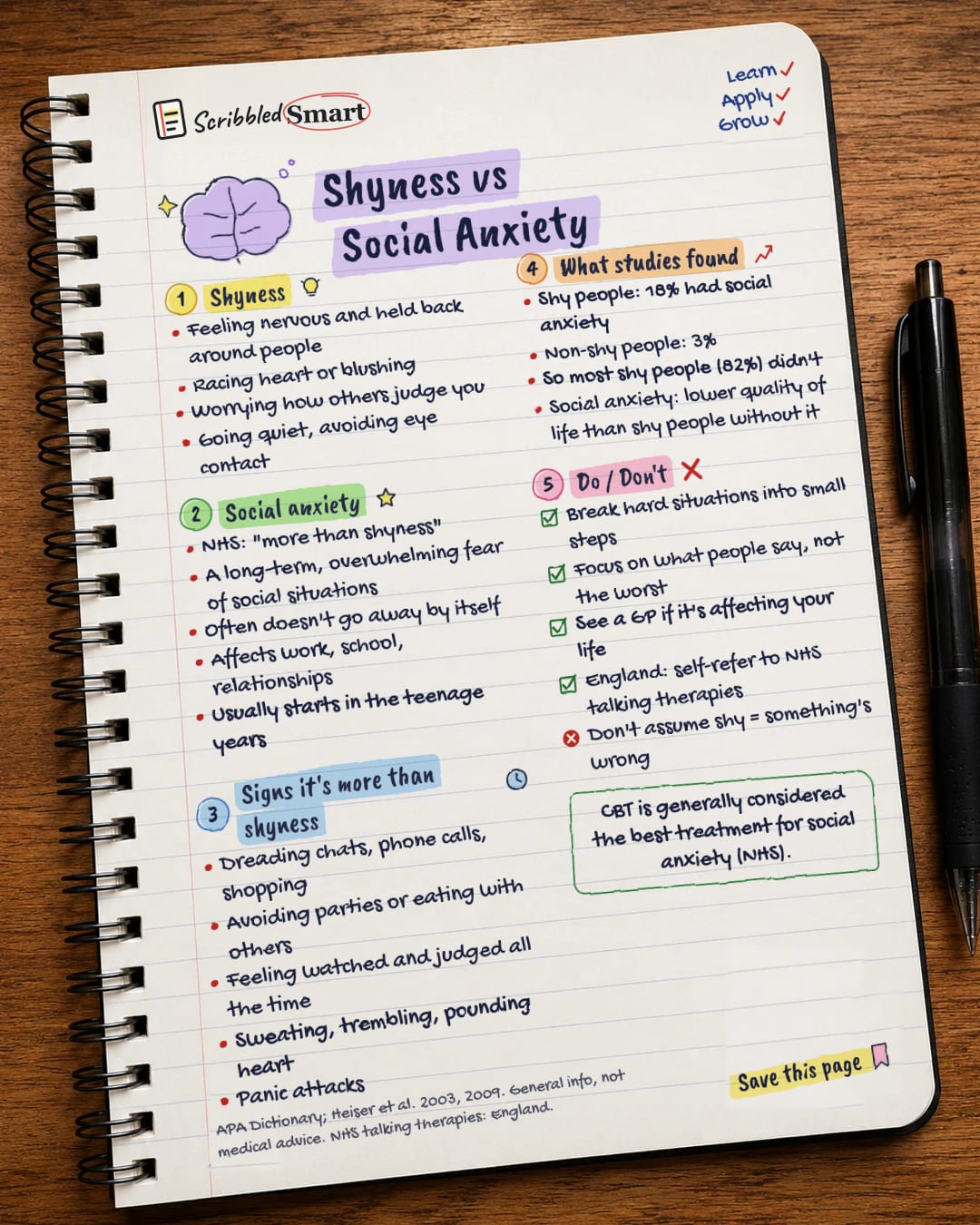
Shyness
- Feeling nervous and held back around people
- Racing heart or blushing
- Worrying how others judge you
- Going quiet, avoiding eye contact
Social anxiety
- NHS: "more than shyness"
- A long-term, overwhelming fear of social situations
- Often doesn't go away by itself
- Affects work, school, relationships
- Usually starts in the teenage years
Signs it's more than shyness
- Dreading chats, phone calls, shopping
- Avoiding parties or eating with others
- Feeling watched and judged all the time
- Sweating, trembling, pounding heart
- Panic attacks
What studies found
- Shy people: 18% had social anxiety
- Non-shy people: 3%
- So most shy people (82%) didn't
- Social anxiety: lower quality of life than shy people without it
Do / Don't
- Break hard situations into small steps
- Focus on what people say, not the worst
- See a GP if it's affecting your life
- England: self-refer to NHS talking therapies
- Don't assume shy = something's wrong
Sources
- NHS: Social anxiety (social phobia)
- APA Dictionary of Psychology: shyness
- Heiser, N. A., Turner, S. M. & Beidel, D. C. (2003): Shyness: relationship to social phobia and other psychiatric disorders. Behaviour Research and Therapy
- Heiser, N. A., Turner, S. M., Beidel, D. C. & Roberson-Nay, R. (2009): Differentiating social phobia from shyness. Journal of Anxiety Disorders
How we checked this
Every fact on this note comes from the 4 sources listed here, checked against official or peer-reviewed sources where possible. AI tools help with drafting; a person checks every fact against the sources. How we research
Spotted a mistake? Tell us and we'll fix it and log it on the corrections page.


