
Study One-page note
Dual Coding: Words Plus Pictures
Dual coding is everywhere in UK classrooms. Here's how to do it right, and what it isn't. Save this page.
Good to know
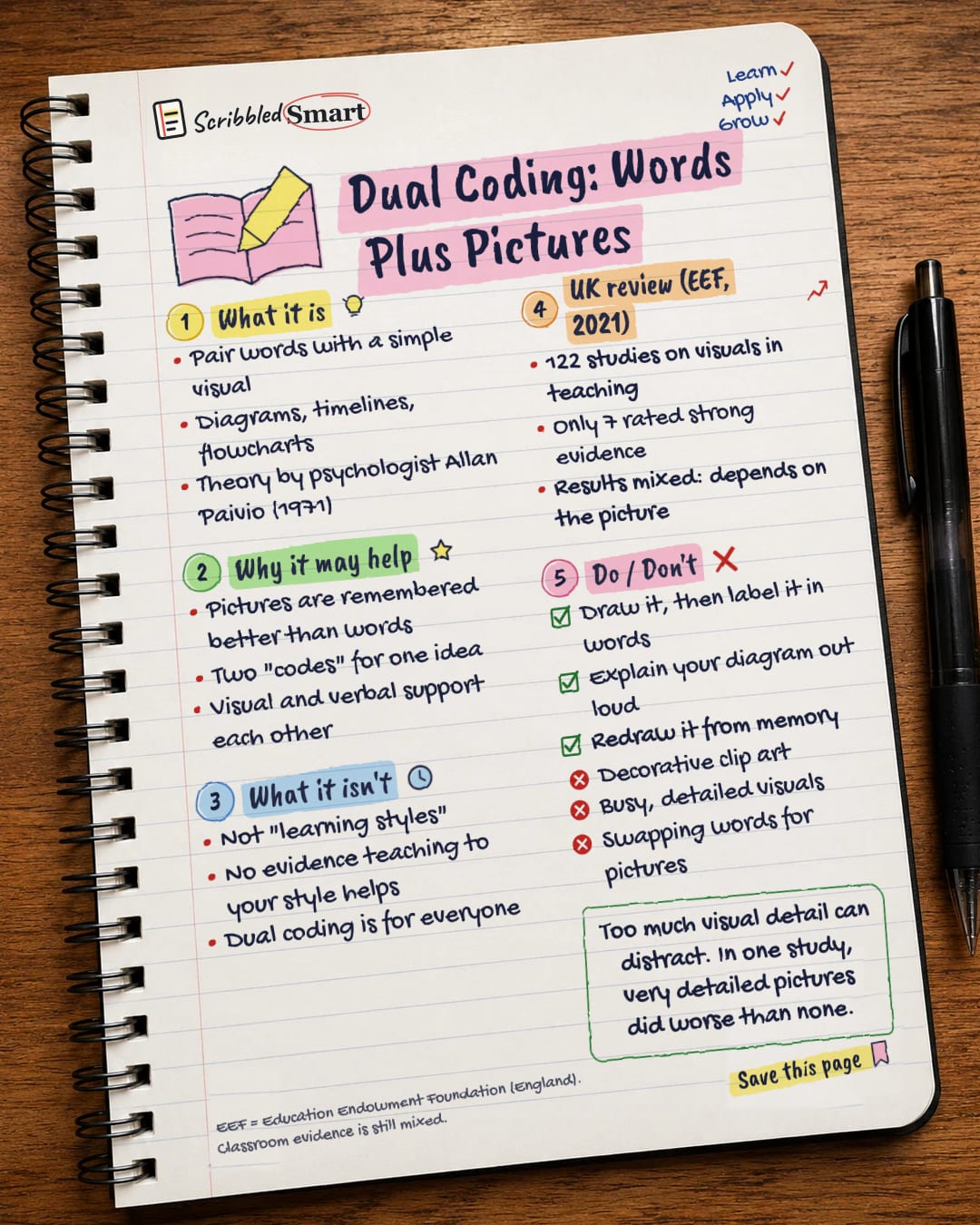
EEF = Education Endowment Foundation (England). Classroom evidence is still mixed.
What's on the page
The note as text, so you can read it, copy it or use a screen reader.
What it is
- Pair words with a simple visual
- Diagrams, timelines, flowcharts
- Theory by psychologist Allan Paivio (1971)
Why it may help
- Pictures are remembered better than words
- Two "codes" for one idea
- Visual and verbal support each other
What it isn't
- Not "learning styles"
- No evidence teaching to your style helps
- Dual coding is for everyone
UK review (EEF, 2021)
- 122 studies on visuals in teaching
- Only 7 rated strong evidence
- Results mixed: depends on the picture
Do / Don't
- Draw it, then label it in words
- Explain your diagram out loud
- Redraw it from memory
- Decorative clip art
- Busy, detailed visuals
- Swapping words for pictures
Sources
How we checked this
Every fact on this note comes from the 3 sources listed here, checked against official or peer-reviewed sources where possible. AI tools help with drafting; a person checks every fact against the sources. How we research
Spotted a mistake? Tell us and we'll fix it and log it on the corrections page.


