
Study One-page note
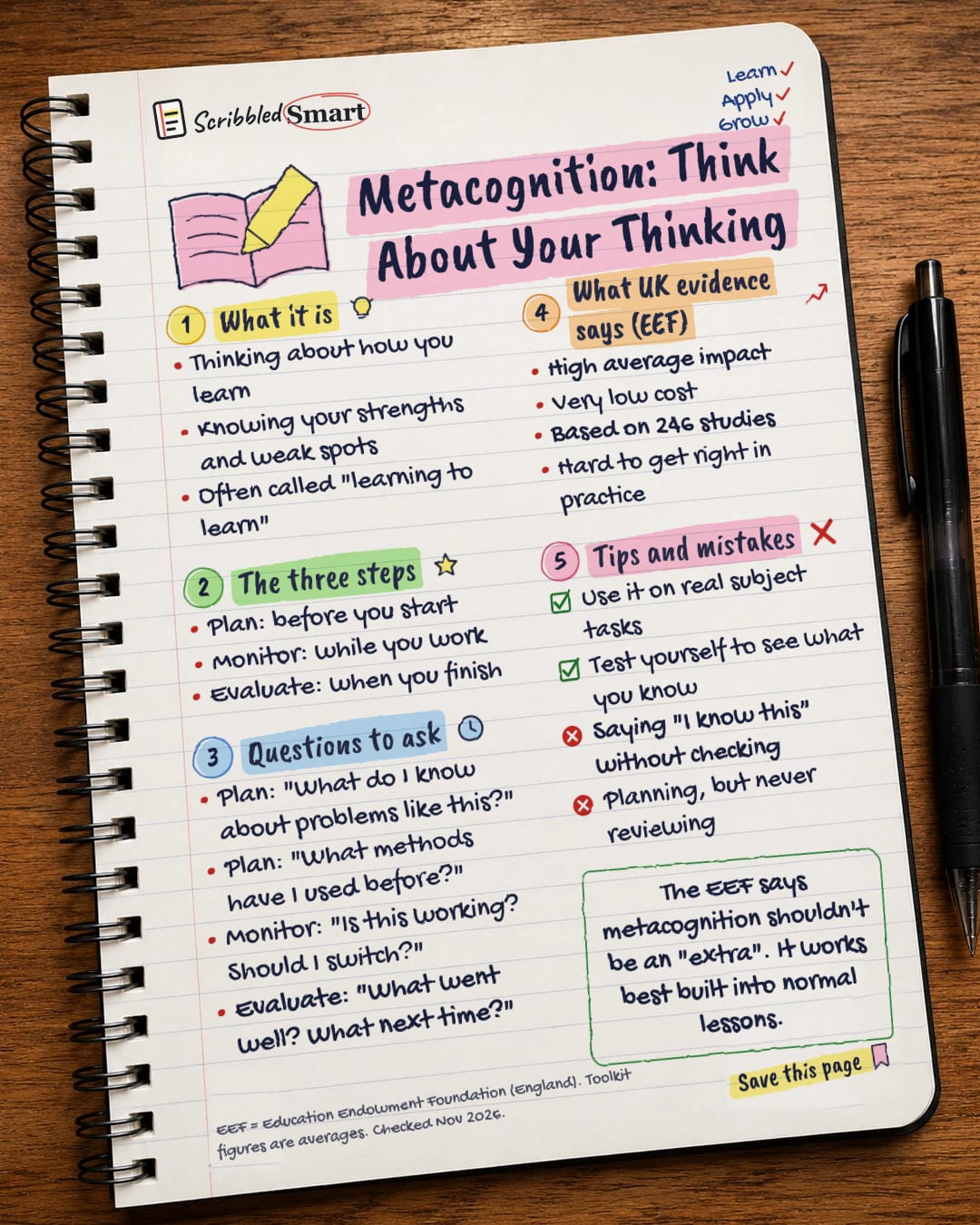
Metacognition: Think About Your Thinking
The study skill UK schools rate as high impact, low cost: thinking about your thinking. Save this page.
Good to know
EEF = Education Endowment Foundation (England). Toolkit figures are averages. Checked Nov 2026.
What's on the page
The note as text, so you can read it, copy it or use a screen reader.
What it is
- Thinking about how you learn
- Knowing your strengths and weak spots
- Often called "learning to learn"
The three steps
- Plan: before you start
- Monitor: while you work
- Evaluate: when you finish
Questions to ask
- Plan: "What do I know about problems like this?"
- Plan: "What methods have I used before?"
- Monitor: "Is this working? Should I switch?"
- Evaluate: "What went well? What next time?"
What UK evidence says (EEF)
- High average impact
- Very low cost
- Based on 246 studies
- Hard to get right in practice
Tips and mistakes
- Use it on real subject tasks
- Test yourself to see what you know
- Saying "I know this" without checking
- Planning, but never reviewing
Sources
How we checked this
Every fact on this note comes from the 6 sources listed here, checked against official or peer-reviewed sources where possible. AI tools help with drafting; a person checks every fact against the sources. How we research
Spotted a mistake? Tell us and we'll fix it and log it on the corrections page.


