
On this page
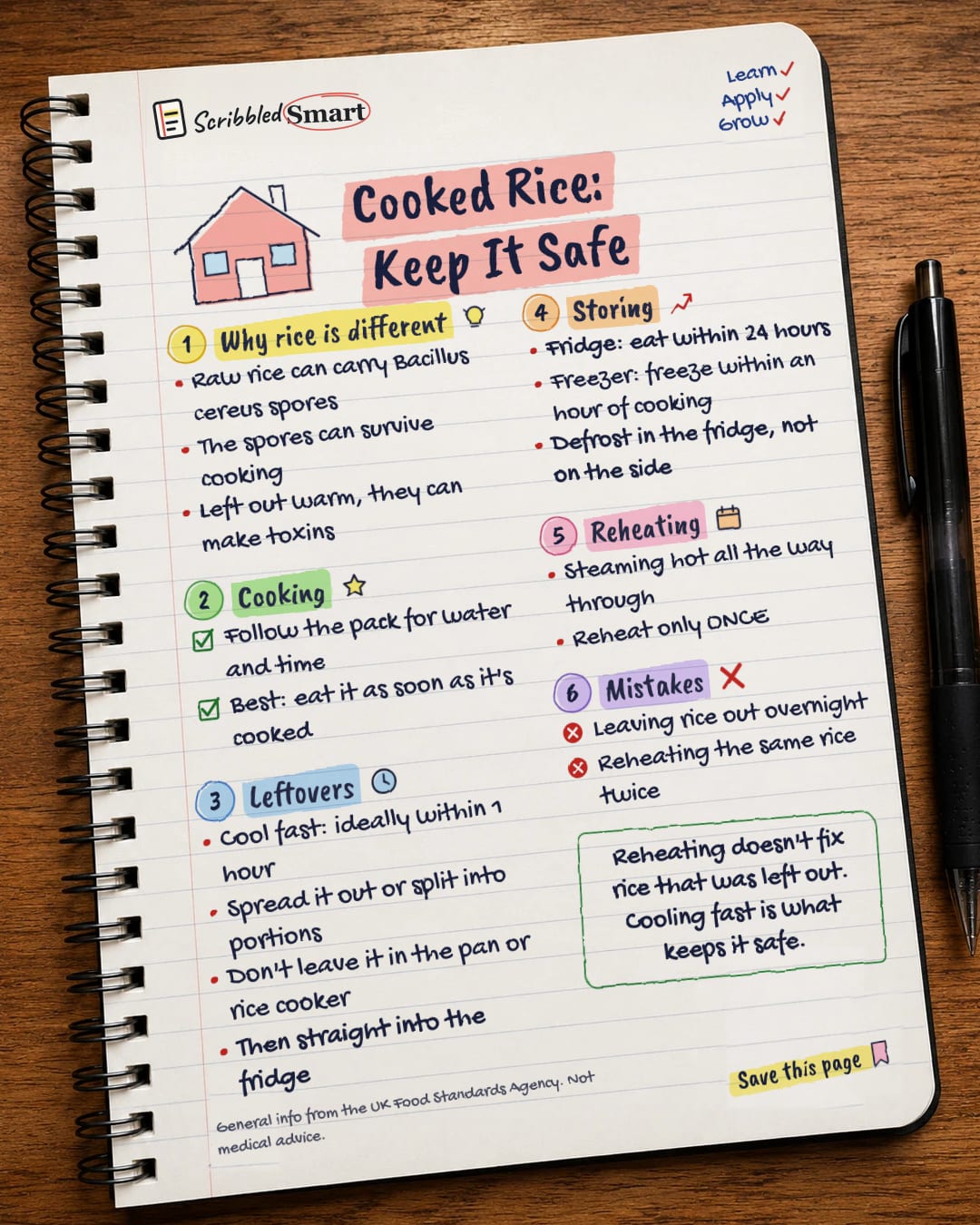
Cooking rice safely is mostly about what happens after it is cooked: eat it straight away if you can, or cool it fast (ideally within 1 hour), keep it in the fridge for no more than 24 hours, and reheat it only once. That is the advice from the UK Food Standards Agency (FSA). This guide explains why rice needs extra care and how to handle leftovers step by step.
Why does rice need extra care?
Rice needs extra care because of a bacterium whose spores can survive the cooking pot. Uncooked rice can contain spores of a bacterium called Bacillus cereus. These spores can survive being cooked.
If cooked rice is then left at room temperature, the spores can go on to produce toxins. The longer the rice is left out, the more likely this becomes. The NHS says these toxins can cause vomiting and diarrhoea.
That is why heating it up later is no fix: the NHS says reheating food will not get rid of these toxins. So once rice has been left out too long, heating it up again does not make it safe. Speed after cooking is what matters.
Cooking the rice
The safest rice is rice you eat as soon as it is cooked. NHS guidance (now part of the FSA fact checker) says to serve it straight after cooking if you can.
For the cooking itself, follow the instructions on the pack for how much water to use and how long to cook it. This varies by rice type, so the pack is your best guide.
Cooling leftover rice fast
If you are not eating it straight away, cool it as quickly as possible. The FSA says ideally within one hour.
How to cool it quickly
- Spread it out or split it into smaller portions. Food Standards Scotland suggests dividing it into smaller portions, which helps it cool faster.
- Take it out of the pan. The FSA says don't leave rice in the rice cooker, steamer or pan to cool down.
- Then put it straight into the fridge.
What about "within 2 hours"?
You may see other websites say 2 hours or 1.5 hours for cooling rice. The FSA's advice for rice is ideally within one hour, so that is the figure to follow. The FSA does give a different, longer window for leftovers in general, which is why the numbers can look mixed up online. For rice, stick to one hour. Our guide to meal prep for the week covers the rules for other leftovers.
How long can you keep cooked rice?
Cooked rice can go in the fridge or the freezer, with different time limits for each.
| Where | What the FSA says |
|---|---|
| Fridge | Eat within 24 hours. No more than one day until reheating. |
| Freezer | Put it in the freezer within an hour of cooking. |
| Defrosting | Defrost in the fridge, not on the kitchen side, then reheat until steaming hot. |
Is cold rice safe?
Yes, if you handle it well. The FSA says cold rice, such as a rice salad, is fine if it was cooled quickly, kept in the fridge and eaten within 24 hours.
Can you reheat rice safely?
Reheat rice until it is steaming hot all the way through. Don't just warm it.
Reheat it only once. Both the FSA and Food Standards Scotland say never reheat rice more than once. So if you have a big batch, take out just the portion you need and reheat that.
A note for people with weakened immune systems
Some NHS hospital trusts tell people with weakened immune systems to avoid reheated rice. If you have been given advice like this by your hospital, follow it.
Cooking rice safely: common mistakes
These mistakes are all easy to avoid.
- ✗ Leaving rice out overnight. The NHS says rice left at room temperature overnight should be thrown away.
- ✗ Reheating the same rice twice. Reheat once only, then throw away what is left.
- ✗ Leaving it to cool in the pan or rice cooker. Move it into smaller containers instead.
- ✗ Thinking a quick blast in the microwave fixes it. Reheating does not remove the toxins.
Good habits:
- ✓ Cook only as much as you need, or plan to cool and chill the extra straight away.
- ✓ Split leftovers into portions so you only reheat what you will eat.
- ✓ Label frozen rice so you know what it is. When you defrost it, use the fridge.
Related reading
- Use-by vs best before: how to read the dates on the rest of your food.
- Five a day: what actually counts towards your fruit and veg.
- Reading food labels: making sense of the label on your pack of rice.
Sources
- FSA (GOV.UK): Home food fact checker
- FSA (GOV.UK): Student guide to food safety and hygiene
- Food Standards Scotland: Rice
- NHS: Starchy foods and carbohydrates
How we checked this
Every fact in this article comes from the 4 sources listed above, checked against official or peer-reviewed sources where possible. AI tools help with drafting; a person checks every fact against the sources. How we research
- Published and checked
General info, not medical advice. Based on UK Food Standards Agency guidance.
Spotted a mistake? Tell us and we'll fix it and log it on the corrections page.


