
On this page
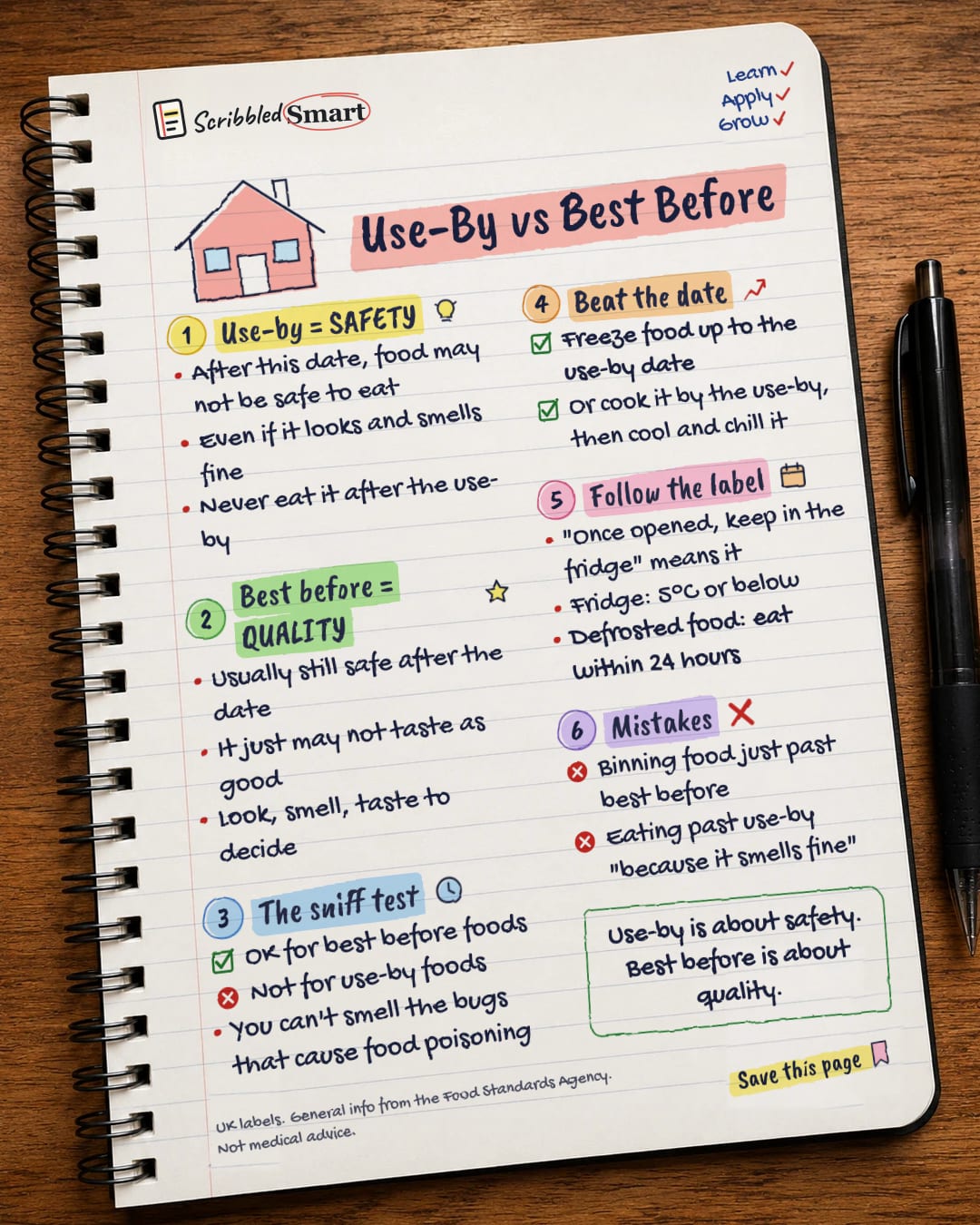
The difference between use-by vs best before is simple: a use-by date is about safety, and a best before date is about quality. After the use-by date, food may not be safe to eat, even if it looks and smells fine. After the best before date, food is usually still safe, but it may not taste as good. This guide explains how to read each date, when the sniff test is fine, and how to stop food going to waste.
🇬🇧 This covers UK labels. The same two terms are used in the EU.
What does a use-by date mean?
A use-by date tells you when food is no longer safe to eat. GOV.UK and the FSA both describe it this way.
That means the date matters even when the food seems fine. The FSA says it's not safe to use the sniff test for any food with a use-by date. Food can look and smell normal and still not be safe.
The FSA's advice is to never eat food beyond the use-by date. The one exception is food you cooked or froze on or before that date (more on that below).
Storage instructions count
GOV.UK says you need to follow the storage instructions on the pack for the use-by date to be a valid guide. If the pack says keep it in the fridge and you leave it out, the date is no longer a valid guide.
Can you eat food after the best before date?
A best before date is about quality, not safety. Food is usually still safe to eat after it, but it may not taste as good.
Look, smell, taste
GOV.UK says you can use sight, taste or smell to decide whether a best before food is still good to eat. Its example: smelling dairy to see if it has soured.
Use-by vs best before at a glance
Here is the difference side by side.
| Use-by | Best before | |
|---|---|---|
| What it's about | Safety | Quality |
| After the date | May not be safe | Usually still safe |
| Sniff test? | No | Yes |
| What to do | Eat, cook or freeze by the date | Look, smell and taste to decide |
Why doesn't the sniff test work for use-by food?
The sniff test can't tell you if use-by food is safe, because the problem is not something you can smell. The FSA puts it plainly: you can't smell the bugs that cause food poisoning.
So:
- ✓ Best before foods: the sniff test is fine. Use sight, smell and taste to decide whether it is still good to eat.
- ✗ Use-by foods: don't rely on the sniff test. Go by the date.
How to beat the use-by date
You don't have to throw food away just because the use-by date is close. You have two options.
Freeze it
The FSA and GOV.UK say you can freeze pre-packaged food right up to the use-by date. When you defrost it, eat it within 24 hours.
Cook it
GOV.UK says you can eat food after its use-by date if it was cooked or frozen on or before that date. So you can cook it by the use-by, then cool it and keep it in the fridge. GOV.UK says you must then eat it within 48 hours or freeze it. For more on storing cooked food, see our guide to safe meal prep for the week.
Follow the label
The other words on the pack matter too.
- "Once opened, keep in the fridge" means it. GOV.UK says if the packaging says to refrigerate after opening, keep it in a fridge at 5°C or below.
- Fridge: 5°C or below.
- Defrosted food: eat within 24 hours.
Use-by vs best before: common mistakes
The first two mistakes go in opposite directions. One wastes food; the other risks your health.
- ✗ Binning food just past its best before date. It is usually still safe. Check it first.
- ✗ Eating food past its use-by "because it smells fine". You can't smell the bugs that cause food poisoning.
- ✗ Ignoring storage instructions. The use-by date is only a valid guide if you follow them.
Planning your food shop around these dates? Our guide to the 50/30/20 budget rule shows a simple way to plan your spending.
Related reading
- Cooked rice: keep it safe: why rice has its own stricter rules.
- How to read food labels (UK): the nutrition side of the same label.
Sources
- GOV.UK: Understanding food labelling, best before and use-by dates
- FSA (GOV.UK): Home food fact checker
- FSA (GOV.UK): Student guide to food safety and hygiene
- FSA (GOV.UK): How to chill, freeze and defrost food safely
How we checked this
Every fact in this article comes from the 4 sources listed above, checked against official or peer-reviewed sources where possible. AI tools help with drafting; a person checks every fact against the sources. How we research
- Published and checked
🇬🇧 UK labels. General info, not medical advice. Based on GOV.UK and Food Standards Agency guidance.
Spotted a mistake? Tell us and we'll fix it and log it on the corrections page.


