
On this page
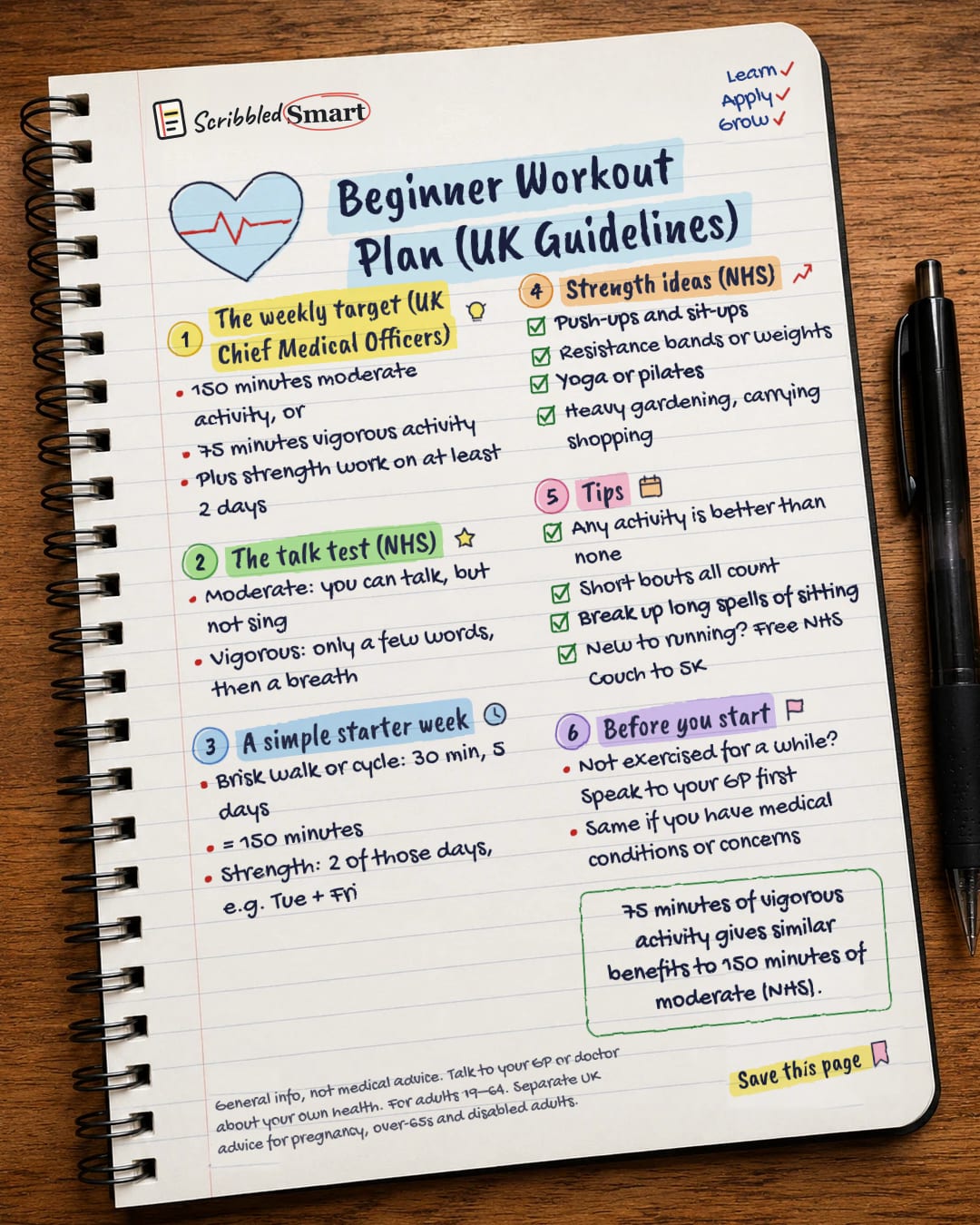
A good beginner workout plan aims for the UK weekly target: at least 150 minutes of moderate activity, or 75 minutes of vigorous activity, plus strength work on at least 2 days. You don't need a gym to get there. This article explains the target, how to tell moderate from vigorous, a simple starter week you can copy, and what to check before you begin.
How much exercise should you do a week?
The UK Chief Medical Officers (CMOs) set the official physical activity guidelines. For adults aged 19 to 64, they say to aim for at least:
- 150 minutes of moderate activity a week, or
- 75 minutes of vigorous activity a week, and
- muscle-strengthening activities on at least 2 days a week
The NHS says the strength work should cover all the major muscle groups. It also says 75 minutes of vigorous activity gives similar benefits to 150 minutes of moderate activity.
The CMO guidelines were reformatted and updated on 10 July 2026 with new evidence for adults, without changing the overall guidance.
The talk test: moderate or vigorous?
You don't need a heart-rate monitor to know how hard you're working. The NHS uses a simple talk test.
| Level | The talk test (NHS) | Examples (NHS) |
|---|---|---|
| Moderate | You can talk, but not sing | Brisk walking, cycling |
| Vigorous | You can only say a few words without pausing for breath | Running, swimming, cycling fast or uphill, stairs, football, rugby, netball, hockey, skipping, aerobics, martial arts |
A beginner workout plan for your first week
Here is one way to hit the target. This is our example, not an official plan.
| Day | Activity |
|---|---|
| Monday | Brisk walk or cycle, 30 minutes |
| Tuesday | Brisk walk or cycle, 30 minutes + strength |
| Wednesday | Brisk walk or cycle, 30 minutes |
| Thursday | Rest |
| Friday | Brisk walk or cycle, 30 minutes + strength |
| Saturday | Brisk walk or cycle, 30 minutes |
| Sunday | Rest |
The maths: 30 minutes × 5 days = 150 minutes of moderate activity. Strength on Tuesday and Friday meets the 2-day minimum.
The NHS suggests spreading activity over 4 to 5 days a week, or every day. But the CMOs also say the 150 minutes can be done in one or two sessions a week and still bring benefit. So if weekdays are busy, longer walks at the weekend still count.
Strength ideas you can do at home
Strength work doesn't have to mean lifting heavy weights. The NHS gives these examples of muscle-strengthening activities:
- push-ups and sit-ups
- working with resistance bands
- lifting weights
- yoga or pilates
- heavy gardening
- carrying heavy shopping
The 2026 CMO evidence update says strength training matters for balance in middle age, and for people taking GLP-1 weight-management drugs.
Tips for sticking with it
Any activity is better than none
The CMO guidelines say: "Any activity is better than none and more is better still." If 150 minutes feels like a lot, start smaller and build up. The 2026 evidence update found that even light activity is associated with a lower risk of dying from heart and circulation disease.
Short bouts all count
The 2026 CMO update says the 150 minutes can be built up in bouts of any length. A 10-minute walk to the shop counts. If you track your walking, read whether you really need 10,000 steps a day.
Break up long spells of sitting
The CMOs say to keep the time you spend sitting to a minimum, and to break up long periods with at least light activity. The 2026 update says sitting for more than 6 to 8 hours a day in total is associated with a higher risk of death. But the evidence still doesn't support a specific time limit.
New to running? Try Couch to 5K
The NHS has a free Couch to 5K plan. It takes you from no running to running 5km in 9 weeks.
Should you see a GP before you start exercising?
The NHS advice is clear: speak to your GP first if you have not exercised for some time, or if you have medical conditions or concerns.
These guidelines are for adults aged 19 to 64. The CMOs give separate, specific advice for pregnancy and after giving birth, older people (65 and over) and disabled adults.
Common mistakes
- Thinking it's all or nothing. Short bouts count, and any activity is better than none.
- Skipping strength work. The guidelines ask for strength on at least 2 days, not just cardio.
- Sitting all day, then one workout. Breaking up long spells of sitting is part of the guidance too.
Related reading
- 10,000 steps a day: whether you really need 10,000, and what the UK guidelines say instead.
- How habits form: how to make a new workout routine stick.
- Protein basics: how much protein you need to go with strength work.
- Desk posture: setting up your desk and breaking up long periods of sitting.
Sources
- GOV.UK / DHSC: UK Chief Medical Officers' physical activity guidelines (2019, updated 10 July 2026)
- GOV.UK: Physical activity guidelines, UK Chief Medical Officers' report (publication page and update history)
- NHS: Physical activity guidelines for adults aged 19 to 64
- NHS Better Health: Get running with Couch to 5K
How we checked this
Every fact in this article comes from the 4 sources listed above, checked against official or peer-reviewed sources where possible. AI tools help with drafting; a person checks every fact against the sources. How we research
- Published and checked
- Next check
- yearly (CMO guidelines last updated 10 July 2026)
General info, not medical advice. Talk to your GP or doctor about your own health. For adults 19 to 64; separate UK advice exists for pregnancy, over-65s and disabled adults.
Spotted a mistake? Tell us and we'll fix it and log it on the corrections page.


