
On this page
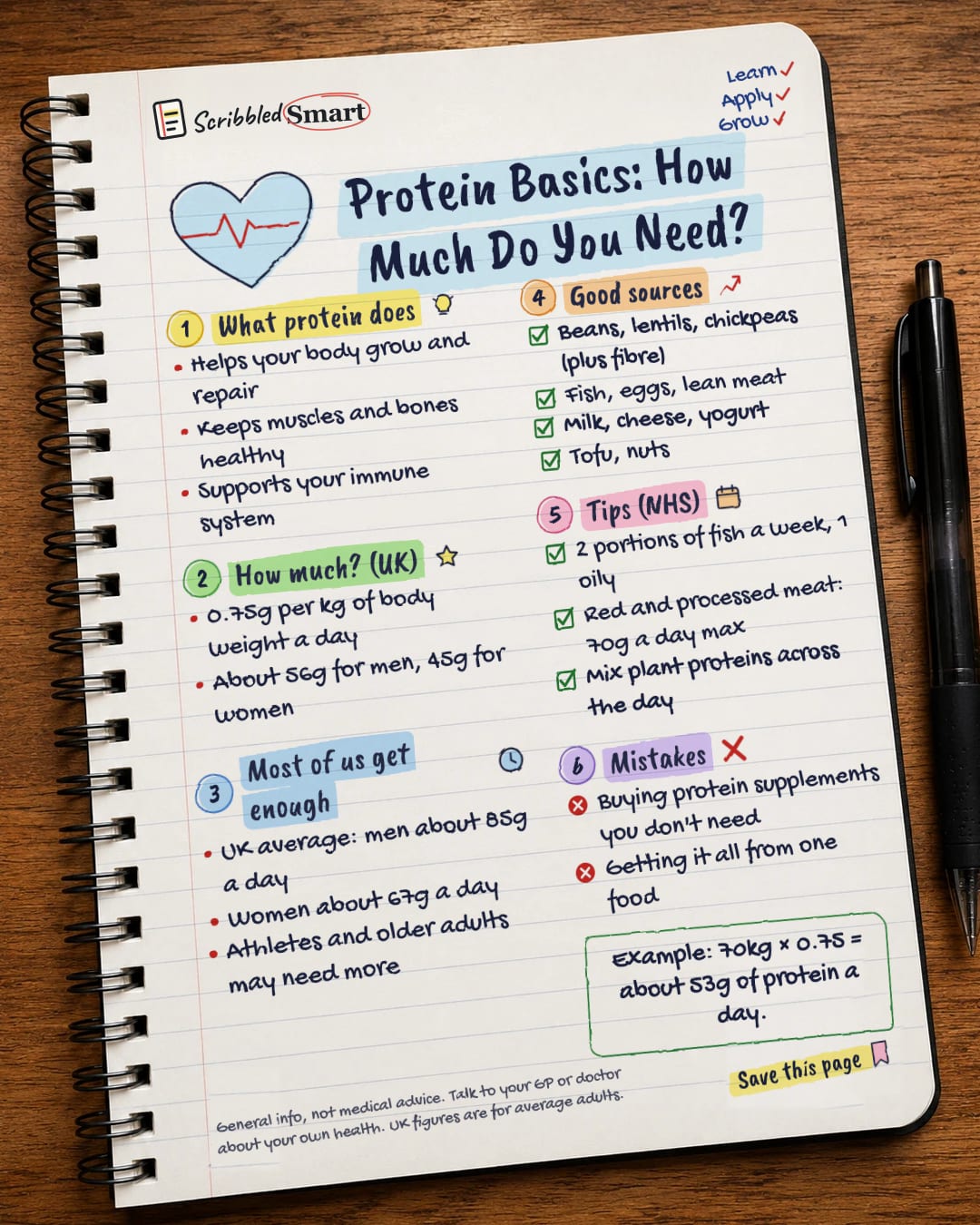
How much protein do you need? In the UK, the recommendation for adults is 0.75g of protein for every kilogram of body weight a day. That works out at about 56g for men and 45g for women. Most people in the UK already eat more than that, so this article covers what protein does, how to work out your own figure, the best food sources, and the common mistakes.
What does protein do?
Protein helps your body grow and repair itself. The British Nutrition Foundation (BNF) says we also need it for energy, and that it does many jobs, from supporting our immune function to keeping our muscles and bones healthy throughout life.
Proteins are made of chains of building blocks called amino acids. Animal proteins contain all the essential amino acids, which is why they are called "complete". Plant proteins can cover your needs too, as long as you eat a variety of plant foods.
How much protein do you need a day?
The BNF says adults need 0.75g of protein per kilogram of body weight per day. It turns this into everyday figures using average body weights:
| Group | Body weight used | Protein a day |
|---|---|---|
| Men | 75kg | about 56g |
| Women | 60kg | about 45g |
Work out your own figure
Multiply your weight in kilograms by 0.75.
For example, someone who weighs 70kg would need 70 × 0.75 = 52.5g, so about 53g of protein a day.
These UK figures are for average adults. If you have a health condition, talk to your GP about what's right for you.
Do most people already get enough protein?
The BNF says the average man in the UK eats about 85g of protein a day, and the average woman about 67g. Both are well above the recommended amounts.
Some people may need more. The BNF says athletes and older adults may have higher protein requirements.
Good sources of protein
Protein is found in lots of foods, from both animals and plants. The BNF lists these:
- Beans, lentils and chickpeas. These are also low in fat and high in fibre.
- Fish, eggs and meat. Eggs also provide vitamin A, B vitamins, vitamin D and selenium.
- Milk, cheese and yogurt. Dairy contains saturated fat, so the BNF suggests choosing lower-fat options.
- Tofu and other soya foods.
- Nuts.
To compare protein between packaged foods, check the nutrition panel. Our guide to reading UK food labels shows you how.
Tips from the NHS
Eat fish twice a week
The NHS recommends at least 2 portions of fish a week, including 1 portion of oily fish. A portion is about 140g cooked.
Note that tuna isn't classed as oily fish. And if you're a girl or woman planning a pregnancy, pregnant or breastfeeding, the NHS says to have no more than 2 portions of oily fish a week.
Keep red and processed meat in check
If you eat more than 90g of red and processed meat a day, the NHS suggests cutting down to an average of no more than 70g a day.
Choose lean meat
The NHS says to go for the leanest option. Two simple tips: the more white you can see on meat, the more fat it has, and you can remove the skin from poultry.
Mix your plant proteins
If you eat mostly plants, the BNF recommends a variety of plant proteins, such as pulses, nuts and soya. Mixing them across the day helps cover your needs.
Common protein mistakes
Buying supplements you don't need
A nutrition scientist at the BNF says we are already eating more than enough protein, so we don't need extra from supplements or products with added protein. This applies to the average UK adult. If a health professional has advised you to take a supplement, follow their advice.
Getting it all from one food
The BNF says it's important to get protein from a range of different foods, not just one.
FAQ
How much protein should I eat a day?
UK adults need 0.75g of protein per kilogram of body weight a day, according to the British Nutrition Foundation. That's about 56g for a 75kg man and 45g for a 60kg woman. To find your own figure, multiply your weight in kilograms by 0.75. A 70kg person needs about 53g.
Do I need protein shakes or supplements?
Most people don't. The average UK man eats about 85g of protein a day and the average woman about 67g, well above the recommended amounts. The BNF says we don't need extra from supplements or products with added protein, though athletes and older adults may need more.
What are good plant sources of protein?
Beans, lentils and chickpeas are good plant sources, and they are also low in fat and high in fibre. Tofu, other soya foods and nuts provide protein too. The BNF says eating a variety of plant proteins, such as pulses, nuts and soya, covers your needs.
Is tuna an oily fish?
No. The NHS says tuna isn't classed as oily fish. The NHS recommends at least 2 portions of fish a week, including 1 portion of oily fish, with a portion being about 140g cooked. So if tuna is your usual fish, you'll need a different choice for your oily portion.
Related reading
- A beginner workout plan: the UK guidelines for strength work and activity.
- 5 a day: how beans and pulses fit into your fruit and veg.
- How much water you need: the other everyday basic, explained with NHS advice.
Sources
How we checked this
Every fact in this article comes from the 3 sources listed above, checked against official or peer-reviewed sources where possible. AI tools help with drafting; a person checks every fact against the sources. How we research
- Published and checked
- Next check
- yearly
General info, not medical advice. Talk to your GP or doctor about your own health. UK figures are for average adults.
Spotted a mistake? Tell us and we'll fix it and log it on the corrections page.


