
On this page
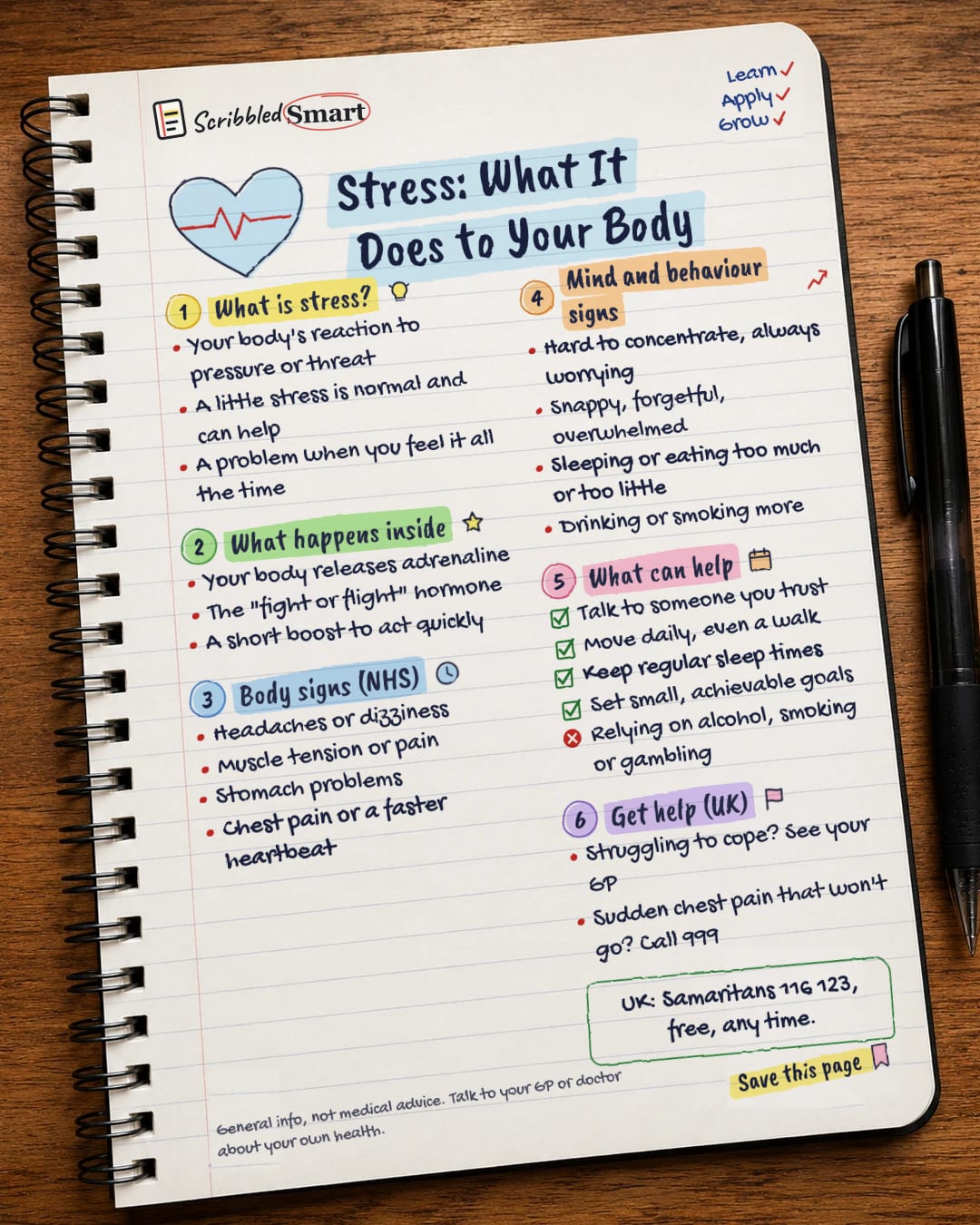
Stress symptoms can show up in your body, your mind and your behaviour: headaches, muscle tension, stomach problems, a racing heart, constant worry and changes in sleep or appetite. Stress is your body's reaction to feeling threatened or under pressure. A little is normal, but it becomes a problem when you feel it all the time. Here's what happens inside, the signs to look for, and what helps.
What is stress?
Stress is how your body reacts when you feel threatened or under pressure. NHS Every Mind Matters describes it this way, and the NHS adds that it's usually a reaction to mental or emotional pressure.
Stress isn't always bad. The World Health Organization (WHO) says a little bit of stress is good and can help us perform daily activities. The NHS says it becomes a problem when you feel stressed all the time.
What does stress do to your body?
When you feel stressed, your body releases a hormone called adrenaline. NHS Every Mind Matters calls it the "fight or flight" hormone.
Adrenaline gives you a short boost that prompts you to act quickly.
NHS Every Mind Matters also says that sometimes stress causes high blood pressure and chest pains. That's one more reason not to ignore stress that won't ease.
Physical stress symptoms (NHS)
Stress can affect your body in lots of ways. The NHS lists these physical signs:
- headaches or dizziness
- muscle tension or pain
- stomach problems
- chest pain or a faster heartbeat
- sexual problems
A safety note on chest pain
Chest pain is on the NHS list of stress symptoms, but chest pain can also be a heart attack. Never assume "it's just stress".
The NHS says to call 999 if you get sudden pain or discomfort in your chest that does not go away. Also call 999 if the pain spreads to your arms, neck, jaw, stomach or back, or comes with sweating, feeling sick, feeling light-headed or being short of breath.
Mind and behaviour signs
Stress changes how you think and act, not just how you feel physically. The NHS lists these signs.
In your mind
- finding it hard to concentrate
- struggling to make decisions
- feeling overwhelmed
- constantly worrying
- being forgetful
In your behaviour
- being irritable and snappy
- sleeping too much or too little
- eating too much or too little
- avoiding certain places or people
- drinking or smoking more
The WHO lists similar effects, including anxiety, irritability, trouble concentrating, headaches, stomach upset, sleep problems and changes in appetite. It also says long-term stress can make existing illness worse.
If your stress is mostly about work and has gone on for a long time, our guide to the signs of burnout may help.
How can you reduce stress?
Small, everyday steps can make stress easier to manage. These come from the NHS and WHO. They are self-help ideas, not treatment.
- Talk to someone you trust. The NHS suggests a friend, family member or health professional. The WHO also says to share your concerns with people you trust.
- Move every day. The WHO says daily activity such as walking can reduce stress.
- Keep regular sleep times. The WHO recommends consistent times for going to sleep and waking up.
- Set small, achievable goals. The NHS says don't take on everything at once.
The WHO also has a free guide called Doing What Matters in Times of Stress.
What not to do
The NHS says don't rely on alcohol, cigarettes, gambling or drugs to cope.
When to get help in the UK
You don't have to wait until things are very bad to ask for help.
| Situation | What to do (NHS) |
|---|---|
| You're struggling to cope, or your own efforts aren't helping | See your GP |
| You need help soon | Call NHS 111 or get an urgent GP appointment |
| A mental health emergency | Call 999 or go to A&E |
| Sudden chest pain or discomfort that does not go away | Call 999 |
The NHS says a mental health emergency should be taken as seriously as a physical emergency.
If you need to talk to someone right now, Samaritans is free, any time, on 116 123 (UK and Republic of Ireland). Outside the UK? Search for your country's crisis line.
Related reading
- Sleep better: NHS basics for a steady sleep routine when stress keeps you up.
- Why we overthink: how constant worrying works and how to break the loop.
- A beginner workout plan: an easy way to build daily movement into your week.
Sources
- NHS: Get help with stress
- NHS Every Mind Matters: Stress
- WHO: Stress (Questions and answers)
- NHS: Chest pain
- Samaritans: Contact us
How we checked this
Every fact in this article comes from the 5 sources listed above, checked against official or peer-reviewed sources where possible. AI tools help with drafting; a person checks every fact against the sources. How we research
- Published and checked
- Next check
- helpline details yearly
General info, not medical advice. Talk to your GP or doctor about your own health. Struggling to cope? See your GP. Sudden chest pain that won't go away? Call 999 (UK). Samaritans (UK and Ireland): 116 123, free, any time.
Spotted a mistake? Tell us and we'll fix it and log it on the corrections page.


