
On this page
- Mistake 1: No emergency fund
- Mistake 2: Should you opt out of your workplace pension?
- Mistake 3: Paying only the minimum on cards
- Mistake 4: Not comparing before borrowing
- Mistake 5: Goals with no plan
- Mistake 6: Ignoring money letters
- Why are money mistakes in your 20s so common?
- FAQ
- Related reading
- Sources
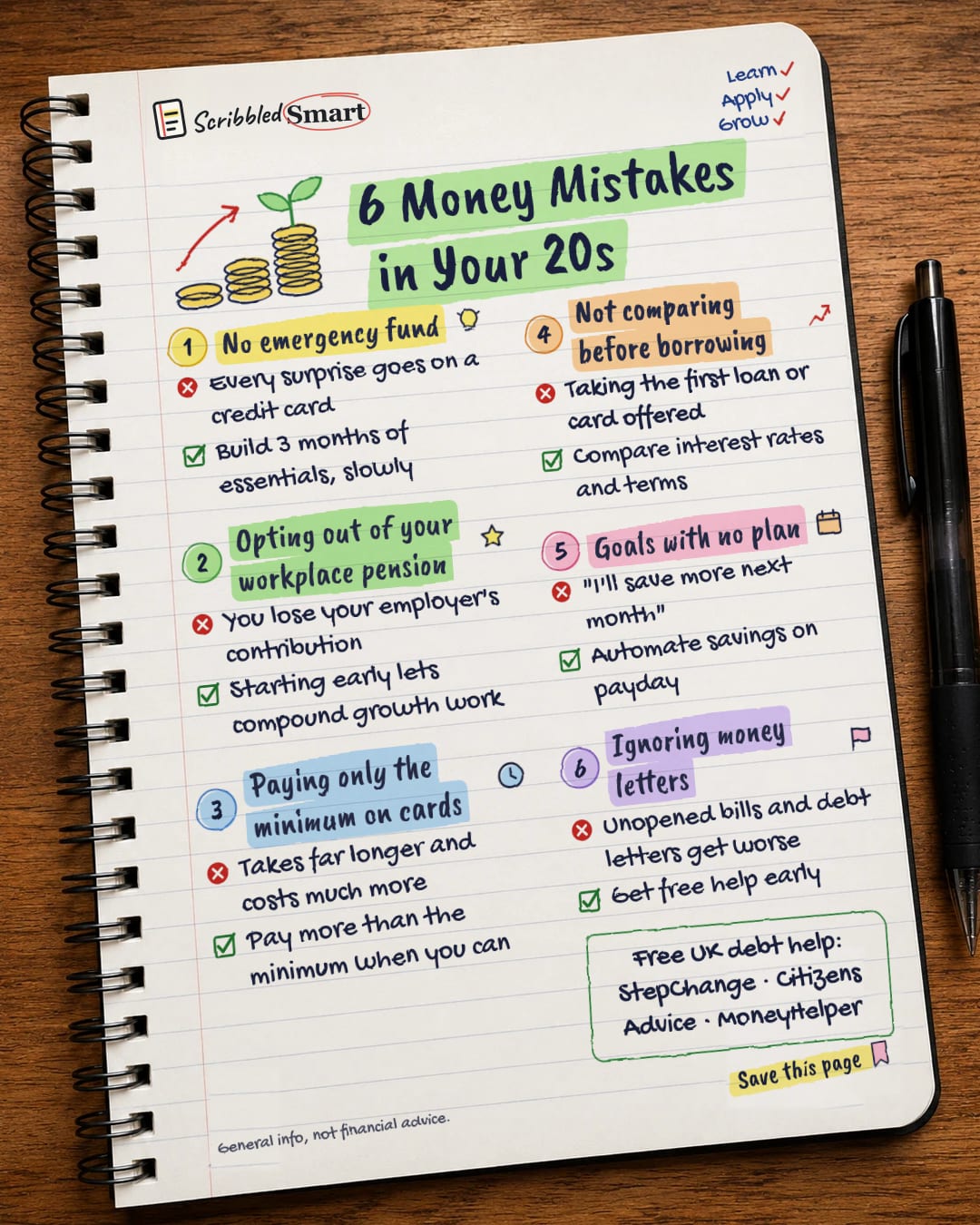
The most common money mistakes in your 20s are having no emergency fund, opting out of your workplace pension, paying only the minimum on cards, borrowing without comparing, setting goals with no plan, and ignoring money letters. Each one comes from regulator or government-backed research, not opinion. And each has a simple fix. We've all made some of these. Here's how to spot them and what to do instead.
Mistake 1: No emergency fund
The problem: without savings, every surprise bill goes on a credit card or loan. The US Consumer Financial Protection Bureau (CFPB) encourages saving at least 3 months of expenses, so you don't have to rely on high-interest credit.
The fix: ✅ build up 3 months of essential costs, slowly. Start with a small goal, such as £500, and set up an automatic transfer.
Our emergency fund guide covers how much to save and where to keep it.
Mistake 2: Should you opt out of your workplace pension?
The problem: in the UK, your employer must pay at least 3% into your workplace pension if you're enrolled (GOV.UK). If you opt out, you lose that money. MoneyHelper warns you may lose valuable retirement benefits.
🇬🇧 You're auto-enrolled if you're 22 or over and earn £10,000 or more. MoneyHelper notes this age may drop to 18 in future, but that's not in force yet.
The fix: ✅ stay in. Starting early lets compound growth work for longer. In our compound interest example, £100 a month at 5% grows to about £152,600 by 65 if you start at 25, but only about £83,200 if you start at 35.
The FCA's research also found that young people tend to underestimate how much they'll need for retirement. One more reason not to wait.
More detail: ISA vs pension (UK).
Mistake 3: Paying only the minimum on cards
The problem: the UK Financial Conduct Authority (FCA) found that people underestimate how long minimum payments take to clear a debt, and how much extra they cost. Paying only the minimum keeps the balance, and the interest, around for much longer.
The fix: ✅ pay more than the minimum whenever you can. If you have several debts, choose a plan: the avalanche or snowball method.
Mistake 4: Not comparing before borrowing
The problem: the CFPB lists borrowing without shopping around for the best rates and terms among the most common consumer mistakes. Taking the first loan or card you're offered can cost you.
The fix: ✅ compare interest rates and terms before you sign. See how credit scores work before you borrow.
Mistake 5: Goals with no plan
The problem: "I'll save more next month." The CFPB notes that people often set goals but don't follow through. The FCA adds that a budget needs follow-through to actually turn into savings.
The fix: ✅ automate it. FCA research on "rules of thumb and nudges" supports behavioural approaches like setting up automatic saving. Move money to savings on payday, before you can spend it. The 50/30/20 budget gives you a simple target.
Mistake 6: Ignoring money letters
The problem: unopened bills and debt letters don't go away. They tend to get worse. The FCA's Financial Lives survey looks at how people put off dealing with money matters.
The fix: ✅ open them, and get free help early. 🇬🇧 In the UK:
- StepChange
- Citizens Advice
- MoneyHelper
All three give free help with money and debt.
Why are money mistakes in your 20s so common?
These aren't signs that you're bad with money. Regulators like the FCA and CFPB have researched each of these. Most are easy to fix once you know about them. Automating your saving means you don't rely on willpower each month. Our guide to how habits really form explains why.
FAQ
What are the biggest money mistakes people make in their 20s?
Common ones include having no emergency fund, opting out of a workplace pension, paying only the minimum on credit cards, borrowing without comparing rates, setting savings goals without a plan, and ignoring bills or debt letters. Regulators such as the FCA and CFPB have researched each of these.
Should I opt out of my workplace pension in my 20s?
Opting out means giving up your employer's contribution, which is at least 3% in the UK. MoneyHelper warns you may lose valuable retirement benefits. Starting early also gives compound growth more time to work. Think carefully before opting out.
Why is paying only the minimum on a credit card bad?
It takes much longer to clear the debt and costs much more in interest. FCA research found people underestimate both how long it takes and the extra cost. Paying more than the minimum whenever you can shortens the time and cuts the interest.
How much emergency savings should I have in my 20s?
The CFPB suggests saving at least 3 months of expenses. You don't need it all at once: start with a small goal, such as £500, and automate a transfer on payday. Our emergency fund guide has more detail.
Where can I get free debt help in the UK?
StepChange, Citizens Advice and MoneyHelper all offer free help with debt in the UK. It's best to contact them early, rather than leaving letters unopened.
Related reading
- Emergency fund: your money safety net: fix mistake 1.
- Compound interest explained: why starting early matters.
- Paying off debt: avalanche vs snowball: fix mistake 3.
- How credit scores work: borrow wisely.
Sources
- CFPB: Explore saving
- CFPB: Help the CFPB solve the most common consumer mistakes
- FCA: Rules of thumb and nudges (PDF)
- FCA: Financial Lives 2024 key findings (PDF)
- MoneyHelper: Supporting yourself financially (16–24)
- GOV.UK: What you, your employer and the government pay
- CFPB: Youth financial education literature review (PDF)
- StepChange Debt Charity: Free expert debt help and advice
- Citizens Advice: Free advice
- MoneyHelper: Free money and pensions guidance
How we checked this
Every fact in this article comes from the 10 sources listed above, checked against official or peer-reviewed sources where possible. AI tools help with drafting; a person checks every fact against the sources. How we research
- Published and checked
- Next check
- yearly
General info, not financial advice. Struggling with debt? Free UK help: StepChange · Citizens Advice · MoneyHelper.
Spotted a mistake? Tell us and we'll fix it and log it on the corrections page.


