
On this page
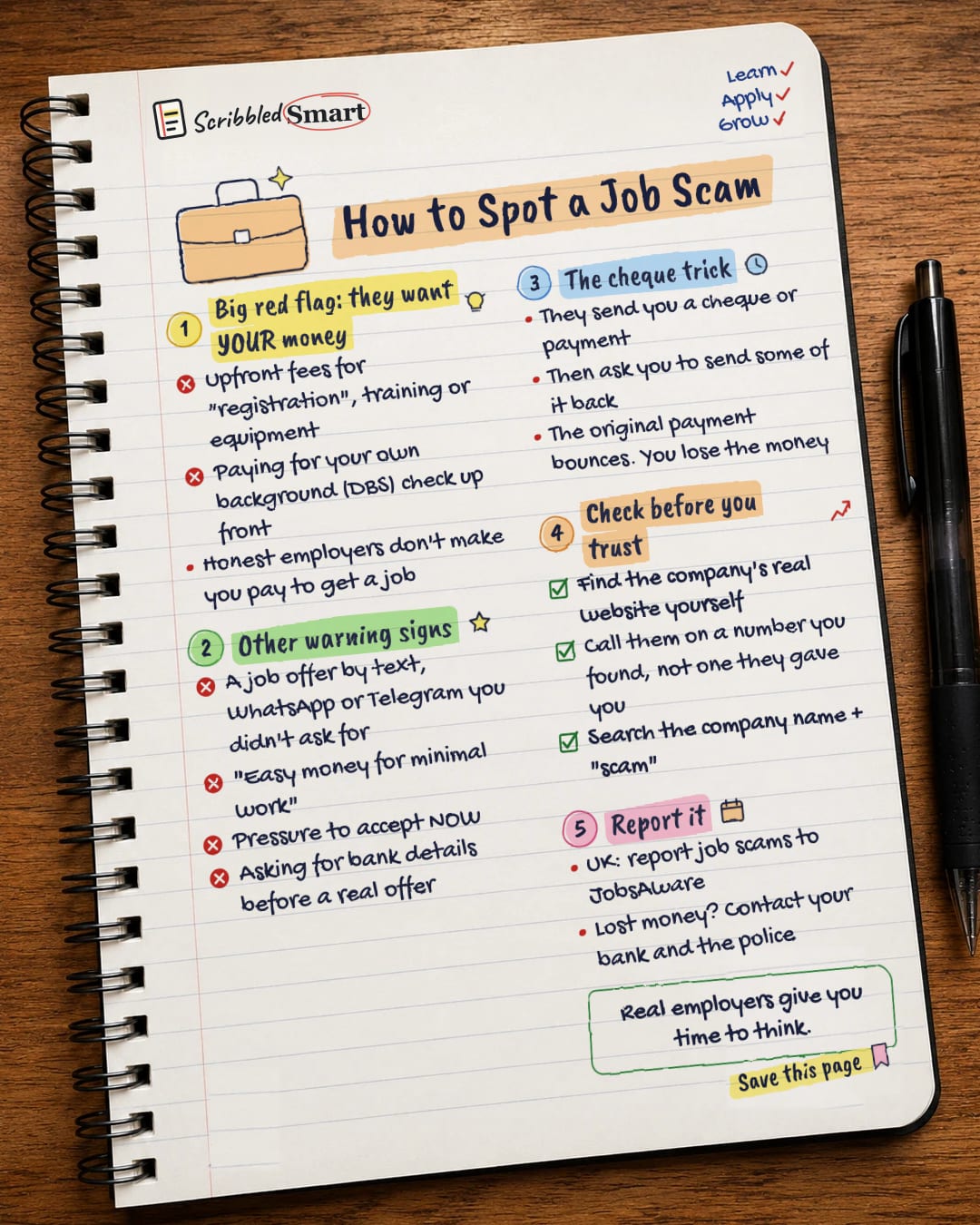
Here's how to spot a job scam quickly: follow the money. If a "job" asks you to pay upfront for registration, training, equipment or a background check, treat it as a serious red flag. Other warning signs include job offers by text or WhatsApp that you never asked for, promises of easy money and pressure to accept right now. This guide covers each red flag, the fake cheque trick, how to check a company and where to report a scam.
This guide uses official advice from the US Federal Trade Commission (FTC, a US regulator) and from the UK's Disclosure and Barring Service (DBS), which works with an organisation called JobsAware to raise awareness of job scams. The FTC advice is written for the US and the DBS advice for the UK, so check how to report a scam where you live.
Red flag 1: Do real employers ask you to pay?
No. If you're asked to pay to get a job, walk away. The FTC says that if a placement firm asks for a fee, especially in advance, you should walk away. It also says honest employers won't ask you to pay for a job or for equipment.
Watch out for fees described as:
- ✗ "Registration" or joining fees.
- ✗ Training you must pay for before you start.
- ✗ Equipment you have to buy from them.
- ✗ Background checks. 🇬🇧 In the UK, the DBS warns that being asked to pay for an expensive DBS check up front can be a sign of a scam. (DBS checks are background checks run by the UK's Disclosure and Barring Service.)
The DBS also warns against handing over money or bank details before you've had a real job offer.
Red flag 2: other warning signs
Even when no fee is mentioned, these signs should make you stop and check.
A job offer you didn't ask for
An unexpected job offer by text, WhatsApp or Telegram is a warning sign. In 2026, the FTC put it simply in the title of one alert: "That job offer text is probably a scam."
Easy money for minimal work
The FTC warns about offers of fast cash for very little work. If the pay sounds far too good for the job described, be suspicious.
Pressure to accept now
Give yourself time to think. The FTC suggests talking a job offer over with someone you trust first, which also gives you vital time to think about it. A "decide today or lose it" message tries to take that time away, so treat it as a warning sign.
Asking for bank details too early
Handing over bank details before you have a genuine job offer is one of the scam signs the DBS lists.
What is the fake cheque trick?
In this scam, the "employer" sends you money and then asks you to send part of it back. The FTC describes it like this:
- They send you a cheque or payment.
- They ask you to deposit it and send some of it back.
- The original payment bounces. The money you sent is gone, and you're left out of pocket.
The rule is simple: never send money back to an employer who has just paid you.
How to spot a job scam by checking the company yourself
Check the company yourself, using details you found, not ones they gave you. The FTC recommends:
- ✓ Find the company's real website yourself. Don't rely on a link in the message.
- ✓ Call them on a number you know is genuine, not a number the recruiter gave you.
- ✓ Search online for the company name plus "scam" or "complaint". See if others have reported problems.
Many job scams arrive the same way as other scam messages. Our guide on how to spot a scam message covers the general signs to look for.
Where do you report a job scam?
🇬🇧 In the UK, report job scams to JobsAware. The DBS works with JobsAware to raise awareness of job scams and points people there.
If you've already paid money:
- Contact the police, as the DBS advises.
- Contact your bank as soon as you can. They may be able to help.
Related reading
- How to spot a scam message: the general warning signs in texts and emails.
- AI voice clone scams: another kind of scam to know about.
- Two-step verification: protect your accounts if you've shared details with a scammer.
- Weak ties and your job search: find real openings through people you know.
Sources
- FTC: Job scams
- FTC (2026): That job offer text is probably a scam
- FTC: Scammers impersonate well-known companies on LinkedIn
- FTC: Looking for a job? Spot the scams
- GOV.UK: DBS is working with JobsAware to raise awareness of job scams
- GOV.UK: DBS continues work with JobsAware on seasonal job scams
How we checked this
Every fact in this article comes from the 6 sources listed above, checked against official or peer-reviewed sources where possible. AI tools help with drafting; a person checks every fact against the sources. How we research
- Published and checked
- Next check
- Yearly
General info, not legal or financial advice.
Spotted a mistake? Tell us and we'll fix it and log it on the corrections page.


