
On this page
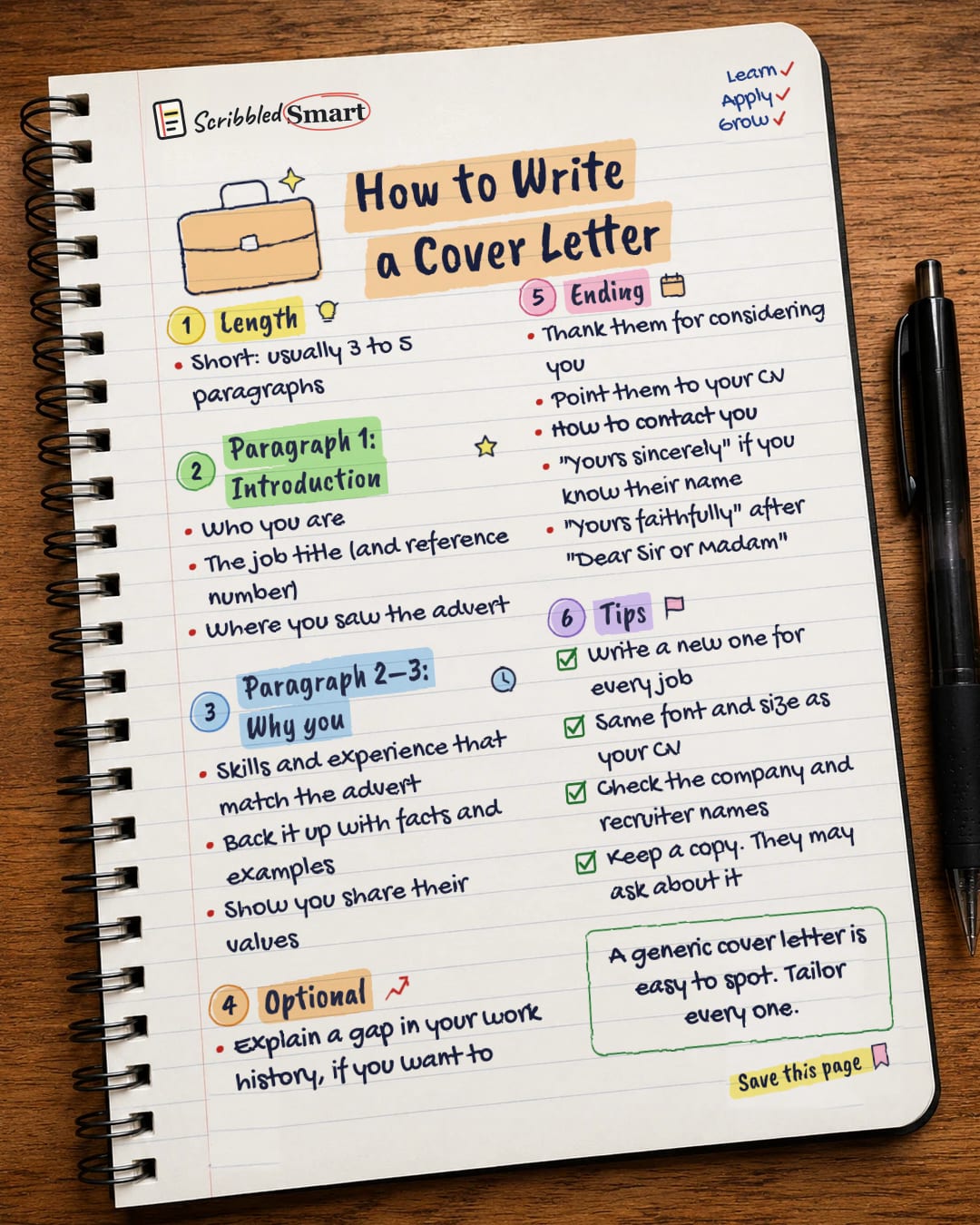
Here's how to write a cover letter that does its job: keep it short (usually 3 to 5 paragraphs), introduce yourself and the role, explain why your skills match the advert, and end by thanking them and pointing them to your CV. That's the structure the UK's National Careers Service recommends. A cover letter is your chance to show you've read the advert and really want this job. This guide takes you through it one paragraph at a time.
How long should a cover letter be?
Keep it to one short letter of about 3 to 5 paragraphs. The National Careers Service describes it as "a short letter, usually 3 to 5 paragraphs long."
Short doesn't mean thin. Each paragraph has a clear purpose, which the sections below explain.
What should the first paragraph of a cover letter say?
Your opening paragraph tells the employer who you are and which job you're applying for. According to the National Careers Service, it should cover:
- Who you are.
- The job title, and the reference number if the advert has one.
- Where or how you found the job advert.
Including the job title and reference makes it clear straight away which job you mean.
Paragraphs 2 and 3: Explain why you fit the role
The middle of your letter is where you make your case: show that your skills and experience match what the advert asks for. The National Careers Service suggests you:
- Match your skills and experience to the advert. Pick the things they ask for and show you have them.
- Back up what you say with facts and examples. Saying "I'm organised" is weak. A short example of something you organised is much stronger.
- Show you share the employer's values. If the company says what it cares about, explain how that fits with you.
How to find what to write about
Read the advert slowly and note the main skills and experience it asks for. Then think of a real example from work, study or volunteering for the most important ones. The STAR method (Situation, Task, Action, Result) is a handy way to shape those examples, though in a letter you'll keep each one to a sentence or two.
Optional: Explain a gap in your work history
If you have a gap in your work history, you can use your cover letter to explain it. The National Careers Service lists this as something you may choose to include. It's your decision. You don't have to, but a short, honest line can stop the reader from guessing.
How do you end a cover letter?
Finish by thanking them and making the next step easy. The National Careers Service suggests your closing paragraph should:
- Thank them for considering your application.
- Point them to your CV.
- Say how they can contact you.
Yours sincerely or yours faithfully?
The sign-off depends on how you started the letter:
| If you opened with… | Sign off with… |
|---|---|
| Their name (for example "Dear Ms Patel") | Yours sincerely |
| "Dear Sir or Madam" | Yours faithfully |
This is the rule the National Careers Service gives. If you can find the name of the person hiring, use it.
How to write a cover letter that passes the final checks
Before you send it, run through these checks from the National Careers Service:
- ✓ Write a new one for every job. Tailor it to the company and the specific role.
- ✓ Use the same font and size as your CV. They should look like a matching pair.
- ✓ Check the company and recruiter names. Getting a name wrong is an easy way to lose a reader.
- ✓ Check your spelling and grammar.
- ✓ Keep a copy. They may ask you about it at the interview.
Keeping a copy is easy to forget. If you've applied for several jobs, you'll want to re-read exactly what you told this employer before you meet them.
Common cover letter mistakes
- ✗ Sending the same letter to every employer. A generic letter can't show why you fit this particular role.
- ✗ Repeating your whole CV. The letter should pick out the most relevant points and explain why they matter for this job.
- ✗ Claims with no evidence. Back each one up with a fact or example.
- ✗ Forgetting to say how to contact you.
Related reading
- How to write a CV: the document your cover letter points to.
- Email phrases that sound professional: useful if you're sending your application by email.
- Formal vs informal English: get the tone of your letter right.
- How to spot a job scam: check the job is real before you send personal details.
Sources
How we checked this
Every fact in this article comes from the 1 sources listed above, checked against official or peer-reviewed sources where possible. AI tools help with drafting; a person checks every fact against the sources. How we research
- Published and checked
Spotted a mistake? Tell us and we'll fix it and log it on the corrections page.


