
On this page
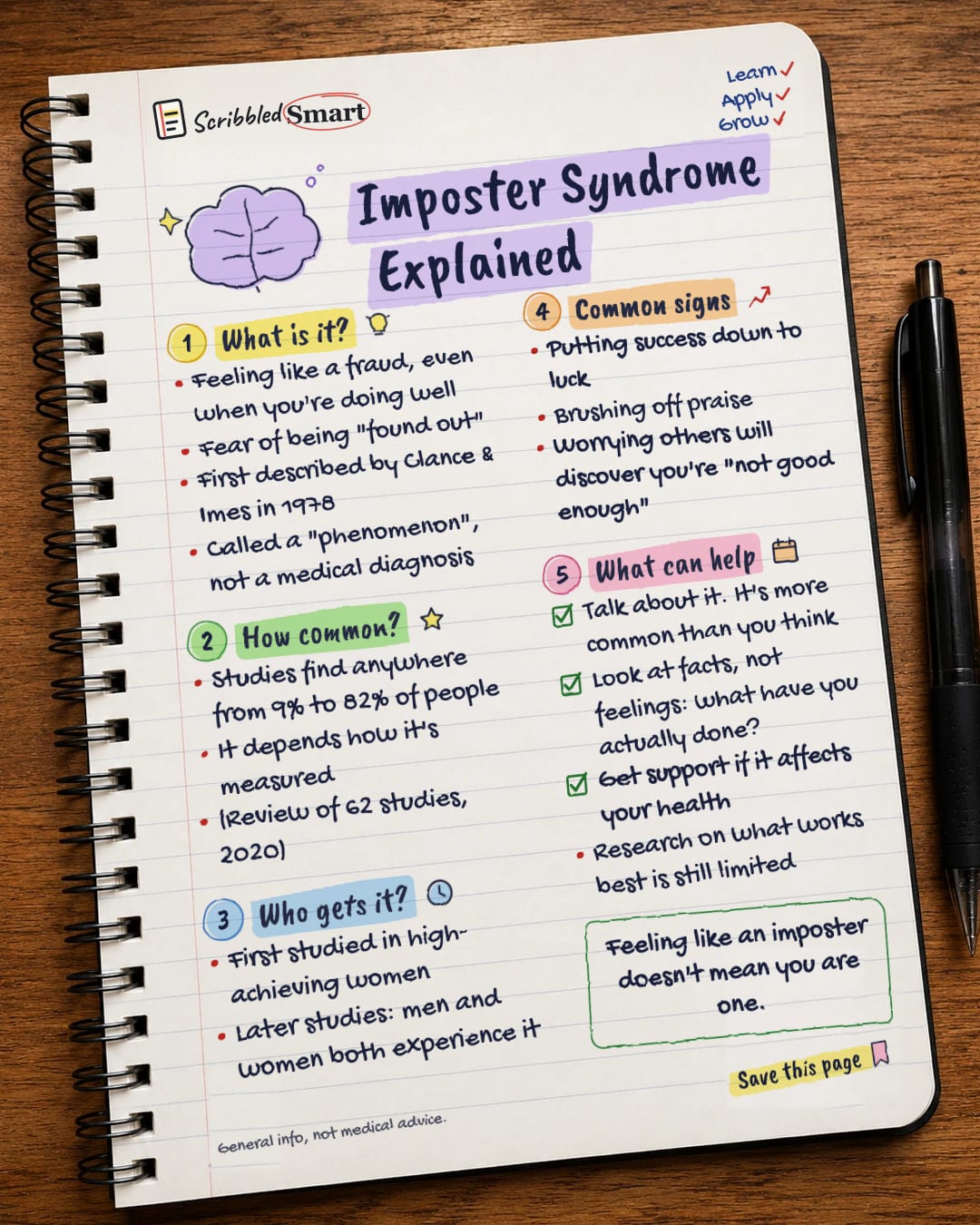
Imposter syndrome is the feeling that you're a fraud, even when you're doing well, along with a fear of being "found out". It was first described by psychologists Clance and Imes in 1978, and research suggests it's common. This article explains where the idea came from, how common it is, the common signs and what we know about what helps.
What is imposter syndrome?
Imposter syndrome is a pattern of feeling like a fraud and fearing you'll be exposed, even when the evidence says you're doing well.
Where the idea came from
The term comes from a 1978 paper by Clance and Imes, "The imposter phenomenon in high achieving women", published in Psychotherapy: Theory, Research & Practice. According to secondary summaries, it was based on more than 150 high-achieving women they saw in therapy.
Notice the word they used: "phenomenon", not "syndrome". "Imposter syndrome" is the popular name that came later.
Not a medical diagnosis
Imposter syndrome is not a medical diagnosis. A large 2020 review by Bravata and colleagues states that it "is not a recognized psychiatric disorder". It isn't in the DSM-5 or ICD-10, two major diagnostic manuals.
Imposter or impostor?
You'll see both spellings. The original 1978 paper used "imposter". The 2020 review used "impostor". Both mean the same thing.
How common is imposter syndrome?
Common, but nobody can give one exact figure. Studies find anywhere from 9% to 82% of people experience it.
That huge range comes from Bravata and colleagues' 2020 systematic review in the Journal of General Internal Medicine. It brought together 62 studies with 14,161 participants. The rates depended on which questionnaire each study used and the cut-off score it set to decide who "counts".
So if you feel like an imposter, you're in good company. But be wary of anyone quoting one precise percentage.
Who gets imposter syndrome?
Anyone can. The original 1978 work focused on high-achieving women, but later research found that men and women both experience it.
The 2020 review found imposter syndrome was common among both men and women. It also found that it often appears alongside depression and anxiety, and that it was linked to burnout. If work stress is part of the picture, our guide to the signs of burnout may help.
Common signs of imposter syndrome
The signs Clance and Imes described include:
- Putting success down to luck, rather than your own skill or effort.
- Brushing off praise, as if people are just being kind.
- Worrying that others will discover you're "not good enough".
The side note on our page is worth remembering: feeling like an imposter doesn't mean you are one.
What can help with imposter syndrome
There's no proven treatment yet, but a few simple steps follow from what we know about it.
Talk about it
Imposter feelings are common. Saying them out loud to someone you trust can show you that you're not the only one.
Look at facts, not feelings
Imposter syndrome often involves putting success down to luck. So check the facts: what have you actually done? Write down the real results, feedback and work behind your successes.
Get support if it affects your health
Because it often comes with depression and anxiety, get support if imposter feelings start to affect your health. Your GP (family doctor) is a good place to start.
What the research can't tell us yet
Research on what works best is still very limited. The 2020 review found that no published studies had evaluated treatments for imposter syndrome. So be careful with anyone promising a cure.
Common mistakes
- Waiting until you "feel ready". The feeling of being a fraud often doesn't match the facts.
- Believing one exact statistic. Rates range from 9% to 82% depending on how they're measured.
- Calling it a diagnosis. It isn't a recognised psychiatric disorder.
- Trusting quick fixes. No published studies have tested treatments yet.
FAQ
What are the signs of imposter syndrome?
Signs Clance and Imes described include putting your success down to luck, brushing off praise, and worrying that others will discover you're "not good enough", even when you're doing well. A 2020 review also found it often appears alongside depression and anxiety and is linked to burnout.
Is imposter syndrome a mental illness?
No. A 2020 systematic review by Bravata and colleagues states that impostor syndrome is not a recognised psychiatric disorder, and it isn't listed in the DSM-5 or ICD-10. Clance and Imes, who first described it in 1978, called it a "phenomenon" rather than a syndrome.
How common is imposter syndrome?
It's common, but estimates vary widely. A 2020 review of 62 studies found rates from 9% to 82%, depending on the questionnaire and cut-off score each study used. It was common among both men and women, so many people who feel this way are not alone.
How do you overcome imposter syndrome?
There's no proven method yet, because no published studies had evaluated treatments by 2020. Simple steps include talking about it, checking the facts of what you've actually achieved, and getting support from your GP or doctor if it starts to affect your health.
Related reading
- The Dunning–Kruger effect: the opposite problem, and why top scorers in the original study tended to underrate themselves.
- How to negotiate your salary: a moment when imposter feelings can hold you back.
- Why we overthink: when worry about not being good enough goes round in circles.
Sources
- Simply Psychology: Imposter syndrome in high-achieving women
- Psychology Today: The history of imposter syndrome
- Frontiers in Psychology (2024): the impostor phenomenon
- PMC: article on the impostor phenomenon
- JobCannon: Why imposter syndrome is not a diagnosis
- Bravata et al. (2020): Prevalence, Predictors, and Treatment of Impostor Syndrome, a Systematic Review (PMC)
How we checked this
Every fact in this article comes from the 6 sources listed above, checked against official or peer-reviewed sources where possible. AI tools help with drafting; a person checks every fact against the sources. How we research
- Published and checked
General info, not medical advice.
Spotted a mistake? Tell us and we'll fix it and log it on the corrections page.


